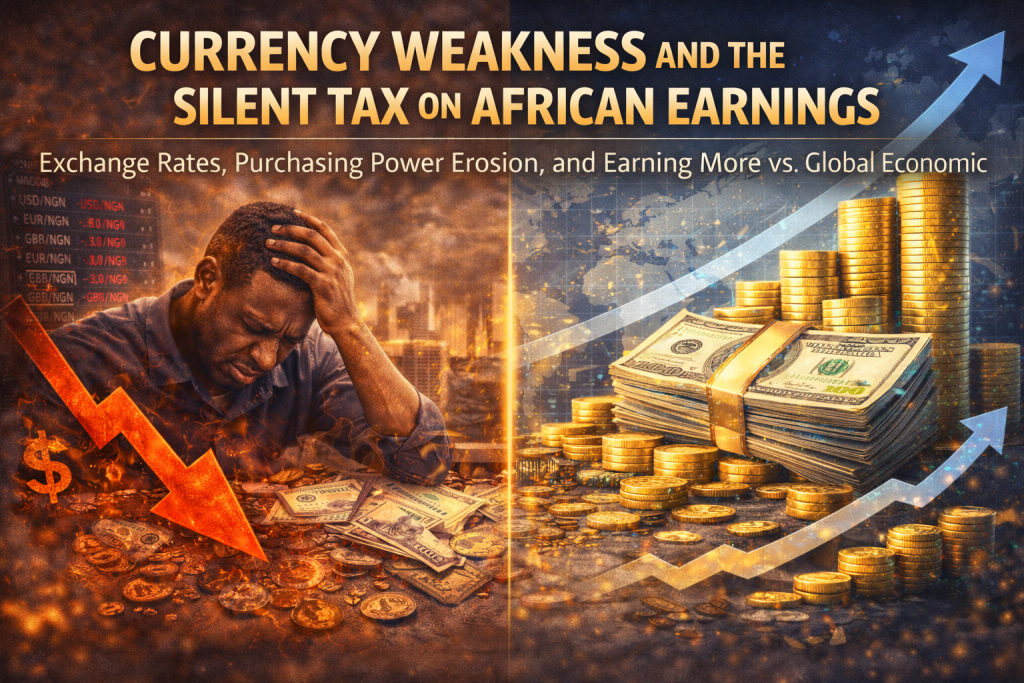
Currency Weakness and the Silent Tax on African Earnings
Exchange Rates, Purchasing Power Erosion, and the Illusion of Rising Incomes
Introduction
Across Africa, millions of people are earning more in nominal terms than they did a decade ago. Salaries have increased, business revenues have grown, and governments often point to higher GDP figures as evidence of progress.
Yet despite these gains, real economic power frequently declines.
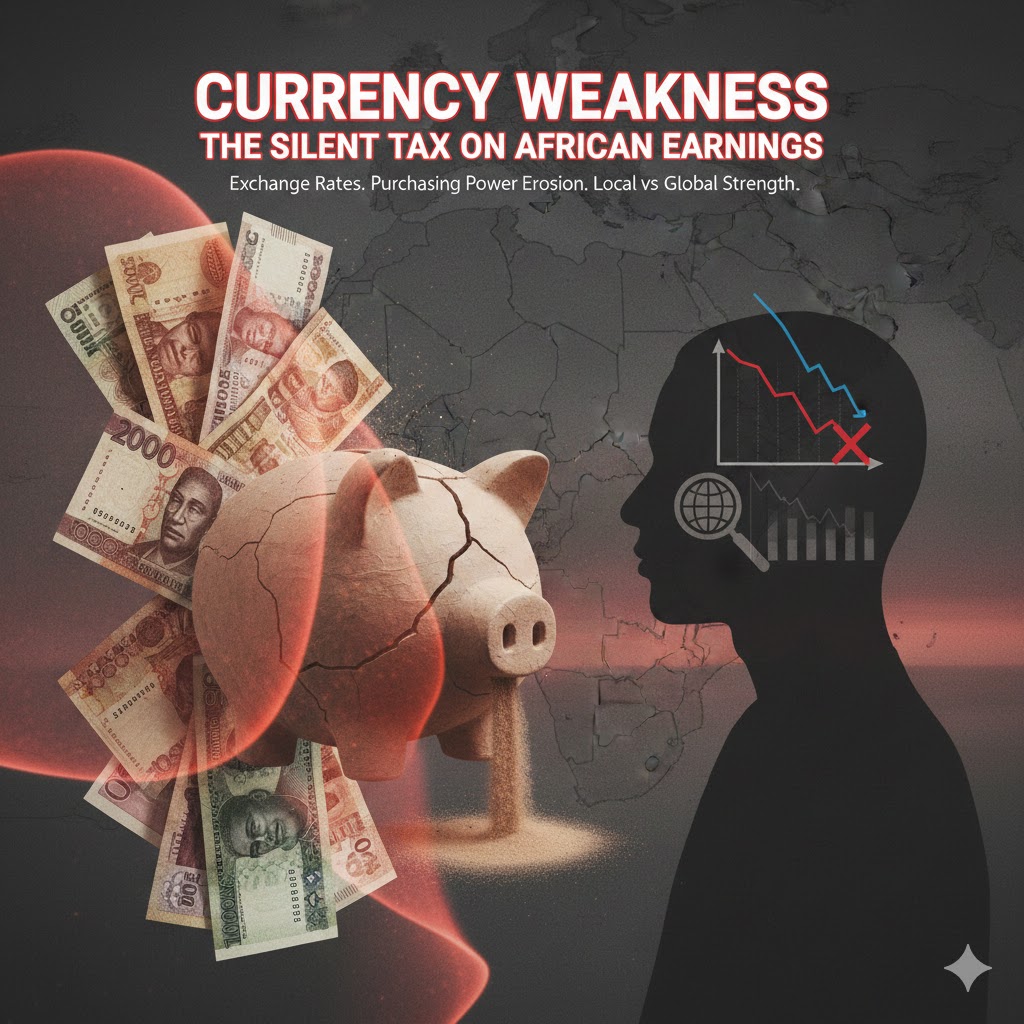
The reason is not laziness, poor planning, or insufficient effort. It is currency weakness—a structural force that operates like a silent tax on African earnings, quietly eroding value without parliamentary votes or explicit deductions.
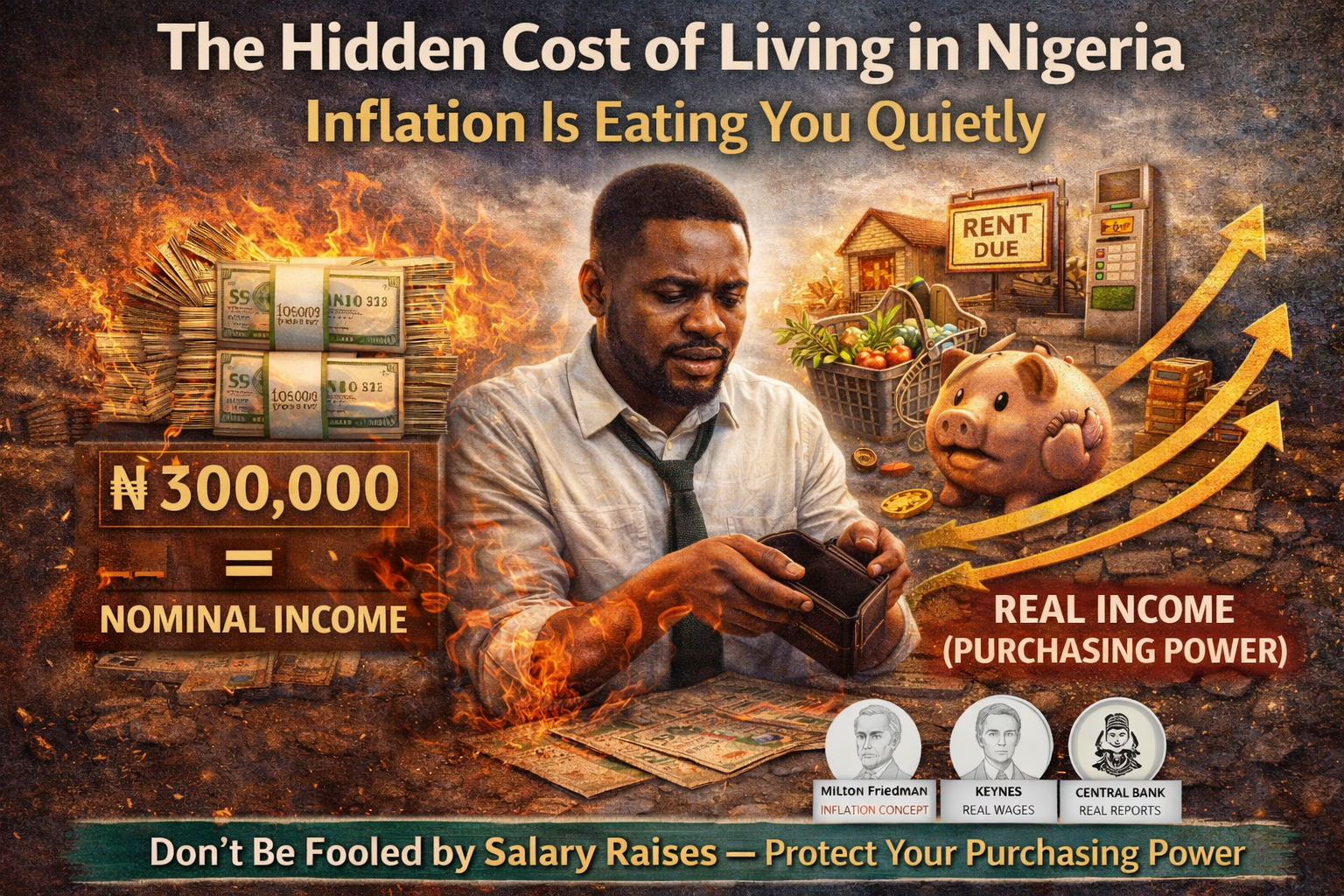
As economist Irving Fisher warned, money illusion leads people to confuse nominal gains with real wealth. In currency-weak environments, that illusion becomes dangerous.
This article examines how exchange rates function as an invisible tax, why earning more locally does not guarantee global purchasing power, and how currency dynamics shape inequality, capital flight, and long-term wealth outcomes across Africa.
1. What Currency Weakness Really Means
Currency weakness is not simply “a low exchange rate.”
It refers to a currency’s persistent inability to store value over time relative to others, driven by:
- Inflation differentials
- Trade imbalances
- Capital outflows
- Weak monetary credibility
- Structural import dependence
As Milton Friedman famously argued, inflation and currency depreciation are ultimately monetary phenomena—but their social consequences are deeply political.
A weak currency reduces what earnings can buy outside the domestic economy, regardless of how hard people work inside it.
2. The Exchange Rate as a Silent Tax
Unlike income tax, currency depreciation:
- Is not voted on
- Is not transparently deducted
- Is not equally borne
Yet its effects are real and measurable.
When a currency depreciates:
- Imports become more expensive
- Foreign education, healthcare, and technology cost more
- Savings lose international purchasing power
- Wages fall in real global terms
Economist Dani Rodrik describes this as an implicit redistribution—from wage earners and savers to exporters, asset holders, and politically connected actors.
This is why depreciation often feels invisible—but painful.
3. Purchasing Power: Local Comfort vs Global Reality
Many Africans experience a paradox:
- They can live “comfortably” locally
- Yet feel globally poorer each year
This happens because purchasing power is relative.
A salary increase that keeps pace with local inflation may still:
- Buy fewer dollars
- Buy fewer euros
- Buy fewer globally traded assets
As Angus Deaton emphasizes, welfare must be measured by what income can actually command—not just nominal figures.
In a globalized world, global purchasing power matters, even for those who never leave home.
4. Why Earning More Locally Is Often Not Enough
Local earnings face three structural limits:
(a) Inflation Differential
If domestic inflation exceeds that of trading partners, exchange rate pressure is inevitable.
(b) Import Dependency
African economies import:
- Fuel
- Machinery
- Pharmaceuticals
- Technology
- Education services
Currency weakness raises the cost of development inputs.
(c) Capital Mobility Asymmetry
Capital can leave easily; labor cannot.
As Thomas Piketty notes, returns to capital adjust faster than wages—especially across borders.
5. Currency Weakness and Wealth Inequality
Currency depreciation does not affect everyone equally.
It benefits:
- Exporters earning foreign currency
- Asset owners holding real estate, equities, or hard assets

Currency Weakness and the Silent Tax on African Earnings - Individuals with offshore exposure
It punishes:
- Salary earners paid in local currency
- Pensioners and fixed-income earners
- Small savers
This is why inequality often widens during currency crises, a pattern documented repeatedly by the IMF and World Bank.
6. The Psychological Cost: Money Illusion and False Progress
Money illusion—the tendency to focus on nominal rather than real values—allows currency erosion to persist politically.
Governments can claim:
- Higher wages
- Bigger budgets
- Rising GDP
While citizens experience:
- Lower purchasing power
- Shrinking savings
- Higher living costs
As John Maynard Keynes observed, inflation allows governments to “confiscate, secretly and unobserved,” the wealth of citizens.
Currency weakness is that confiscation mechanism.
7. Currency Weakness and Capital Flight
Currency instability encourages rational exit.
As explored by Ndikumana and Boyce, African capital flight is strongly linked to:
- Exchange rate volatility
- Inflation uncertainty
- Weak monetary credibility
When domestic currency cannot reliably store value, wealth seeks:
- Dollars
- Euros
- Offshore assets
- Foreign property
This further weakens the currency, creating a self-reinforcing cycle.
8. Why This Is a Structural Problem, Not a Personal Failure
It is crucial to be clear:
- Working harder does not fix currency weakness
- Budgeting better does not change exchange rates
- Financial discipline cannot offset structural depreciation
As Douglass North emphasized, economic outcomes are shaped by institutions, not individual effort alone.
Currency strength reflects:
- Monetary governance
- Fiscal discipline
- Export competitiveness
- Institutional credibility
Individuals can adapt—but they cannot solve it alone.
9. How Wealth Protects Itself from Currency Erosion
Globally, wealth responds to currency risk by:
- Holding foreign-denominated assets
- Owning productive assets priced globally
- Diversifying across jurisdictions
- Using businesses as currency hedges
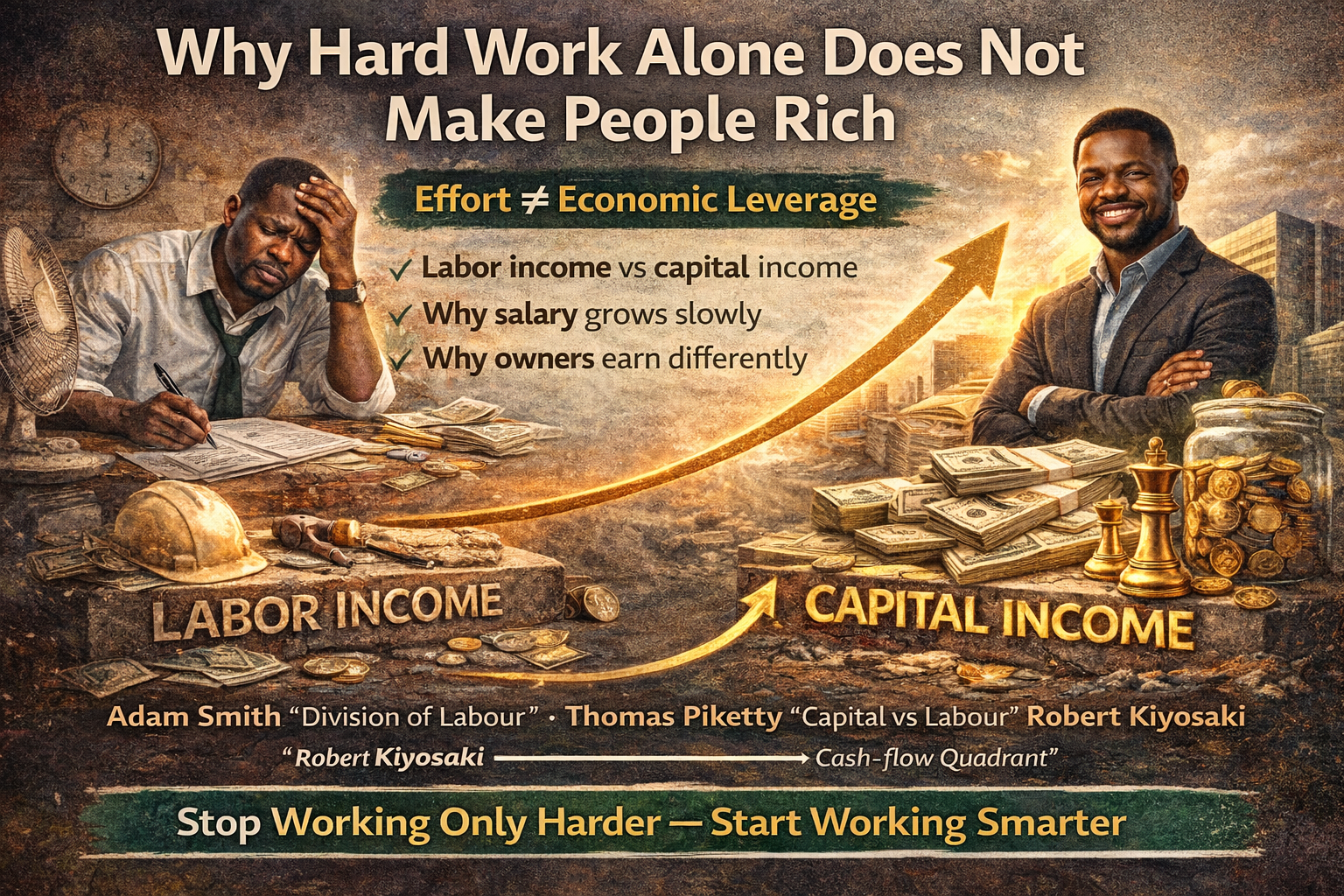
This explains why wealth compounds differently from wages, especially in currency-weak environments.
10. Implications for African Economic Strategy
For individuals:
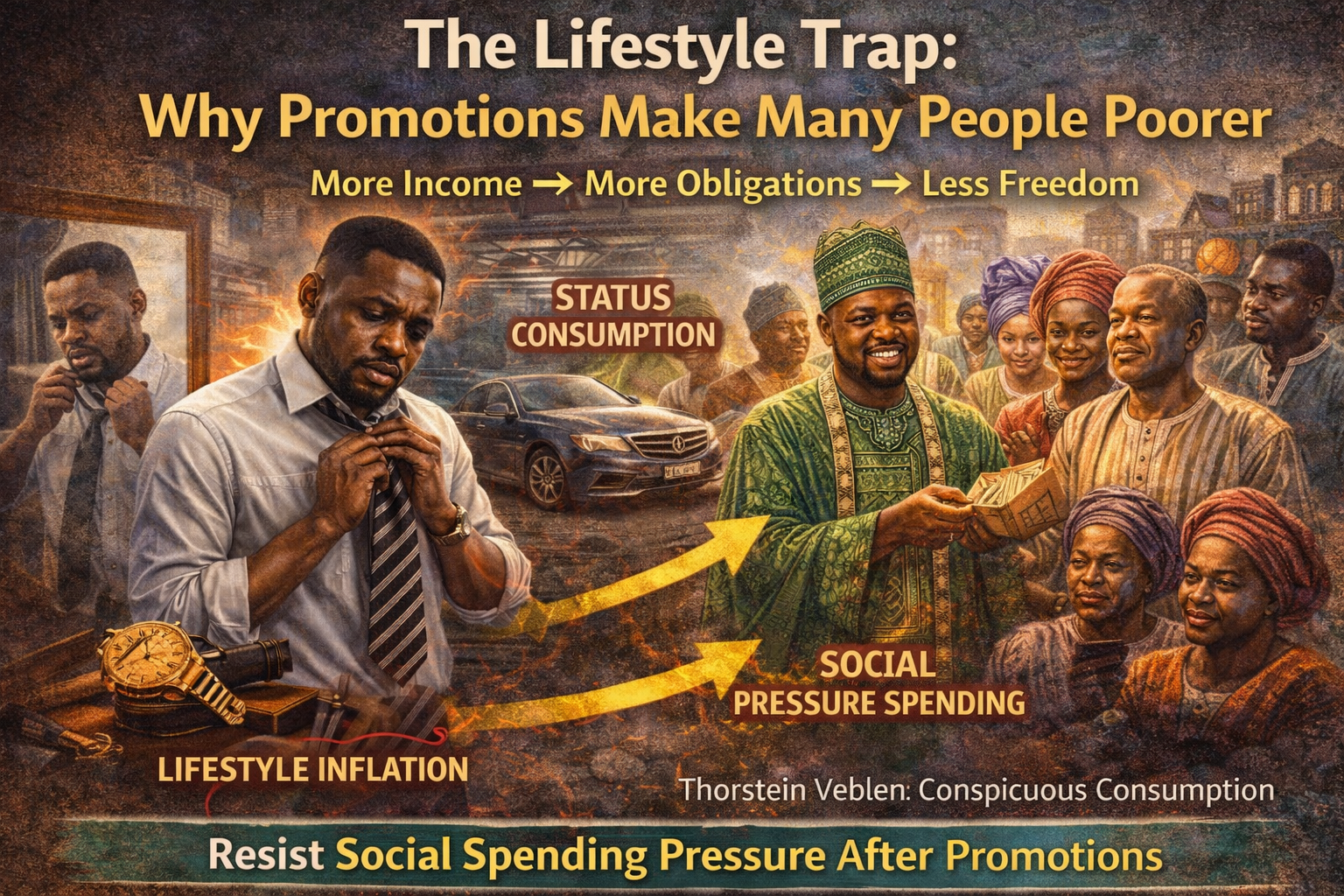
- Income growth must be paired with asset ownership
- Currency exposure must be managed consciously
- Global value benchmarks matter
For policymakers:
- Currency stability is not cosmetic—it is foundational
- Development without monetary credibility is fragile
- Growth figures mean little without purchasing power preservation
Conclusion
Currency weakness operates as a silent tax on African earnings, quietly eroding value even as incomes rise.
It explains why:
- Growth feels hollow
- Savings feel futile
- Progress feels temporary
Until African economies build credible monetary systems, export strength, and institutional trust, earning more locally will not consistently translate into global economic power.
As history repeatedly shows:
Wealth is not about how much you earn—it is about what your earnings can reliably become.
WealthQuizzes Insight
Currency weakness punishes effort, rewards access, and exposes the difference between income and wealth.