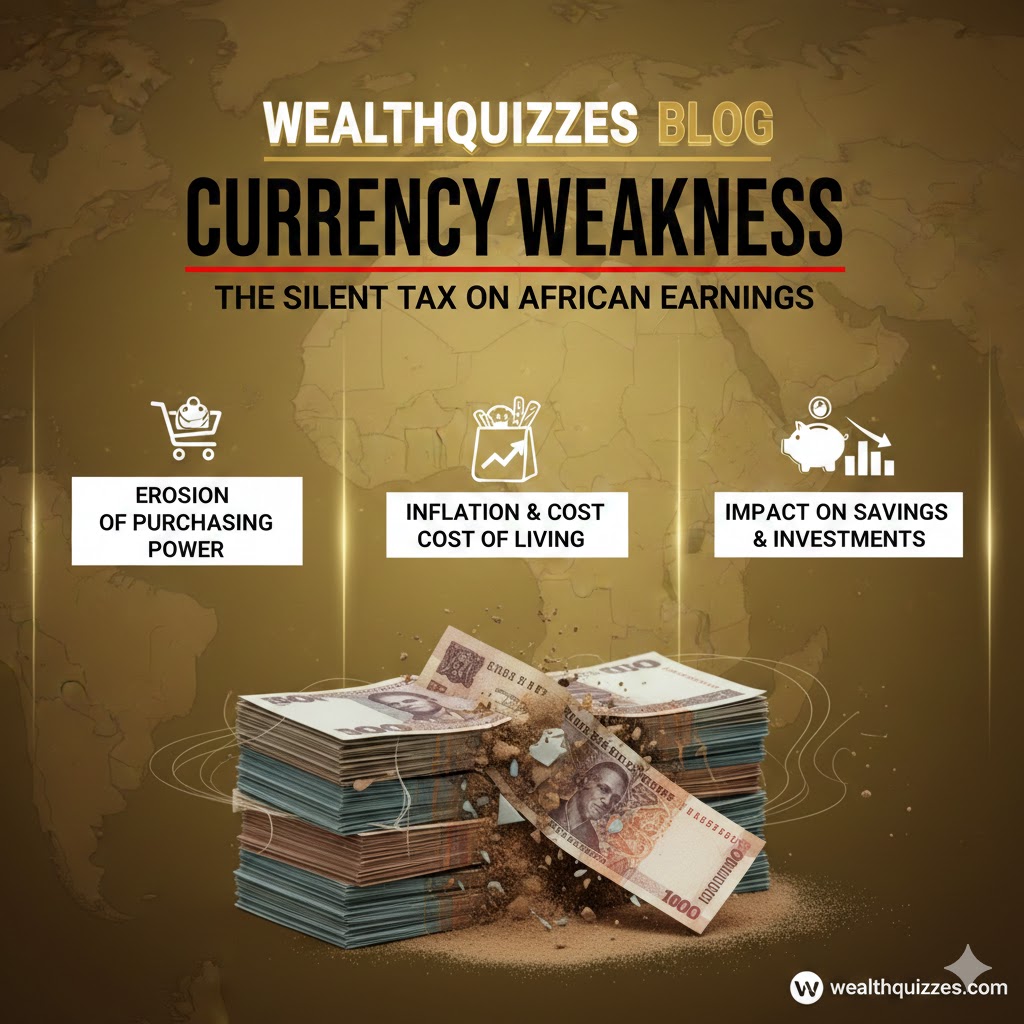
Currency Weakness and the Silent Tax on African Earnings
A structural analysis of exchange-rate depreciation, purchasing-power erosion, and income fragility across African economies
1. Introduction: What Economists Mean by a “Silent Tax”
In public finance, a tax is typically a legislated levy imposed by the state. However, macroeconomists recognize another category — implicit or non-legislated taxation — where government policy or macroeconomic conditions reduce citizens’ real income without a formal tax statute.
One of the most powerful examples is currency weakness (persistent depreciation of the domestic currency).
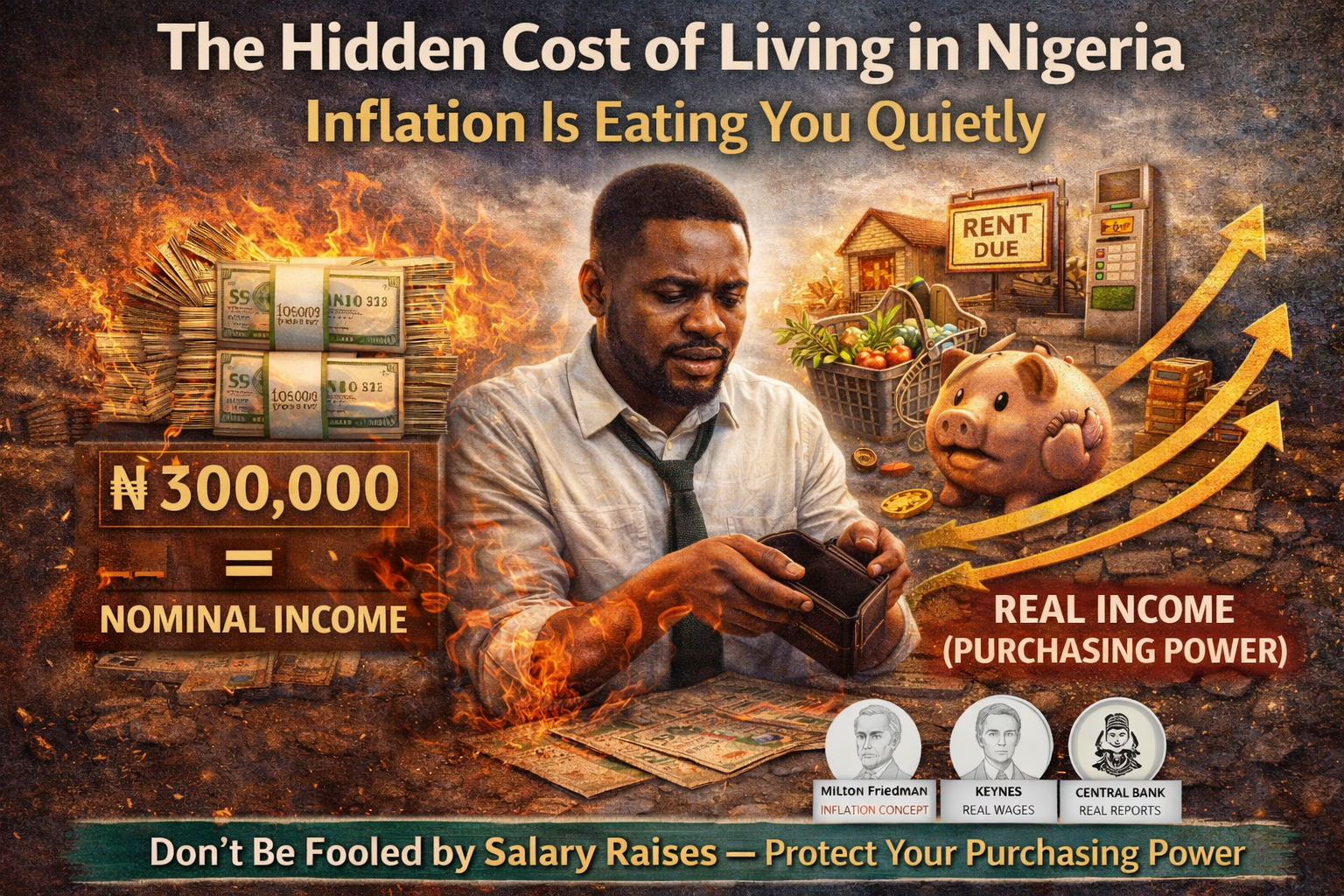
When a currency steadily loses value against international reserve currencies (USD, EUR, GBP, CHF), individuals earn the same nominal income but their real income and purchasing power fall. That reduction operates economically the same way a tax would — it transfers wealth away from wage earners.
The International Monetary Fund (IMF) in its External Sector Report repeatedly emphasizes that exchange-rate depreciation in import-dependent economies redistributes welfare away from households toward governments and exporters through price effects and inflation transmission.
Thus, the “silent tax” is not collected by tax officials —
it is collected by inflation and exchange rates.
2. Understanding Currency Weakness
A currency weakens when more units of it are required to purchase one unit of a foreign currency.
Example:
| Year | ₦ per $1 |
|---|---|
| 2014 | ₦155 |
| 2020 | ₦360 |
| 2024–2025 | ₦1,400+ |
The Nigerian wage earner who earned ₦150,000 monthly in 2014 had the approximate global purchasing power of about $968.
The same ₦150,000 salary today equals roughly $100.
The worker did not receive a pay cut in nominal terms — but in real terms, he suffered an income collapse.
This is precisely why economist Milton Friedman (1963, Inflation and Monetary Frameworks) observed:
“Inflation is taxation without legislation.”
Currency depreciation in developing economies functions through the same mechanism — only more aggressively.
3. The Transmission Mechanism: How Currency Depreciation Becomes a Tax
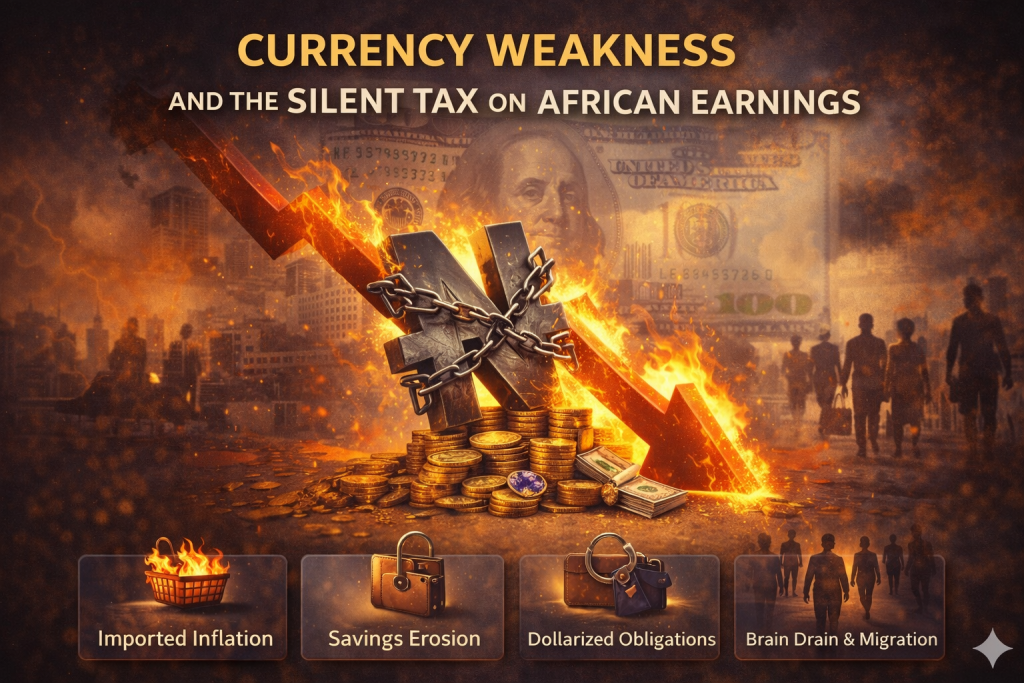
Currency weakness affects earnings through four main channels:
(a) Imported Inflation
Most African economies are structurally import-dependent.
Imports include:
- refined petroleum
- pharmaceuticals
- food inputs (wheat, fertilizer)
- machinery
- education services
- technology services (software subscriptions, cloud services)
When the exchange rate falls, import costs rise instantly.
Businesses then pass these costs to consumers.
Result: prices rise faster than wages.
The World Bank (Africa’s Pulse Report, 2023) identifies exchange-rate pass-through as one of the primary drivers of food inflation in Sub-Saharan Africa.
(b) Wage Stickiness
Wages in Africa adjust slowly due to:
- weak labor unions
- high unemployment
- informal employment dominance
Economists call this nominal rigidity.
Keynes explained this phenomenon in The General Theory of Employment, Interest and Money (1936) — workers resist nominal wage cuts, but inflation quietly reduces real wages.
Thus:
Employers don’t reduce salaries — inflation reduces them on their behalf.
(c) Savings Erosion
Currency weakness penalizes savers more than spenders.
If a person saves ₦1,000,000 in a bank account:
- purchasing power collapses as inflation rises
- interest rates are usually below inflation
This is known as negative real interest rate, defined by Irving Fisher (Fisher Equation):
[Real Interest Rate = Nominal Interest Rate – Inflation Rate]
In many African economies:
- Savings interest: 4–8%
- Inflation: 20–35%
Therefore:
Savers lose wealth every year simply by holding local currency.
That loss is economically identical to a tax on savings.
(d) Dollarized Obligations
Many African households pay for services priced internationally:
- tuition abroad
- professional certifications
- software subscriptions
- imported healthcare
- international travel
Even local goods often contain imported inputs.
Hence, incomes are local —
but expenses are global.
The African Development Bank (AfDB, Macroeconomic Performance and Outlook 2024) notes that exchange-rate volatility disproportionately harms the urban middle class, not only the poor.
4. Governments and Currency Depreciation
Currency weakness rarely occurs randomly. It typically arises from structural fiscal and monetary conditions:
- Persistent budget deficits
- Monetary financing of government spending
- Low export diversification
- Foreign reserve depletion
When governments finance deficits by expanding the money supply (printing money), the currency supply rises faster than economic output.
According to the Quantity Theory of Money (Irving Fisher, later monetarists):
[MV = PY]
Where:
- M = Money supply

Currencies Weakness and the Silent Tax on African Earnings - V = Velocity
- P = Price level
- Y = Output
If M increases faster than Y, then P (prices) rise → inflation → currency weakness.
Thus, currency depreciation often reflects fiscal imbalance.
5. Who Pays the Silent Tax?
Currency weakness is not neutral. It redistributes wealth.
| Beneficiary | Why |
|---|---|
| Governments | Inflation reduces real value of public debt |
| Exporters | Earn foreign currency |
| Asset owners | Property and equities rise with inflation |
| Victims | Why |
|---|---|
| Salary earners | Fixed wages |
| Pensioners | Fixed payments |
| Small savers | Local currency savings |
| Youth workers | Entry-level salaries |
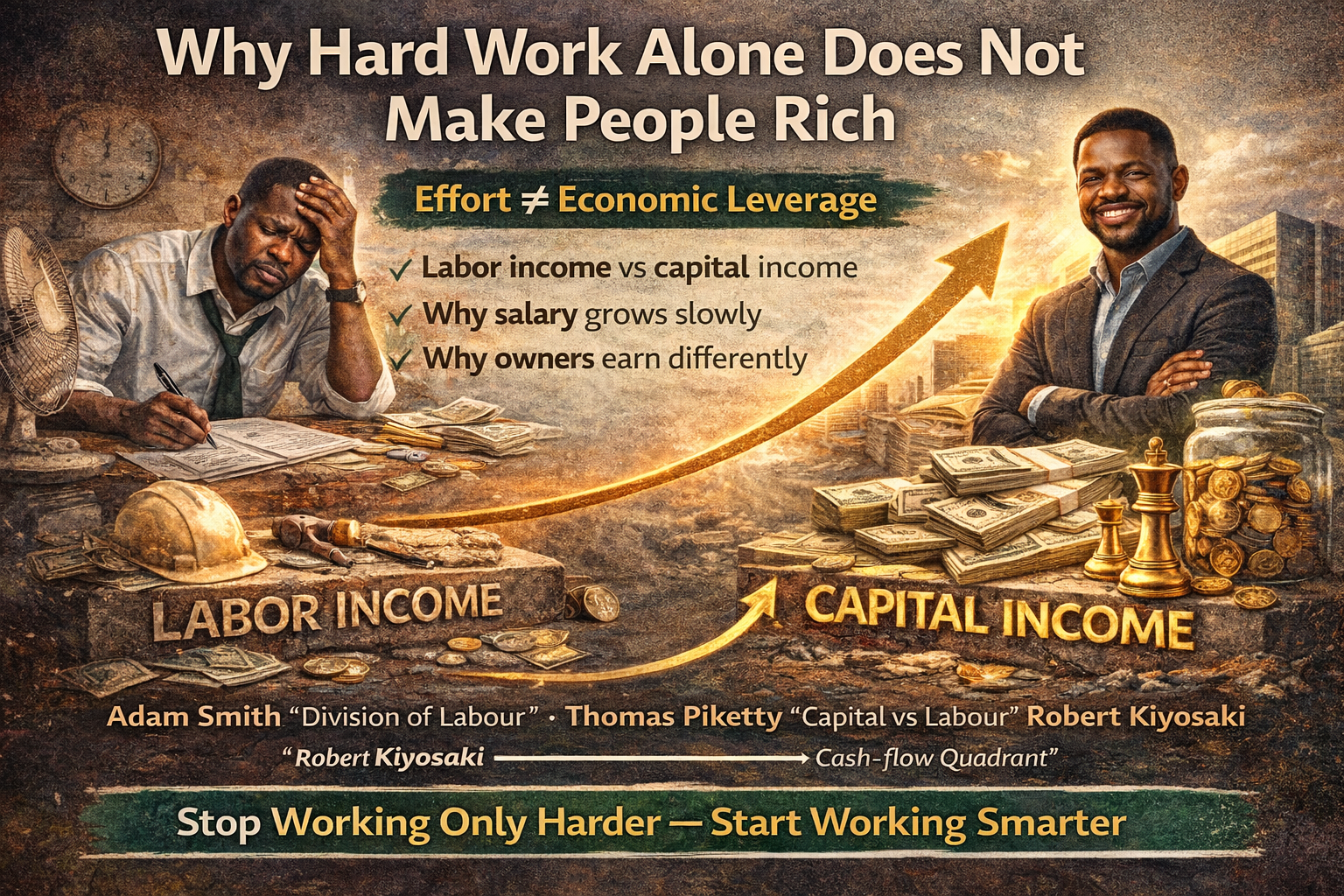
Economist Thomas Piketty (Capital in the 21st Century) explains that inflation disproportionately harms labor relative to capital because assets adjust faster than wages.
In Africa, this produces a shrinking middle class.
6. Currency Weakness and Brain Drain
A major but less discussed consequence is migration pressure.
When professionals discover:
- their earnings lose international value yearly,
- and their human capital is globally tradable,
they relocate.
The World Bank (2022) links real wage decline to skilled emigration in Nigeria, Ghana, Kenya, and Ethiopia.
Doctors, engineers, lawyers, and IT workers are not only leaving for higher salaries —
they are leaving for stable currency jurisdictions.
Thus, currency weakness becomes a labor export policy — unintentionally.
7. The Psychological Dimension: The Illusion of Nominal Income
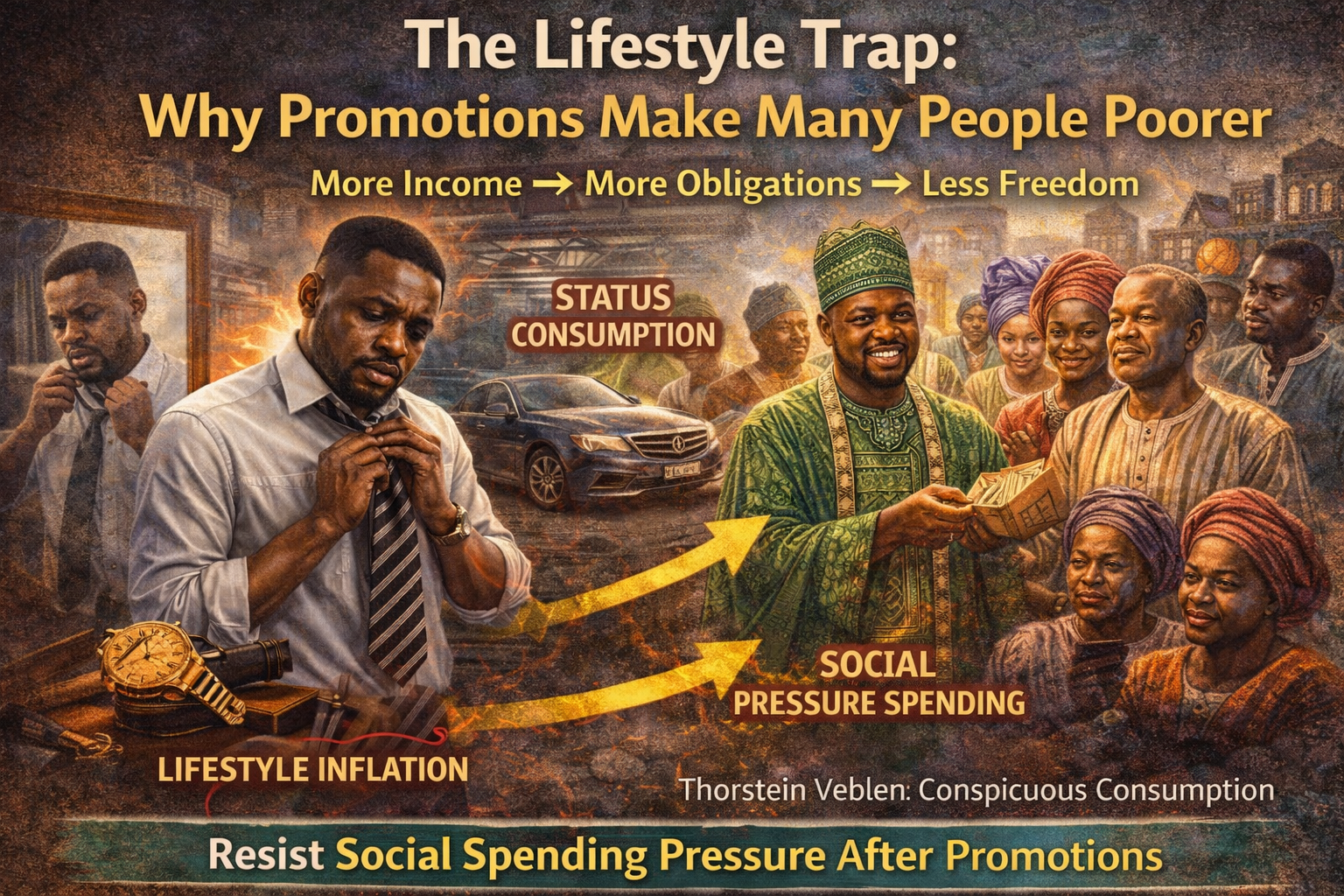
Humans evaluate income nominally (“I now earn ₦300,000”), not in real purchasing power.
Behavioral economists call this money illusion (Irving Fisher; later expanded by Modigliani and Cohn).
So citizens feel richer even when poorer.
Example:
Salary rises from ₦120k → ₦250k
But exchange rate rises ₦400 → ₦1,500/$
Real income has fallen — but psychologically appears increased.
This is why the silent tax often goes politically unnoticed.
8. Long-Term Consequences for African Development
Persistent currency depreciation produces structural effects:
- Collapse of long-term savings culture
- Weak pension systems
- Low mortgage markets
- High short-term consumption behavior
- Dollarization of private transactions
Economists call this financial shallowing — where citizens avoid long-term local financial instruments because the currency cannot store value.
Hernando de Soto (The Mystery of Capital) notes that stable currency is a prerequisite for capital formation.
Without a reliable store of value, capitalism struggles to develop domestically.
9. Is Currency Depreciation Always Bad?
Not necessarily.
In theory, a weaker currency:
- makes exports competitive
- stimulates domestic production
This is the Marshall–Lerner condition in international economics.
However, it only works if:
- the country produces tradable goods,
- manufacturing exists,
- exports are diversified.
Many African economies export commodities priced in dollars (oil, minerals, cocoa).
Therefore depreciation does not significantly boost production — but still raises prices.
Hence, the costs are felt, but the benefits are muted.
10. Policy Solutions Suggested by Economists
Authorities including the IMF, AfDB, and World Bank consistently recommend:
- Fiscal discipline (reduce deficits)
- Central bank independence
- Export diversification
- Inflation targeting regimes
- Deepening capital markets
- Strengthening foreign reserves
Countries like Botswana and Mauritius demonstrate that currency stability in Africa is achievable under disciplined macroeconomic management.
11. Practical Implications for Individuals
From a financial planning perspective, the silent tax changes rational behavior.
Economists call this currency risk hedging.
Common responses:
- holding foreign-currency assets
- investing in real assets (land, equities)
- earning cross-border income (remote work)
- acquiring portable skills
Notably, these are defensive behaviors — citizens protecting income from macroeconomic conditions rather than from statutory taxation.
12. Conclusion
Currency weakness is more than a technical macroeconomic issue.
It is a distributional economic force.
Without any act of parliament, wage earners’ purchasing power declines, savings erode, and the middle class contracts. The process transfers wealth from labor to assets, from local earners to foreign-currency holders, and from households to macroeconomic imbalances.
Therefore, the phrase “silent tax” is not rhetorical — it is analytically accurate.
As Friedman warned, inflation and monetary instability quietly perform what explicit taxation would politically struggle to achieve.
For many African households today, the greatest tax burden is not personal income tax, VAT, or customs duty.
It is the exchange rate.