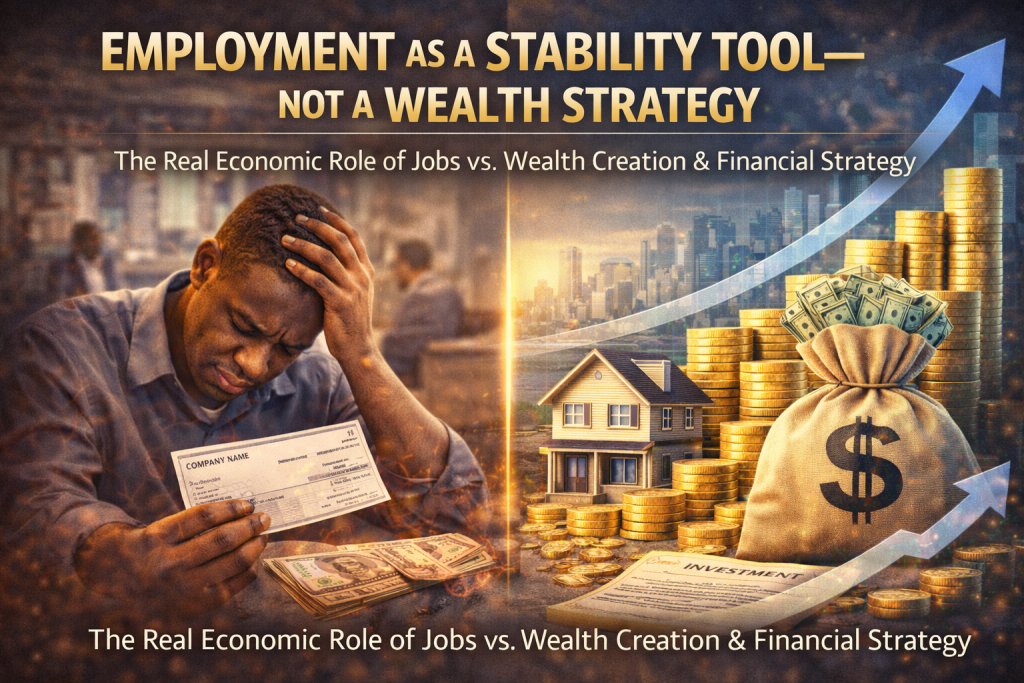
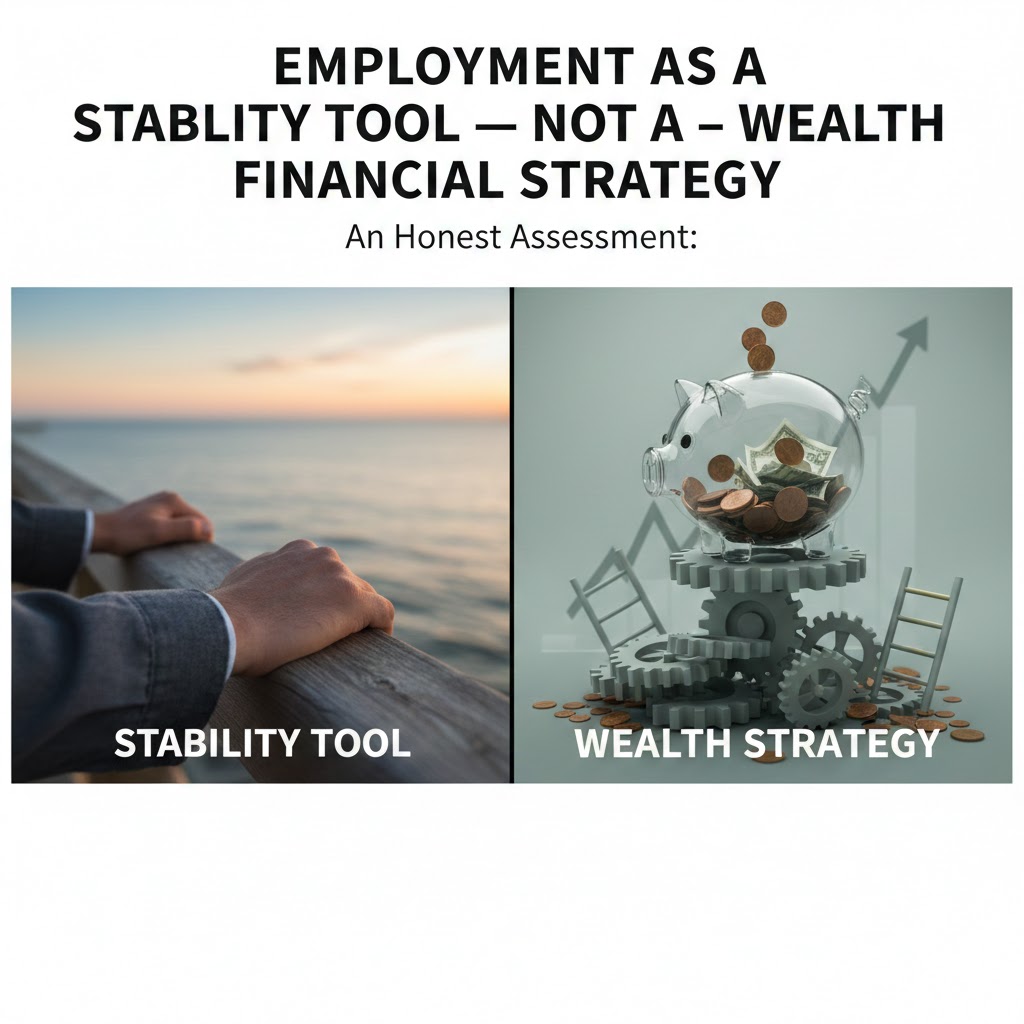
Employment as a Stability Tool—Not a Wealth Strategy
What Jobs Are Designed to Do, Their Economic Limits, and How They Fit Into a Real Financial Plan
Introduction
Modern society treats employment as the default solution to poverty. Governments pursue job creation. Parents urge children to “get a good job.” Individuals equate salary increases with financial progress.
Yet across the world—especially in developing economies—millions of hardworking, fully employed people never become wealthy.
This is not a paradox.
It is design.
Employment is one of the most important institutions in modern economies, but its purpose is frequently misunderstood. A job is fundamentally a stability mechanism, not a wealth-generation mechanism.
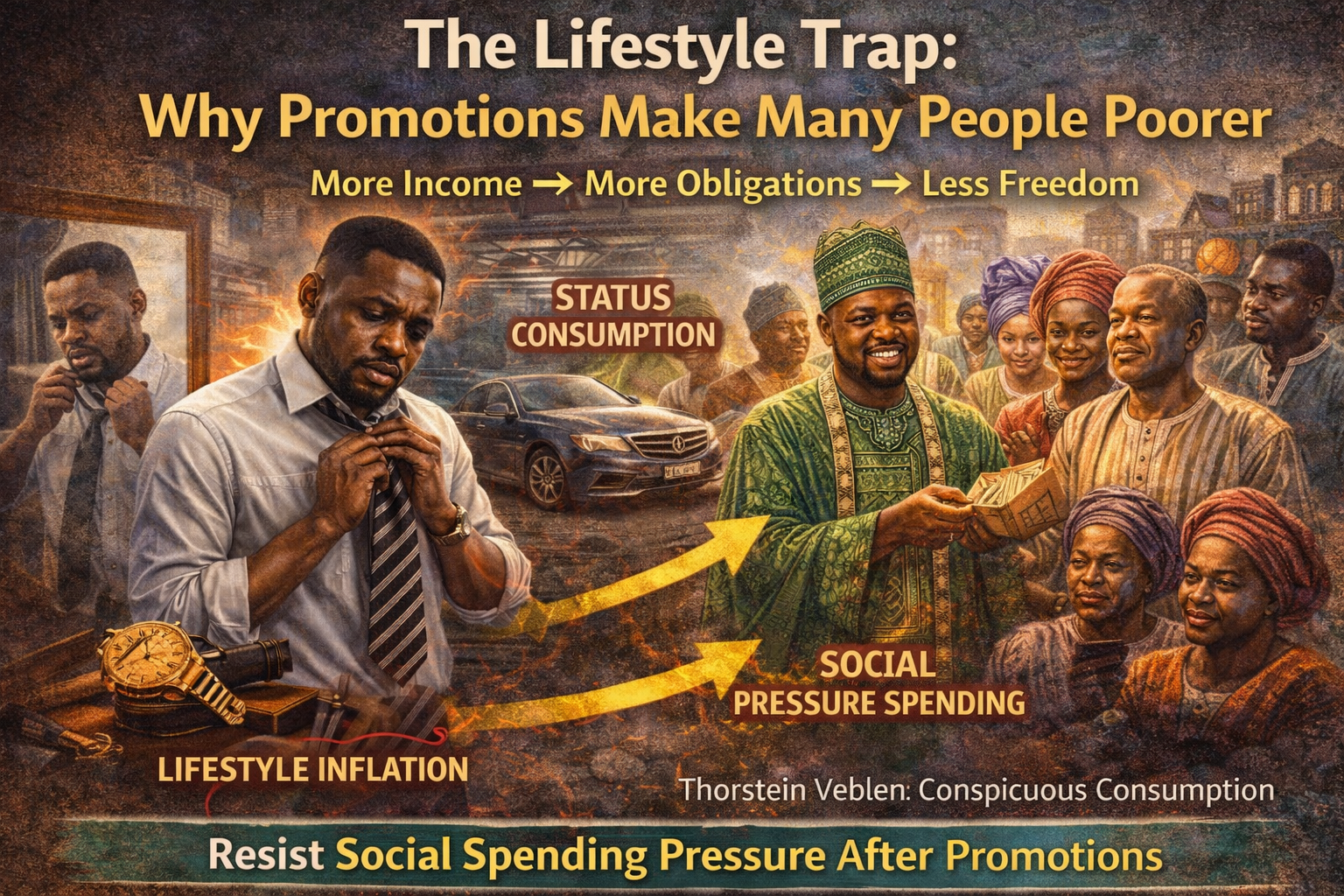
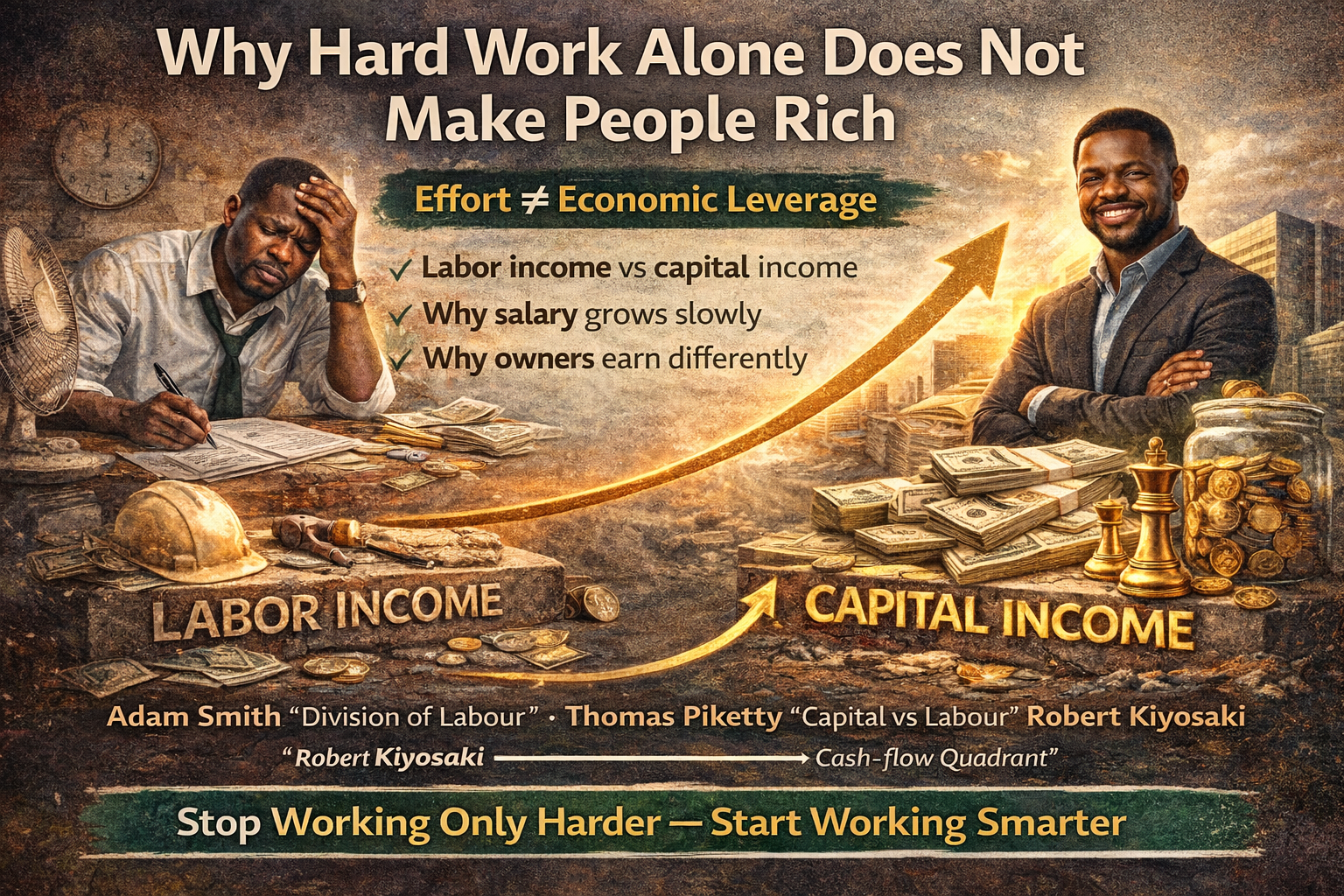
Economist Adam Smith in The Wealth of Nations distinguished clearly between wages and profits: wages sustain labor; profits accumulate capital. Confusing the two leads to persistent financial frustration.
This article explains what employment actually does economically, why it rarely compounds into wealth on its own, and how it should properly fit into a broader financial strategy.
1. What Employment Is Designed to Do
At its core, employment is an economic contract:
- The worker sells time and skill
- The firm pays predictable income
The employer assumes business risk.
The employee receives income certainty.
This arrangement exists because of specialization. As Adam Smith demonstrated with the famous pin factory example, division of labor increases productivity. But specialization produces a second effect: workers become dependent on wages rather than ownership.
Employment therefore serves three primary functions:
(a) Income Stability
A salary converts uncertain economic conditions into predictable cash flow.
(b) Consumption Support
Wages allow households to purchase necessities—food, shelter, healthcare, and education.
(c) Social Order
As John Maynard Keynes observed, steady employment reduces economic volatility and stabilizes societies. Joblessness threatens not just incomes, but political stability.
Employment is therefore essential—but its purpose is security, not capital accumulation.
2. Why Wages Rarely Compound Into Wealth
Wealth compounds.
Wages generally do not.
The difference lies in economic structure.
Time Constraint
Wage income is limited by hours worked. Even highly paid professionals have:
- Fixed working hours
- Physical limits
- Career ceilings
As economist Herbert Simon noted, earnings from labor depend on human effort, while capital earnings scale independently of human time.
Non-Scalability
A business can sell to 10,000 customers.
An employee still works one shift.
Consumption Pressure
Wages are primarily used for:
- Rent
- Transportation
- Food
- Family support
This leaves limited surplus for investment.
Because wages are consumed, they struggle to accumulate. Wealth, however, comes from retained and reinvested surplus.
3. Income vs Capital: The Critical Economic Divide
Economists separate economic returns into distinct categories:
| Type | Source | Behavior Over Time |
|---|---|---|
| Wages | Labor | Linear |
| Profits | Enterprise | Scalable |
| Rents | Ownership | Recurring |
| Capital Gains | Assets | Compounding |
As Thomas Piketty demonstrated in Capital in the Twenty-First Century, returns on capital (r) historically exceed economic growth (g). This means owners of assets see wealth grow faster than wage earners.
Therefore:
Workers earn a living.
Owners accumulate wealth.
Employment alone rarely crosses that divide.
4. The Inflation Problem
Even when wages rise, inflation interferes.
Economist Irving Fisher described the distinction between nominal and real income. A salary increase does not guarantee improved purchasing power.
In many economies:
- Salary growth lags inflation
- Currency depreciation reduces value
- Savings erode over time
Thus, a worker may feel busier and better paid, yet become economically weaker.
This explains why decades of continuous employment often produce retirement insecurity.
5. Why Companies Cannot Pay Everyone Wealth
A firm cannot pay employees equal to the value they produce.
If it did:
- There would be no profit
- There would be no reinvestment
- The firm would collapse
As Joseph Schumpeter emphasized, profit is the reward for bearing uncertainty and organizing production. Employers therefore retain a portion of value created by labor to:
- Expand operations
- Invest in technology
- Reward shareholders
This is not exploitation in itself; it is the operating principle of capitalism.
But it also means:
employment cannot be the primary path to wealth for most participants.
6. Employment and Risk Allocation
Employment transfers economic risk.
| Party | Risk Exposure |
|---|---|
| Employee | Income security, limited upside |
| Employer | Income uncertainty, unlimited upside |
The worker exchanges potential wealth for predictability.
This tradeoff is rational. As Frank Knight explained, profit belongs to those who bear uncertainty. Employees are paid precisely because they do not bear that uncertainty.
In other words:
A salary is payment for giving up entrepreneurial risk—and entrepreneurial reward.
7. The African Context
In many African economies, the limitations of employment are magnified by structural realities:
- High inflation
- Weak currencies
- Limited pension systems
- Informal family support obligations
- Narrow formal job markets
A professional may earn a respectable salary locally yet remain globally poor in purchasing power.
This is why middle-class insecurity is widespread despite full employment.
Employment provides dignity and stability, but not necessarily intergenerational wealth.
8. How Employment Should Fit Into a Financial Strategy
The problem is not employment.
The problem is relying on employment alone.
A job should be treated as:
Stage 1 — Foundation
Provides:
- Cash flow
- Skill development
- Creditworthiness
Stage 2 — Capital Formation
Surplus income is redirected into:
- Businesses
- Investments
- Property
- Financial assets
Stage 3 — Ownership Transition
Income increasingly comes from assets rather than labor.
Economist Hyman Minsky observed that financial security comes when income no longer depends solely on current work effort.
9. Why Many People Remain Stuck
Many workers never transition because:
- Consumption rises with salary (lifestyle inflation)
- No assets are accumulated
- Retirement depends solely on savings
This traps individuals in what economists call the wage cycle — working continuously to maintain current living standards.
Without ownership, the cycle continues indefinitely.
10. Reframing the Meaning of a Job
A job is best understood as:
- A training ground
- A financing mechanism
- A stability platform
Not a final destination.
Employment finances the transition into ownership, but it does not replace it.
The financially successful rarely abandon employment early—they use employment strategically.
Conclusion
Employment is one of the most valuable social institutions ever created. It stabilizes households, sustains consumption, and maintains social order. But it was never designed to create large-scale wealth.
Jobs provide income certainty.
Wealth requires asset ownership and compounding.
Confusing the two produces lifelong effort without long-term security.
The lesson is not to reject employment—but to understand its role:
A job is a powerful starting point for financial life, but ownership is what completes it.
WealthQuizzes Insight
Employment keeps you economically stable.
Ownership makes you economically free.