
Financial Innovation in Africa: How Fintech Is Redefining Access to Capital
By WealthQuizzes Editorial Team
The Fintech Revolution: How Technology Is Changing Money
Money is changing — not just how it moves, but who gets to access it. Across Africa, financial technology — or fintech — has transformed from a niche industry into a full-blown revolution.
Once, financial services were limited to the few: people with bank accounts, urban addresses, or steady income. Today, through the power of technology, even a small trader in Asaba or a student in Nairobi can make payments, save, invest, and borrow money with just a smartphone.
That’s the magic of fintech — using innovation to make finance inclusive, accessible, and efficient.
From mobile wallets to blockchain-powered lending, fintech is breaking traditional banking barriers and reshaping Africa’s financial future.
The Problem Fintech Solves — Financial Inclusion and Accessibility
For decades, one of Africa’s biggest economic challenges was financial exclusion.
According to the World Bank, over 45% of African adults still lack access to formal financial services. That means millions cannot open bank accounts, secure loans, or invest their savings.
Fintech provides the solution — not through brick-and-mortar banks, but through digital platforms.
- Mobile money services like M-Pesa in Kenya revolutionized payments.
- Digital lending apps like Carbon and FairMoney offer small, quick loans without the red tape.
- Savings and investment apps like PiggyVest and Cowrywise empower users to manage money smartly.
Fintech is democratizing finance — giving every African, regardless of background or location, the tools to participate in the modern economy.
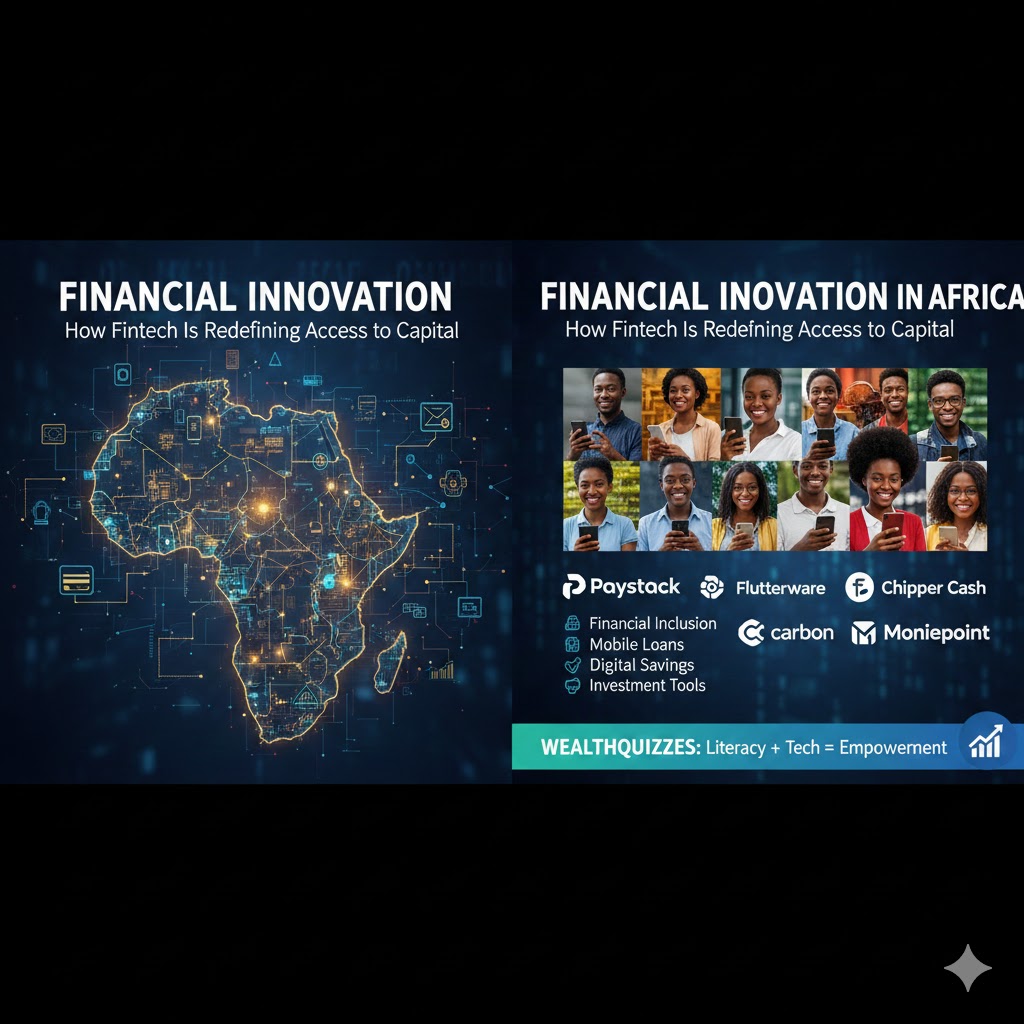
African Fintech Success Stories: Paystack, Flutterwave, Chipper Cash, Carbon, and Moniepoint
The success stories are remarkable and global in scale:
- Paystack: Founded in Nigeria in 2015, Paystack simplified online payments for African businesses. It became a continental success and, in 2020, was acquired by Stripe for over $200 million, one of the largest fintech deals in African history.
- Flutterwave: Founded in Lagos, Flutterwave powers payments for companies across 30+ African countries. Its technology connects Africa to global commerce, enabling businesses to receive and send money effortlessly.
- Chipper Cash: Originating in Uganda, this cross-border payments app allows instant, no-fee transfers across African countries — promoting regional trade and diaspora remittances.
- Carbon (formerly Paylater): A pioneer in digital lending, Carbon offers credit to individuals and small businesses using AI-driven credit scoring instead of traditional collateral.
- Moniepoint: Once a small Nigerian fintech, Moniepoint has evolved into a major financial services provider for SMEs, offering digital banking, payments, and business loans.
Together, these companies are proving that African innovation can scale globally — and that access to finance is a catalyst for entrepreneurship and economic growth.
How Blockchain, AI, and Open Banking Are Creating New Financial Models
Fintech’s next frontier goes beyond mobile apps — it’s about rebuilding the financial ecosystem itself.
- Blockchain Technology:
Blockchain is making transactions more secure and transparent. In Africa, it’s being used for cross-border remittances, trade finance, and even agricultural supply chain tracking. It eliminates middlemen and reduces fraud. - Artificial Intelligence (AI):
AI helps fintechs analyze user data to provide personalized financial advice, detect fraud, and assess creditworthiness. It’s how digital lenders like FairMoney and Carbon make instant lending decisions. - Open Banking:
By allowing different financial platforms to share user data (with consent), open banking encourages competition and innovation. It gives customers more choices and control over their financial lives.
Together, these innovations are giving rise to new financial models that are smarter, cheaper, and more inclusive — the exact values Africa’s youth-driven economies need.
Challenges: Regulation, Data Protection, and Cybersecurity
For all its promise, fintech faces serious challenges that must be addressed for sustainable growth.
- Regulatory Uncertainty: Many African countries are still developing clear fintech frameworks. This slows expansion and investor confidence.
- Data Privacy Concerns: As users share more personal information online, protecting that data becomes critical.
- Cybersecurity Threats: Fintech companies are prime targets for hackers, necessitating stronger digital security measures.
- Interoperability: Payment systems often don’t “talk” to each other across borders, limiting the seamless transfer of money.
However, regulators are catching up. The Central Bank of Nigeria (CBN) and other African authorities are working on sandbox environments — allowing fintechs to innovate safely under controlled conditions.
The Role of Central Banks and Digital Currencies (eNaira Example)
Governments are not sitting on the sidelines of fintech innovation — they are participating actively.
Nigeria’s eNaira, launched by the Central Bank of Nigeria in 2021, was Africa’s first central bank digital currency (CBDC). Its goal is to:
- Promote financial inclusion,
- Reduce transaction costs, and
- Improve transparency in financial systems.
Other African nations, including Ghana and South Africa, are exploring similar digital currency projects.
While adoption is still growing, these moves show that even traditional institutions recognize the need for digital transformation in finance.
The Future: Democratizing Wealth Creation Through Technology
The next wave of Africa’s economic growth will not be powered by oil or commodities — it will be powered by data, innovation, and digital finance.
Fintech is democratizing wealth creation, giving young people, small businesses, and local investors a fair chance to participate in the financial system.
From mobile banking agents in rural areas to investment apps in major cities, the future of African finance is open, digital, and inclusive.
WealthQuizzes Perspective: Where Financial Literacy Meets Technology
At WealthQuizzes, we believe financial innovation is only as powerful as the knowledge behind it.
Technology provides the tools — but financial literacy provides the understanding to use them wisely.
Our mission is to empower Africans with the skills to:
- Understand fintech products,
- Make informed investment decisions,
- Manage digital risks, and
- Turn learning into earning.
Fintech is reshaping Africa’s financial future. But only those who are financially intelligent and digitally aware will thrive in it.
That’s the power of education — and the promise of WealthQuizzes.