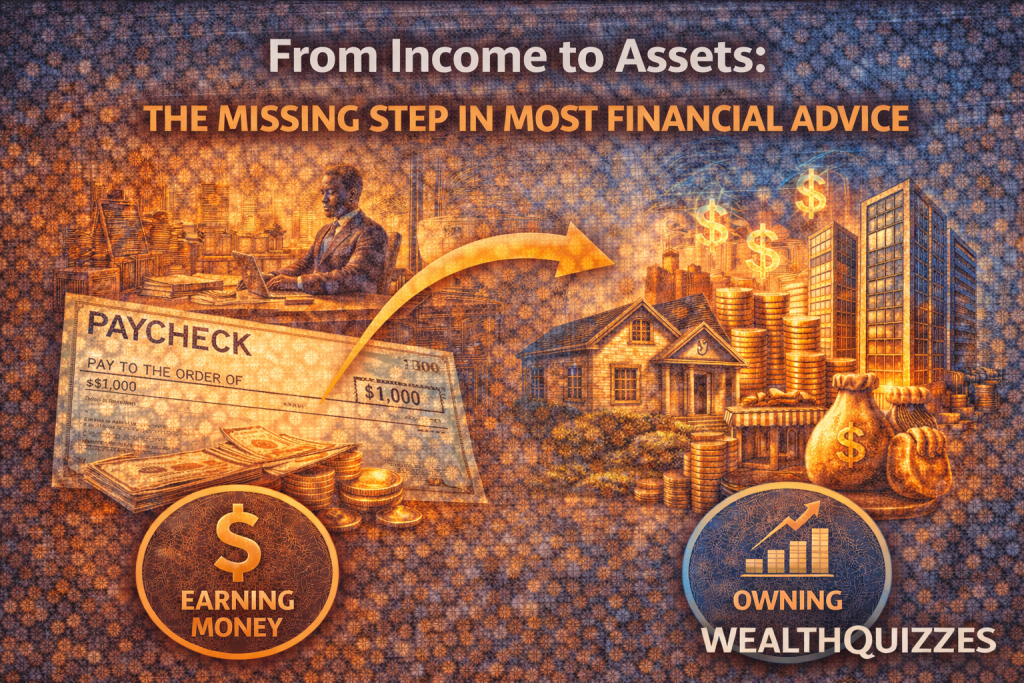
From Income to Assets: The Missing Step in Most Financial Advice
Introduction
For decades, mainstream financial advice has emphasized income growth as the primary pathway to financial security. “Get a good job,” “increase your salary,” and “earn more” are recurring mantras in personal finance discourse. While income is undeniably important, it is not sufficient. Across economies—both developed and developing—the decisive factor separating financial stability from long-term wealth is not how much people earn, but what they own.
This article argues that the critical missing step in most financial advice is the transition from income dependence to asset ownership. Drawing on established economic theory and empirical evidence, it shows why income alone is structurally limited, why assets compound wealth, and why ownership—not wages—is the foundation of durable financial independence.
1. Income: Necessary but Structurally Limited
Income, especially wage income, is constrained by three fundamental economic realities.
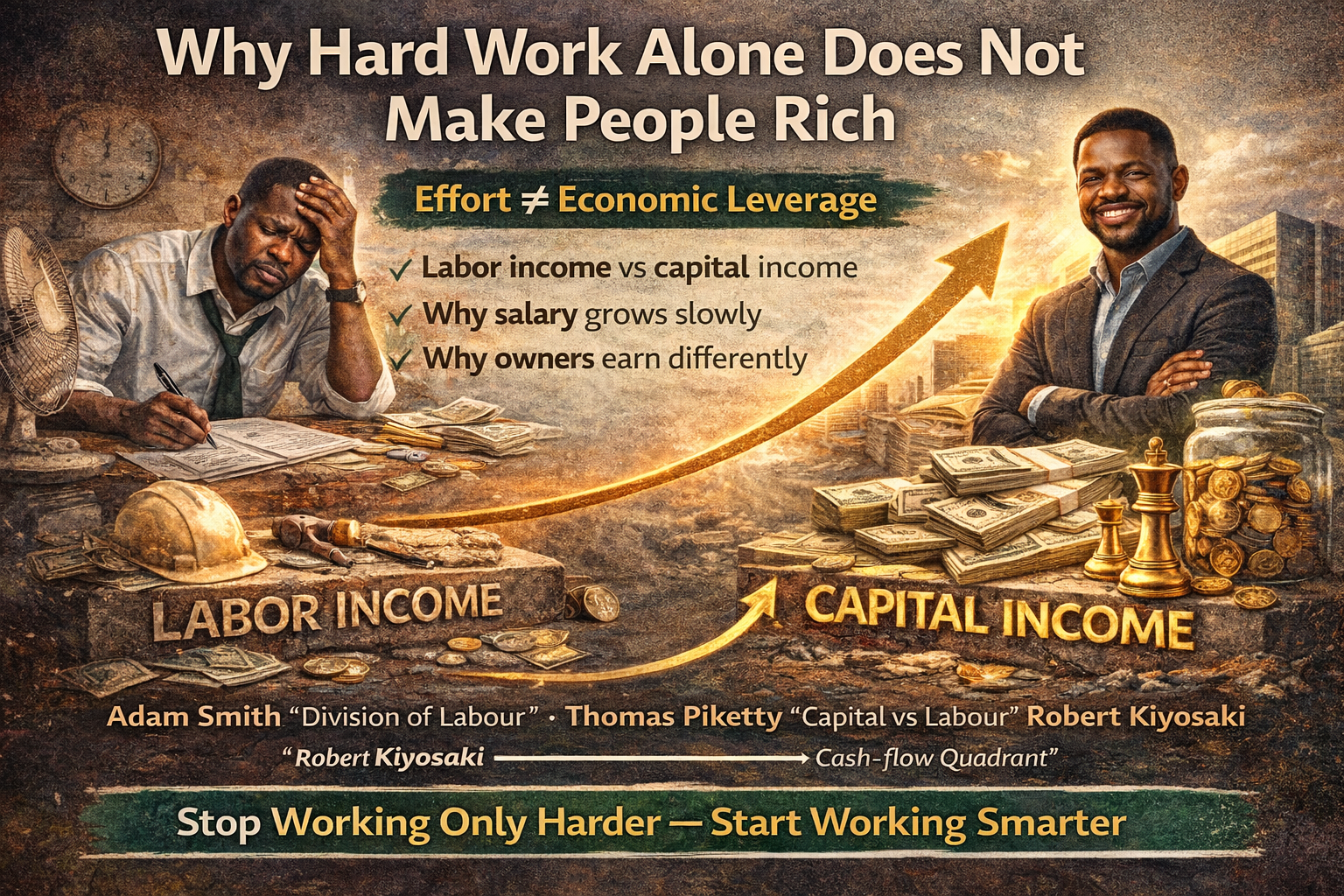
First, income is linear. Wages are paid in exchange for time and effort, and both are finite. As classical labor economics explains, earnings are bounded by productivity, hours worked, and market demand for skills (Alfred Marshall, Principles of Economics). Even highly paid professionals face ceilings imposed by age, health, and institutional pay structures.
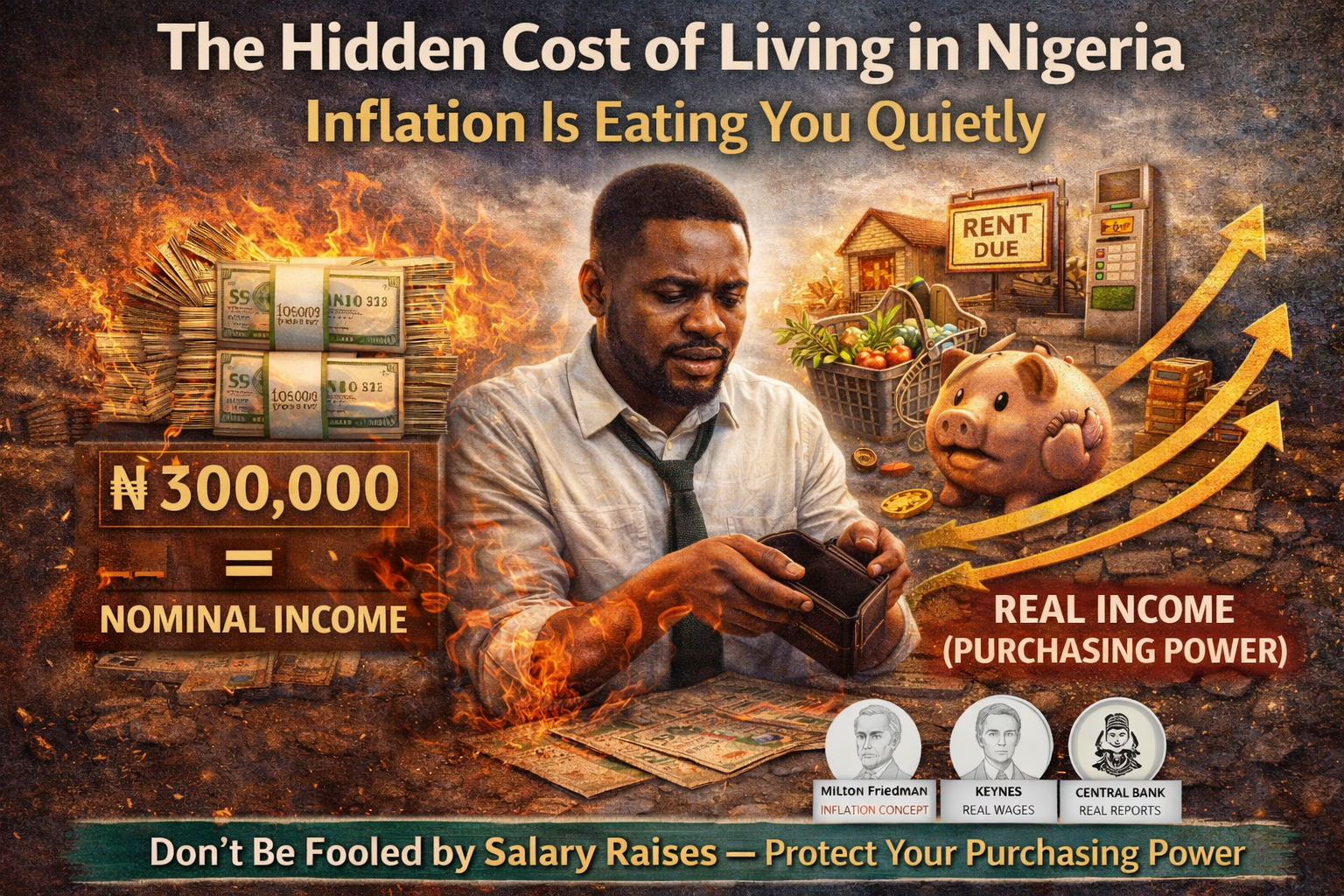
Second, income is vulnerable. John Maynard Keynes highlighted the inherent instability of labor income in market economies, where employment and wages fluctuate with business cycles (The General Theory of Employment, Interest and Money). Recessions, automation, illness, or policy changes can abruptly disrupt earnings.
Third, income is heavily taxed relative to capital. Thomas Piketty’s landmark work, Capital in the Twenty-First Century, demonstrates that labor income is generally taxed more aggressively than capital income in most jurisdictions, reducing its capacity to generate lasting wealth.
In short, income sustains consumption—but rarely builds enduring financial power on its own.
2. Assets: The Engine of Wealth Accumulation
Assets differ fundamentally from income. An asset is any resource that generates future economic benefits—cash flows, appreciation, or both—without continuous labor input.
Economists from Adam Smith onward recognized this distinction. In The Wealth of Nations, Smith emphasized that capital accumulation, not labor alone, drives long-term prosperity. Modern finance reinforces this insight.
Assets work through compounding, a concept Albert Einstein famously described as the “eighth wonder of the world” (a phrase frequently attributed to him, though apocryphal). When returns are reinvested, wealth grows exponentially over time. Wages do not compound; assets do.
Common income-producing assets include:
- Equity (shares in companies)
- Real estate
- Bonds and fixed-income instruments
- Businesses and intellectual property
As Warren Buffett has repeatedly stated, “If you don’t find a way to make money while you sleep, you will work until you die.” His own wealth was not built on salary, but on long-term ownership of productive enterprises.
3. The Income Trap in Personal Finance Advice
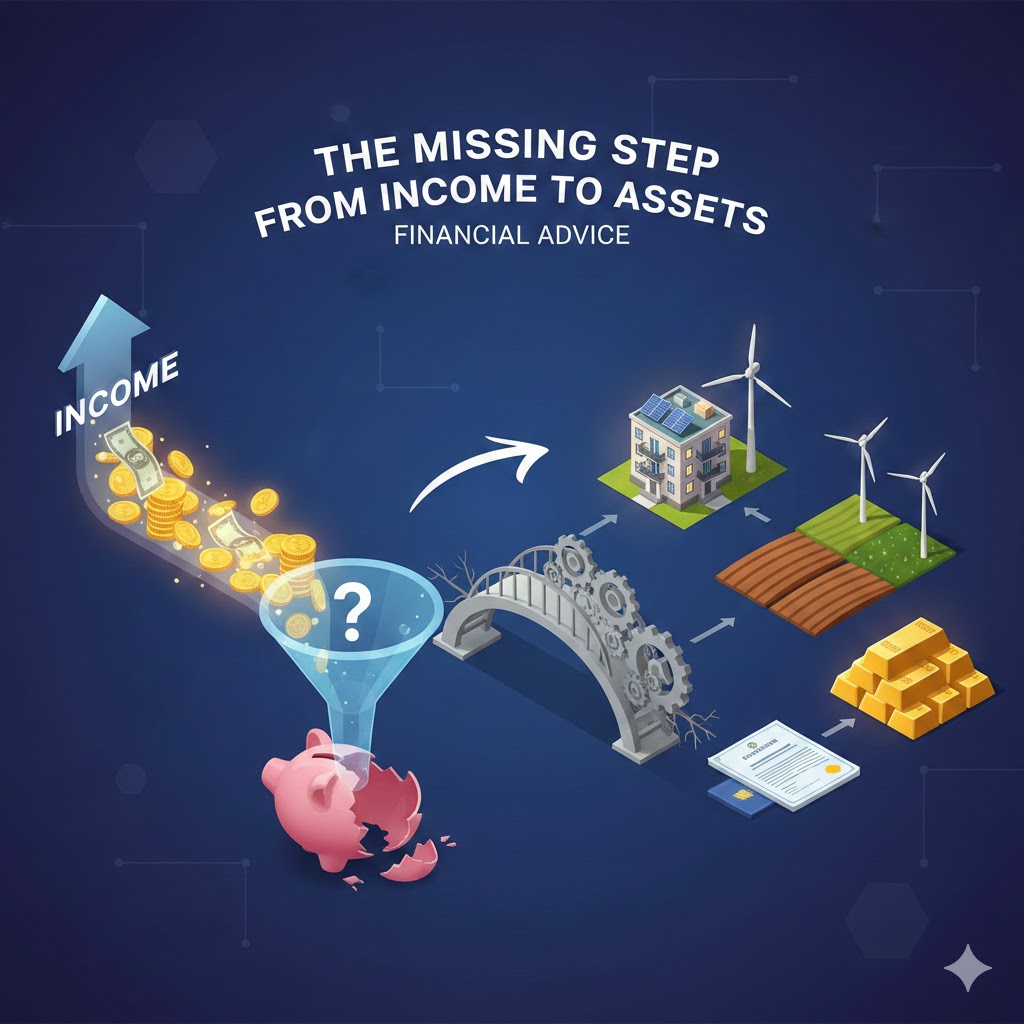
Much popular financial advice stops at budgeting, saving, and career optimization. While these are important, they often fail to answer a deeper question: What happens after income is earned?
Hyman Minsky’s financial instability hypothesis helps explain why many households remain perpetually income-dependent. Without asset buffers, individuals are forced into continuous labor simply to meet obligations. They become participants in the economy, but not owners of it.
This omission has real consequences:
- People save cash without converting it into productive capital.
- Retirement planning becomes dependent on pensions or government transfers rather than owned assets.
- Economic shocks disproportionately affect those without capital holdings.
Robert Shiller, Nobel laureate in economics, has emphasized that broad-based asset ownership is essential for financial resilience, not merely high employment (Finance and the Good Society).
4. From Earning to Owning: The Critical Transition
The transition from income to assets involves a deliberate shift in financial behavior and mindset.
- Income as a Tool, Not a Goal
Income should be viewed as raw material for asset acquisition, not as an end in itself. This reframing is central to modern wealth strategy. - Delayed Consumption
As Irving Fisher noted in his theory of intertemporal choice, individuals who defer consumption in favor of investment are able to transfer resources into the future more efficiently. - Risk Management, Not Risk Avoidance
Assets involve risk, but avoiding assets entirely is itself risky. Harry Markowitz’s Modern Portfolio Theory shows that diversified asset ownership can reduce risk while enhancing returns. - Ownership Over Lifestyle Inflation
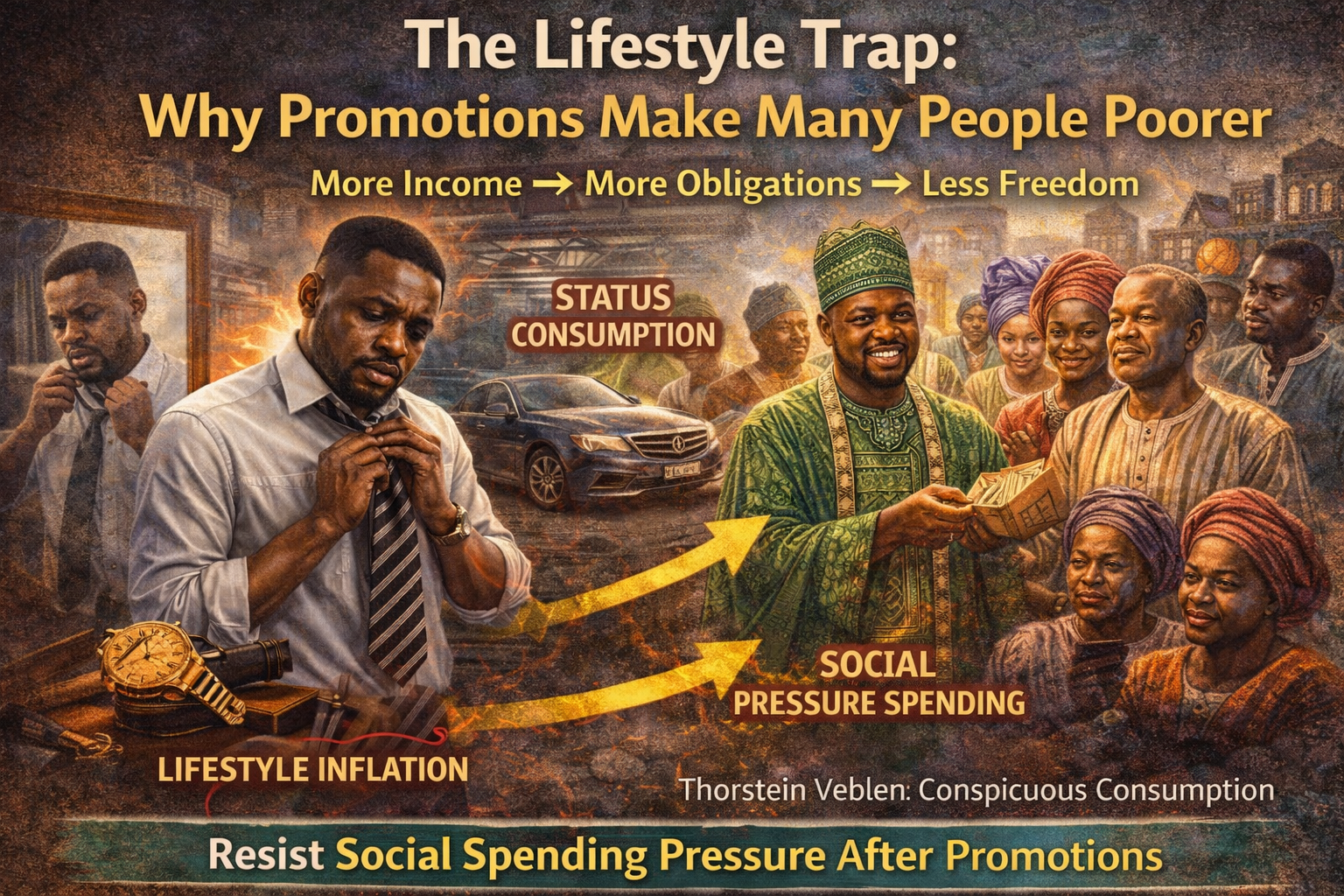
Empirical studies consistently show that rising incomes often lead to proportional increases in consumption rather than investment, a phenomenon known as lifestyle inflation. This undermines wealth formation.
5. Structural Inequality and the Asset Divide
The importance of assets extends beyond individual finance into macroeconomic inequality.
Piketty’s research demonstrates that societies where capital ownership is concentrated experience widening wealth gaps, even when employment levels are high. Those who rely solely on wages fall behind those who own appreciating and income-producing assets.
This explains why:
- Two individuals with similar incomes can have radically different net-worth over time.
- Employment growth does not automatically translate into wealth creation.
- Intergenerational wealth persists primarily through asset transfer, not salaries.
Thus, asset ownership is not merely a personal choice; it is a structural determinant of economic position.
6. Reframing Financial Advice for the Modern Economy
A more complete financial framework must integrate income and assets into a single progression:
- Earn income.
- Control expenses.
- Convert surplus income into productive assets.
- Reinvest returns.
- Gradually reduce dependence on labor income.
This approach aligns with both classical economic theory and modern financial practice. It reflects how wealth has historically been built—by individuals, institutions, and nations alike.
As economist Joseph Schumpeter observed, capitalism rewards those who control productive resources, not merely those who participate in production.
Conclusion
Income is essential, but it is not transformative. Assets are transformative, but they require income as a starting point. Most financial advice fails because it focuses on the first step while neglecting the second.
The true path to financial security lies in moving deliberately from earning money to owning income-producing assets. Until this transition becomes central to financial education and personal strategy, millions will continue to work hard, earn well—and remain financially fragile.
Wealth, in the final analysis, is not about how much you make. It is about what you own, what compounds, and what continues to work long after your labor stops.