
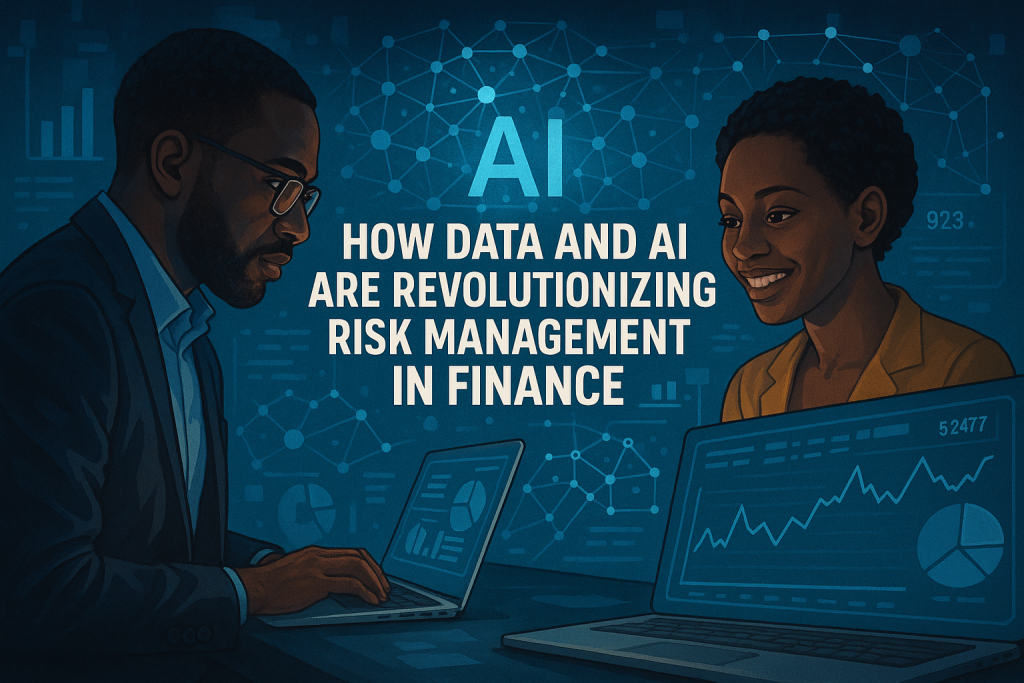
How Data and AI Are Revolutionizing Risk Management in Finance
By WealthQuizzes Editorial Team
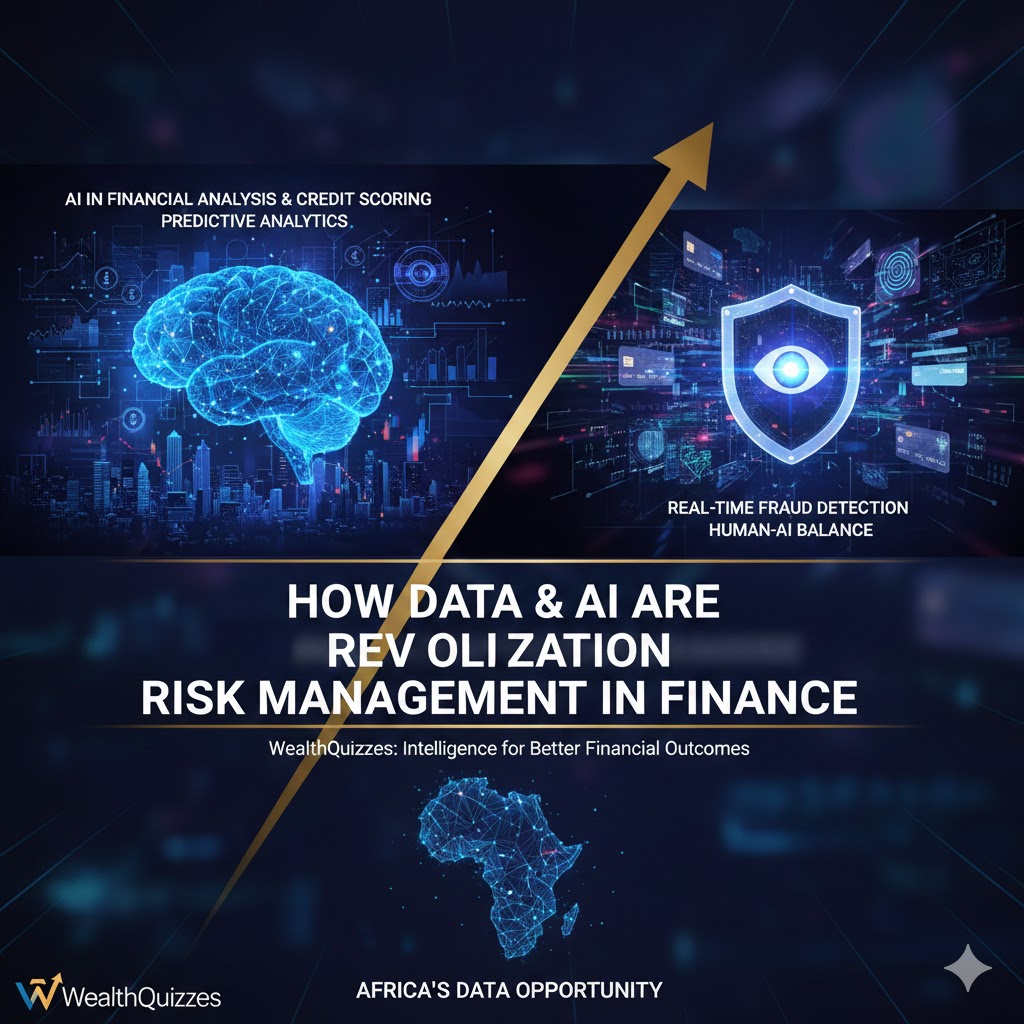
AI in Financial Analysis and Credit Scoring
For decades, finance has been driven by numbers — but today, it is powered by data. Artificial Intelligence (AI) is changing how those numbers are understood, interpreted, and used to make smarter financial decisions.
In traditional banking, creditworthiness was determined by limited historical data — salary slips, collateral, or a few months of transaction history. But in the digital economy, AI systems analyze thousands of data points to build a far more accurate picture of an individual or company’s risk profile.
These systems consider alternative data such as:
- Mobile money transaction patterns,
- Social media behavior,
- Utility payments, and
- E-commerce spending trends.
By using machine learning algorithms, financial institutions can identify patterns that humans might miss — distinguishing between borrowers who appear similar on paper but behave differently in reality.
In short, AI transforms credit scoring from a rigid checklist into a dynamic, data-driven prediction model. For millions of Africans excluded from the formal credit system, this innovation is unlocking access to loans and capital — often for the first time.
Predictive Analytics and Consumer Behavior
Data is the new currency of finance, and predictive analytics is how it is spent.
Through advanced analytics, banks and fintech companies can now forecast customer needs, anticipate defaults, and personalize financial products in real time.
For example:
- An AI system can detect when a customer’s spending pattern suggests financial strain — prompting the bank to offer early repayment support or credit restructuring.
- Insurers can predict which clients are most likely to file claims and adjust their pricing models accordingly.
- Investment managers use data trends to forecast market behavior, identify opportunities, and mitigate volatility.
The result is a smarter, more proactive financial system, where institutions anticipate risk instead of reacting to it.
In essence, predictive analytics helps finance move from “what happened” to “what will happen next — and how to prepare for it.”
Real-Time Fraud Detection Systems
One of the most immediate benefits of AI in finance is fraud prevention.
Traditional fraud detection relied on rule-based systems — flagging transactions only after they violated preset thresholds. That approach worked, but it was slow and reactive.
Today, AI-powered fraud detection systems use real-time pattern recognition and behavioral analytics to identify suspicious activity the moment it occurs.
For example:
- If an account suddenly initiates transactions outside its usual location or time zone, AI can block or verify it instantly.
- Machine learning models continuously adapt to new fraud techniques, making them harder to outsmart.
Banks like GTBank, Access Bank, and global players such as JP Morgan and Revolut now rely heavily on AI-driven monitoring systems to secure millions of daily transactions.
In Africa’s growing fintech ecosystem — where mobile payments and digital wallets dominate — this technology is not optional; it’s essential. AI ensures that convenience does not come at the cost of security.
The Human–AI Balance in Decision-Making
As algorithms grow smarter, the question arises: Can machines replace human judgment in finance?
The answer is — not entirely.
AI excels at analyzing data, identifying patterns, and flagging anomalies. But human judgment remains critical in interpreting context, ethics, and emotion — factors that data alone cannot quantify.
A balanced approach combines AI’s computational intelligence with human strategic insight:
- AI identifies potential credit risks; humans decide how to manage relationships with clients.
- AI spots suspicious patterns; compliance officers investigate and act.
- AI forecasts investment trends; portfolio managers align them with long-term strategy.
This collaboration between man and machine produces the best outcomes — decisions that are both intelligent and informed, logical and ethical.
In the future, successful financial professionals will not compete with AI; they will work alongside it, using technology as an ally in managing risk and creating value.
Africa’s Data Opportunity — and the Need for Protection
Africa sits at a crossroads of tremendous opportunity and significant risk.
With the fastest-growing fintech sector in the world, the continent is generating enormous volumes of digital financial data — from mobile payments to e-commerce and digital lending. This data is a goldmine for innovation but also a target for exploitation.
The opportunity:
- AI-driven credit inclusion can extend financing to millions of unbanked citizens.
- Governments can use predictive analytics for better fiscal planning and social welfare targeting.
- Investors can access more accurate market intelligence for smarter decision-making.
The challenge:
- Weak data protection laws and cybersecurity frameworks leave users vulnerable.
- Misuse of personal data by unregulated platforms can erode public trust.
- Poor data literacy means many consumers don’t understand how their information is used.
To harness AI responsibly, Africa must invest in data governance, ethical standards, and privacy protection. The Nigeria Data Protection Act (2023) and similar frameworks across Kenya, Ghana, and South Africa are vital steps in the right direction.
If managed wisely, data can become Africa’s next great natural resource — not extracted, but leveraged for inclusive growth.
WealthQuizzes Perspective: Data Literacy Meets Financial Intelligence
At WealthQuizzes, we believe that financial success in the digital era requires data intelligence as much as financial intelligence.
By helping Africans understand how data, algorithms, and AI shape financial systems, we equip them to:
- Make smarter decisions about credit, savings, and investments,
- Recognize both the power and the limits of AI in finance, and
- Participate confidently in the emerging data-driven economy.
Financial literacy is no longer just about knowing how money works — it’s about understanding how information drives money.
In the age of Artificial Intelligence, those who master both will lead Africa’s financial future — with intelligence that’s not only artificial but profoundly human.