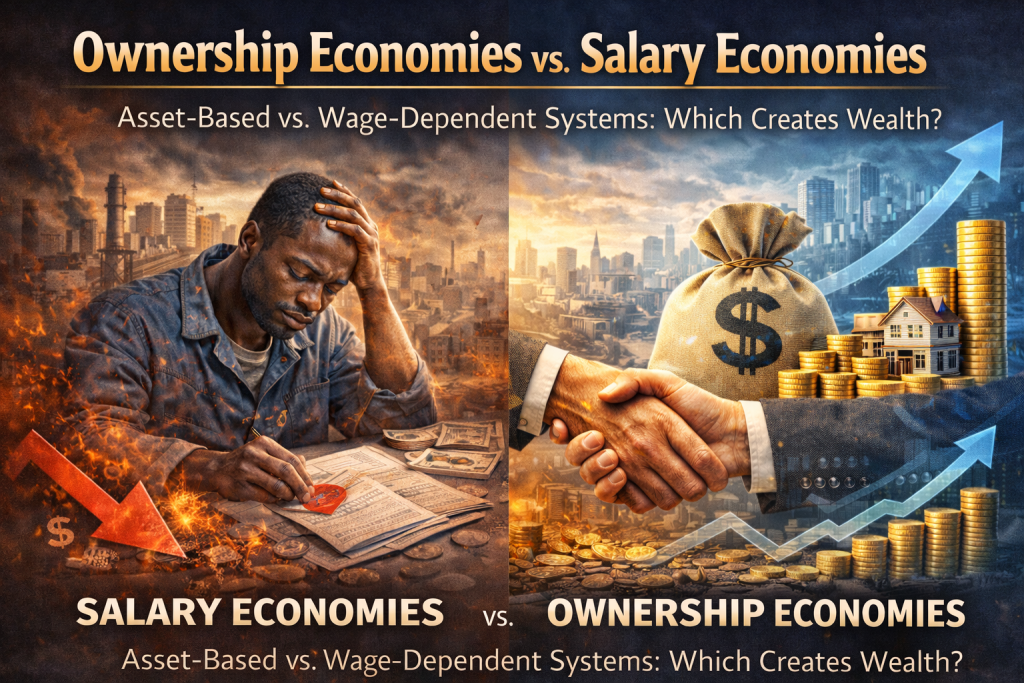
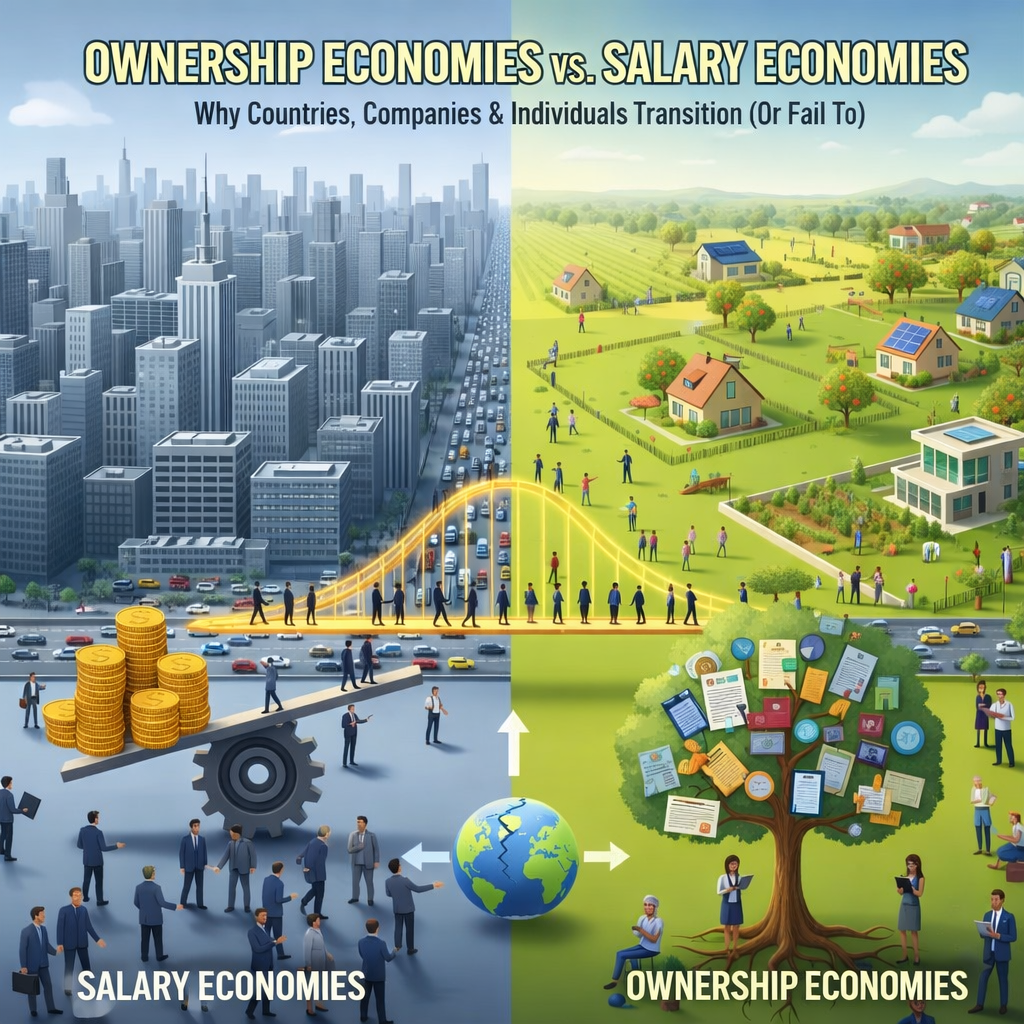
Ownership Economies vs. Salary Economies
Why Asset-Based Systems Create Wealth—and Wage-Dependent Systems Struggle to Sustain It
Economic systems are often discussed in terms of growth rates, employment figures, and income levels. Yet beneath these surface indicators lies a more decisive structural divide: whether an economy is built on ownership or on wages.
This distinction—between ownership economies and salary economies—explains why some countries, companies, and individuals compound wealth over time, while others remain trapped in cycles of dependency, stagnation, and vulnerability.
As economist Adam Smith observed, prosperity is not merely about production, but about who owns the means of production. That insight remains as relevant today as it was in the 18th century.
1. Defining the Two Systems
Salary Economies: Income Without Endurance
A salary economy is one in which the majority of economic participants depend primarily on wages for survival and advancement.
Key characteristics include:
- Income tied to labor and time
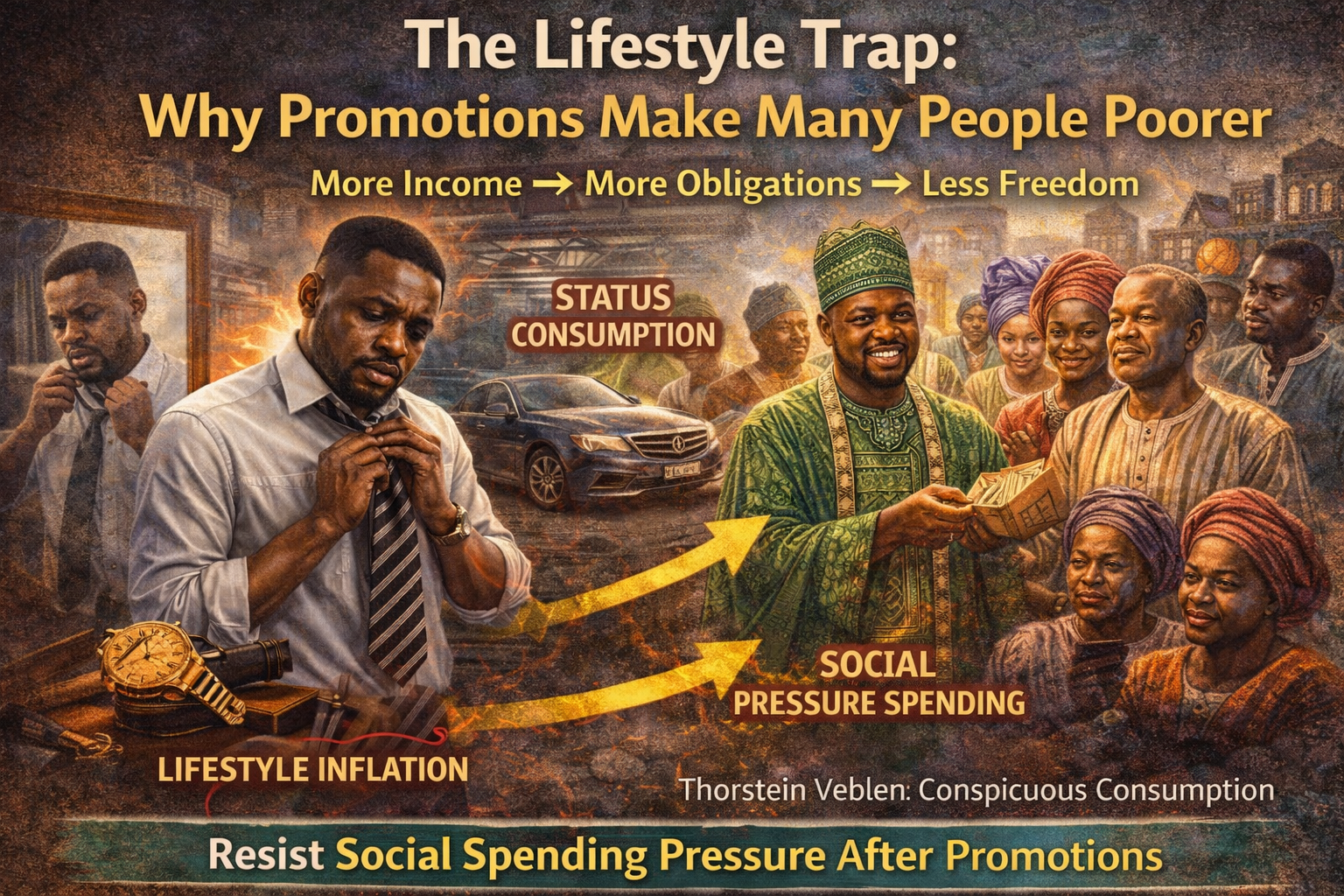
- Limited asset ownership
- Weak compounding mechanisms
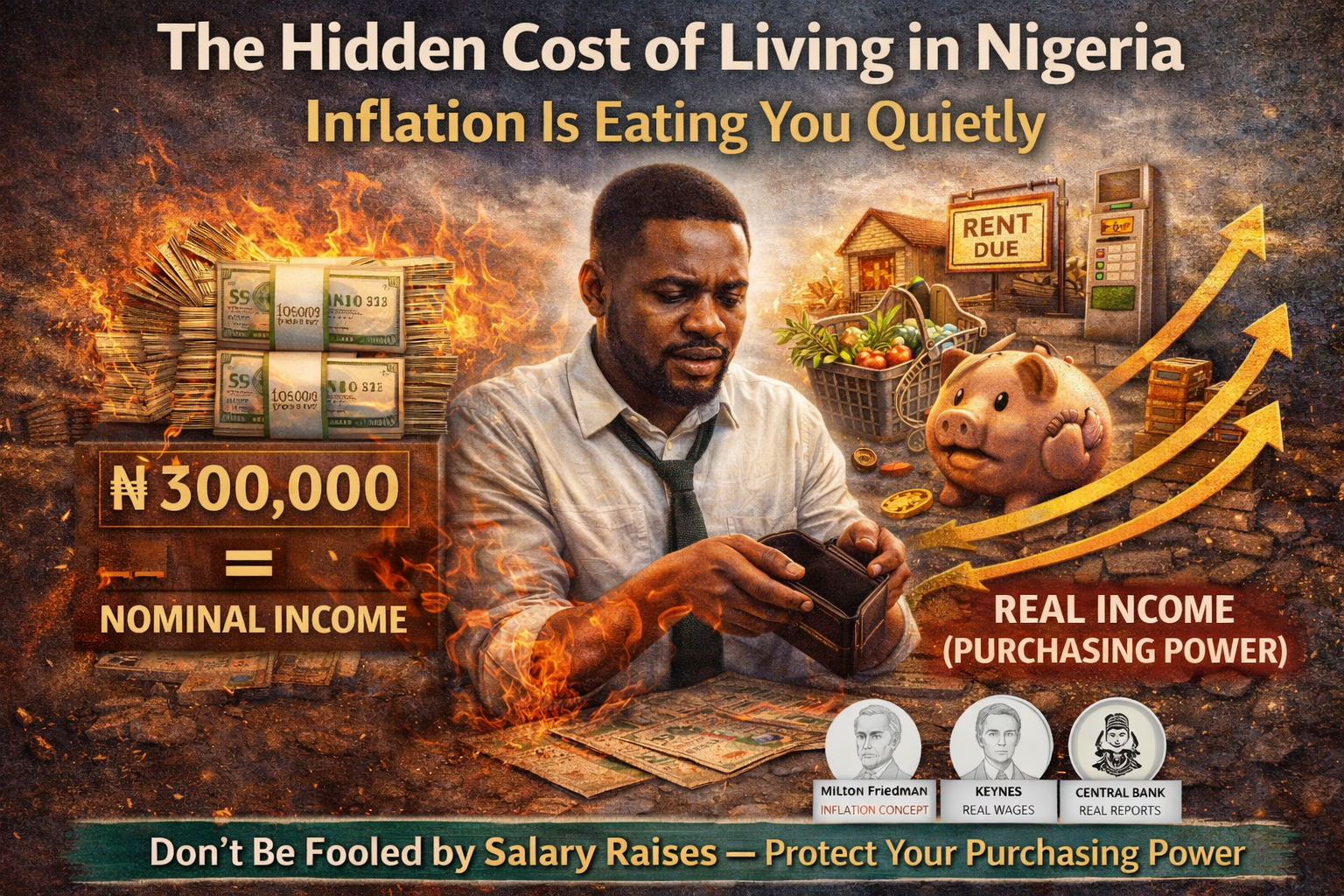
- High vulnerability to inflation and unemployment
John Maynard Keynes described wages as a flow that sustains consumption, not accumulation. When wages stop, economic security collapses unless assets exist in the background.
Salary economies prioritize employment creation, but often neglect ownership distribution.
Ownership Economies: Assets as the Core Engine
An ownership economy is structured around the widespread holding of productive assets—by individuals, firms, and institutions.
These assets include:
- Businesses and equity
- Land and real estate
- Intellectual property
- Financial instruments
- Infrastructure and capital goods
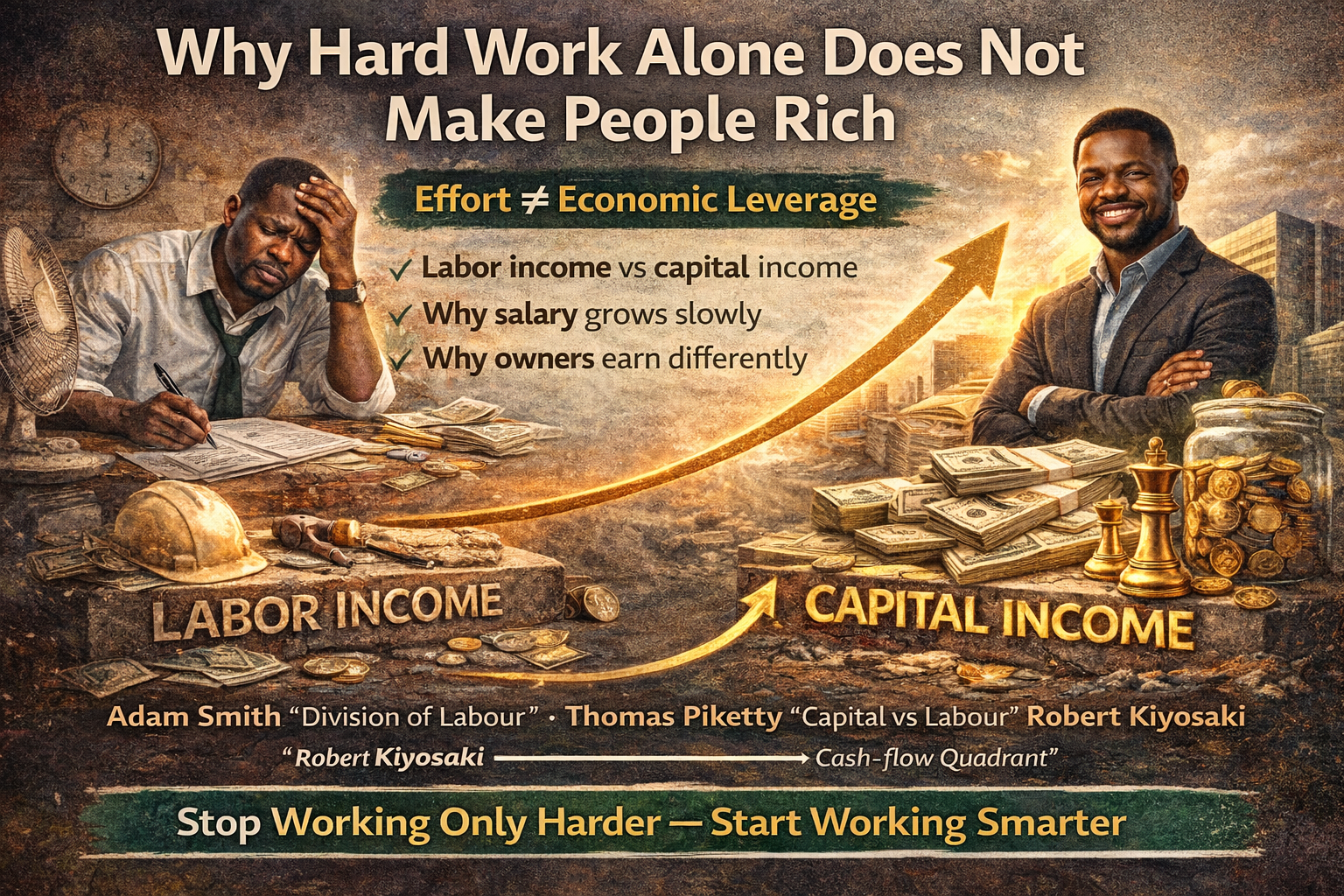
In ownership economies, income increasingly flows from capital returns rather than labor alone. As Thomas Piketty demonstrates empirically, long-term wealth growth is driven primarily by returns on capital, not wages.
2. How Income and Wealth Behave Differently in Each System
Salary Economies: Linear Growth, Fragile Stability
Wage income behaves linearly:
- Earn → spend → repeat
- Limited scalability
- Minimal compounding
- Often eroded by inflation
As Milton Friedman noted, labor income is constrained by human capacity—there are only so many hours a person can sell. This makes salary-based advancement inherently capped.
Ownership Economies: Compounding and Durability
Asset ownership introduces non-linear growth:
- Returns reinvest
- Scale increases efficiency
- Time becomes an ally
- Inflation often raises nominal asset values
Albert Einstein’s famous (though disputed) remark on compound interest captures the principle accurately: capital compounds, labor does not.
3. Countries: Why Some Nations Build Ownership and Others Don’t
Ownership-Heavy Nations
Advanced economies typically emphasize:
- Strong property rights
- Deep capital markets
- Widespread equity ownership (pensions, funds, shares)
- Business scalability
- Long-term financing
The United States, for example, channels household savings into equities through pension funds, retirement accounts, and capital markets—making millions indirect owners of productive assets.
As Douglass North emphasized, institutions that protect ownership rights are foundational to economic development.
Salary-Dependent Nations
Many developing economies rely heavily on:
- Public and private sector employment
- Commodity exports without domestic ownership
- Informal labor markets
- Weak capital access
Even when GDP grows, wealth concentration remains narrow because ownership does not diffuse. Growth benefits balance sheets abroad while local populations earn wages at home.
This explains the paradox of growth without prosperity.
4. Companies: Builders vs. Employers
Companies That Build Owners
Firms in ownership systems:
- Offer equity participation
- Reinvest profits
- Focus on long-term value
- Scale through capital, not just labor
As Joseph Schumpeter argued, innovation-driven firms create wealth by transforming capital into new productive structures.
Companies That Only Pay Salaries
In contrast, salary-focused firms:
- Treat labor as a cost center
- Minimize ownership sharing
- Optimize short-term cash flow
- Replace workers easily
Such firms may employ many people but create few owners. When downturns come, wages disappear; ownership remains elsewhere.
5. Individuals: Workers vs. Owners
The Salary Trap
For individuals, exclusive reliance on wages creates:
- Exposure to job loss
- Limited inflation protection
- No intergenerational transfer
- Constant restart after shocks
As Robert Kiyosaki popularized (in simplified terms), employees work for money, while assets work for owners. Though his framing lacks academic rigor, the structural insight is valid.
The Ownership Transition
Individuals who shift toward ownership:
- Convert income into assets
- Use time as leverage
- Gain pricing power
- Reduce dependence on labor
This transition—not income growth alone—is what differentiates financial stability from perpetual vulnerability.
6. Why Transitions Fail
Despite knowing the benefits of ownership, many systems fail to transition. Common barriers include:
a. Policy and Regulation
Weak property rights, unstable currencies, and hostile business environments discourage asset accumulation.
b. Credit Access
As discussed by Hyman Minsky, financial systems favor existing asset holders. Without credit, ownership remains inaccessible.
c. Financial Illiteracy
Where financial education focuses on budgeting rather than ownership, populations remain trapped in wage thinking.
d. Cultural Framing
Societies that celebrate employment over enterprise unconsciously reinforce salary dependence.
7. Ownership, Power, and Stability
Ownership is not just financial—it is political and social.
Those who own assets:
- Influence policy
- Shape markets
- Absorb shocks
- Plan long-term
Those who rely solely on wages:
- React rather than shape
- Suffer disproportionately during crises
- Remain structurally replaceable
As Karl Marx—despite ideological differences with liberal economists—correctly observed, ownership determines power relations within any economic system.
Conclusion: Wages Sustain Life; Ownership Sustains Wealth
Salary economies can reduce poverty, but they rarely create widespread wealth. Ownership economies, by contrast, enable compounding, resilience, and intergenerational stability.
The critical question for countries, companies, and individuals is not:
“How many jobs are being created?”
But rather:
“Who owns what is being created?”
Until economic systems prioritize ownership alongside employment, growth will continue to coexist with inequality—and effort will continue to outpace reward.
WealthQuizzes Insight
Employment feeds you.
Ownership frees you.
Systems decide which one you’re allowed to pursue.