Risk and Return: The Unwritten Rule of Smart Investing
Every successful investor — from Wall Street veterans to Africa’s emerging entrepreneurs — lives by one universal principle:
No reward comes without risk.
This is the golden law of investing, the foundation of every financial decision worth making.
Whether you’re buying shares, starting a business, or saving for the future, understanding the relationship between risk and return separates the wise investor from the reckless gambler.
In this article, we’ll break down what risk and return mean in simple, everyday terms and show how WealthQuizzes helps users learn, test, and master this concept before taking real-world financial action.
💡 What Exactly Is “Risk and Return”?
At its core, the concept is simple:
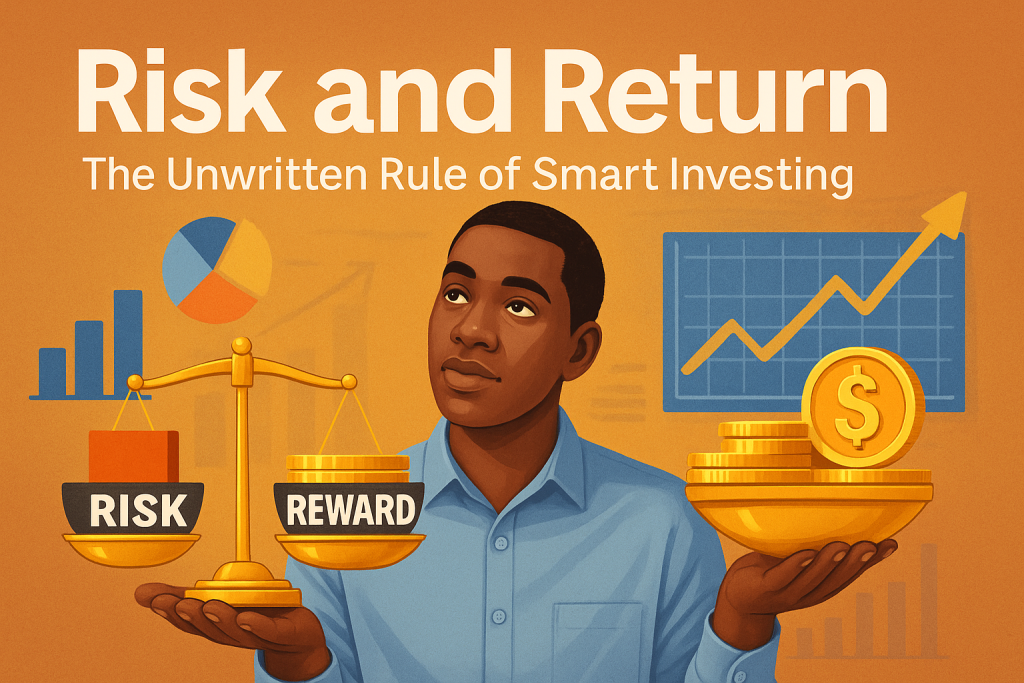
- Risk is the chance that you could lose some or all of your money.
- Return is the profit or benefit you expect to gain from an investment.
The two are inseparable — like two sides of a coin.
The higher the potential return, the higher the risk you’re taking.
The lower the risk, the smaller the potential return.
Example 1:
Leaving your money in a savings account?
👉 Very low risk.
👉 But your return (interest) is tiny — maybe 2–5% per year.
Example 2:
Buying stocks in a new Nigerian tech startup?
👉 High potential return if the company grows fast.
👉 But also high risk — you could lose your money if the company fails.
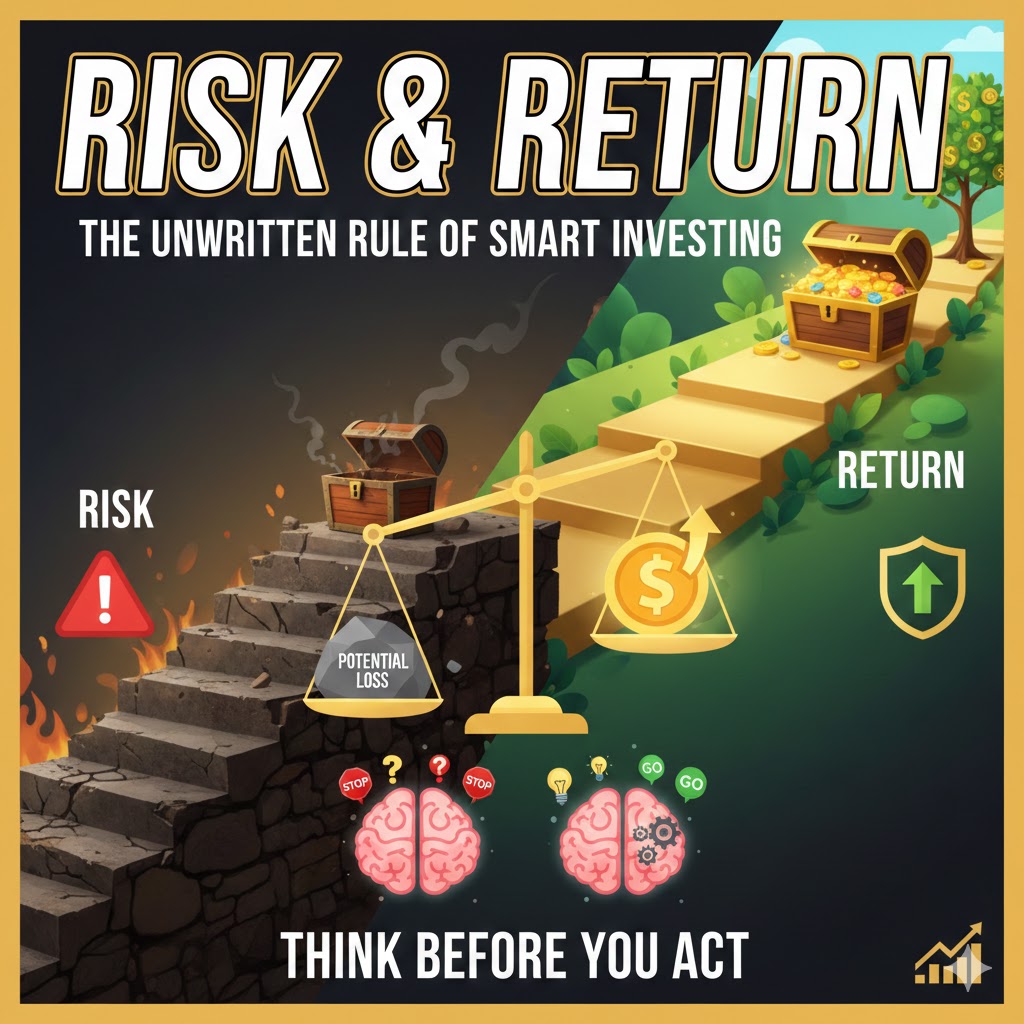
That’s the risk-return tradeoff — the balance every investor must understand before acting.
⚖️ The Risk-Return Relationship Explained Simply
Imagine you’re climbing a mountain.
The higher you go, the more rewarding the view — but also the more dangerous the climb.
Similarly, in investing:
- Safe investments = low returns, low stress.
- Aggressive investments = high returns, high uncertainty.
The Key Is Balance.
Smart investors don’t run from risk — they manage it.
They diversify their portfolios, set goals, and make informed choices rather than emotional ones.
📈 Types of Investment Risk (and How to Manage Them)
Every investment carries risk, but not all risks are the same.
Here are the most common ones you’ll face as an investor — and how to think about them intelligently.
1️⃣ Market Risk
This is the risk that your investment’s value will fluctuate because of market conditions — like inflation, oil prices, or economic downturns.
Example:
When stock markets fall, even good companies lose value temporarily.
Solution: Stay calm, diversify, and invest long-term instead of reacting emotionally.
2️⃣ Credit Risk
The risk that a borrower (like a bond issuer or company) won’t repay you.
Example:
If you buy corporate bonds and the company defaults, you lose your principal.
Solution: Research the company’s credit rating and stability before investing.
3️⃣ Liquidity Risk
This happens when you can’t sell your investment quickly without taking a loss.
Example:
Real estate is valuable but hard to sell fast.
Solution: Mix your assets — some liquid (cash, stocks) and some illiquid (property, business).
4️⃣ Inflation Risk
Over time, rising prices can reduce the value of your money.
Example:
₦100,000 today might buy less next year.
Solution: Invest in assets that grow faster than inflation — like stocks or mutual funds.
5️⃣ Emotional Risk
Perhaps the most dangerous of all — when fear or greed drives your decisions instead of logic.
Example:
Buying crypto during a hype wave or selling your shares after a one-day loss.
Solution: Build financial discipline and intelligence — something WealthQuizzes helps you master.
💰 Understanding Returns: It’s Not Just About Profit
When most people think of “returns,” they think of how much money they’ll make.
But smart investors also ask:
“How much risk am I taking for this return?”
Returns come in different forms:
- Interest: From savings or bonds.
- Dividends: From company profits shared with shareholders.
- Capital Gains: From selling an investment for more than you paid.
However, real returns are calculated after adjusting for inflation and risk.
So if inflation rises faster than your earnings, your “profit” may actually be a loss in disguise.
🧠 The Investor’s Formula: Risk + Knowledge = Smart Returns
Many people think investing is only about money — but it’s really about judgment.
You can’t control the market.
You can’t predict the future.
But you can control how much you know before you invest.
That’s what separates an intelligent investor from a lucky one.
Financial intelligence reduces financial risk.
Platforms like WealthQuizzes are designed to give you that knowledge — in an engaging, rewarding way.
🎯 How WealthQuizzes Makes Risk and Return Easy to Understand
WealthQuizzes simplifies the complex world of investing by turning it into practical learning stages that combine education and earning.
Here’s how it helps:
✔ Learn by Experience
Through quizzes on topics like investment types, portfolio management, and risk analysis, users gain real financial insight — not just theory.
✔ Build Confidence Before Investing
You get to “test your thinking” before risking your money in real life.
✔ Earn Rewards While Learning
Each correct answer earns cash rewards, proving that financial knowledge itself is valuable.
✔ Develop the Investor Mindset
By progressing through quiz stages, users adopt the analytical habits of seasoned investors — learning how to balance risk, reward, and discipline.
🌍 Real-World Example: The Nigerian Investor Mindset Shift
In Nigeria and across Africa, the conversation is changing.
People are beginning to see that true wealth doesn’t come from gambling or quick wins — it comes from strategy, patience, and informed decisions.
Smart investors today are:
- Saving in stable platforms.
- Diversifying into mutual funds and treasury bills.
- Learning how to evaluate business opportunities before committing money.
This shift is powered by financial literacy, and WealthQuizzes is at the forefront of making it accessible, engaging, and profitable for all.
🧩 Final Thought: Knowledge Is the Safest Investment
In a world full of financial hype and get-rich-quick promises, one rule stands firm:
Don’t invest in what you don’t understand.
Risk is inevitable — but ignorance is optional.
With knowledge, risk becomes manageable.
With discipline, returns become predictable.
And with platforms like WealthQuizzes, learning to make smarter financial decisions can be as rewarding as the investments themselves.