Risk Is Not the Enemy: Misunderstanding Risk, Volatility, and Time
Why Avoiding Risk Often Guarantees Long-Term Financial Loss
Introduction
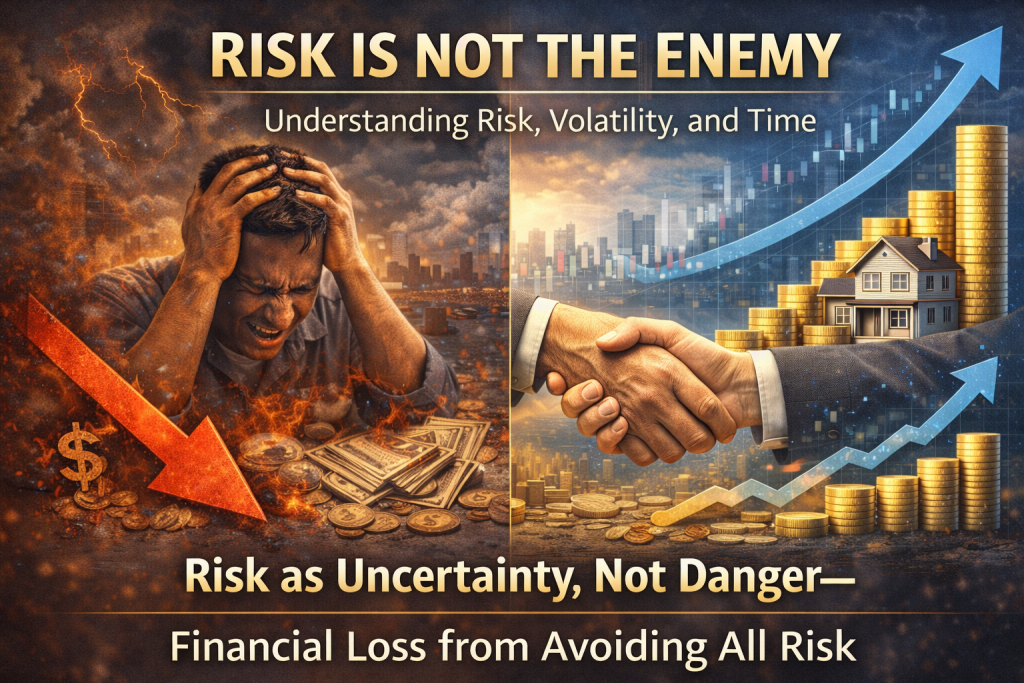
For most people, risk is treated as a synonym for danger—something to be avoided, minimized, or eliminated entirely. This mindset shapes how individuals save, invest, choose careers, and even structure national economic policies. Yet paradoxically, the persistent avoidance of risk is one of the most reliable paths to long-term financial erosion.
Modern financial theory, economic history, and empirical data all point to a counterintuitive truth: risk is not the enemy—misunderstanding risk is. When risk is properly understood as uncertainty, rather than imminent loss, it becomes clear that avoiding all risk does not create safety. Instead, it quietly guarantees stagnation and, in inflationary systems, decline.
This article reframes risk, distinguishes it from volatility, and explains why time—not fear—is the decisive variable in wealth creation.
1. The Fundamental Misunderstanding of Risk
In everyday language, risk is perceived emotionally. It is associated with loss, fear, and instability. In economics and finance, however, risk has a precise meaning: the variability of outcomes around an expectation.
Frank Knight, one of the most influential economists of the 20th century, made a crucial distinction in Risk, Uncertainty, and Profit (1921):
- Risk refers to measurable uncertainty
- Uncertainty refers to outcomes that cannot be probabilistically predicted
Profit, Knight argued, exists because uncertainty exists. Without it, all returns would converge to zero.
In other words, risk is the source of reward, not a deviation from it.
2. Volatility Is Not Risk—But It Is Often Mistaken for It
One of the most damaging errors in personal finance is equating volatility with risk.
- Volatility describes short-term price movement.
- Risk describes the probability of permanent capital loss.
This distinction is foundational in modern portfolio theory. Harry Markowitz, Nobel Laureate and architect of diversification theory, emphasized that volatility becomes less dangerous as time horizons expand.
A volatile asset held for one year may be risky. The same asset held for twenty years may be statistically safer than cash once inflation is accounted for.
Yet many individuals react to volatility emotionally:
- Market drops are interpreted as danger
- Stability is mistaken for safety
- Short-term noise overrides long-term outcomes
As Daniel Kahneman and Amos Tversky demonstrated in Prospect Theory, humans are loss-averse, not rational. The pain of short-term losses outweighs the rational understanding of long-term gains.
3. The Illusion of Safety: Why Low-Risk Choices Can Be High-Risk
Holding cash or relying solely on fixed income instruments feels safe because:
- Nominal values do not fluctuate visibly
- Losses occur quietly through inflation
- There is no emotional discomfort
But as economist John Maynard Keynes observed, “The avoidance of risk is itself a risk.”
Inflation as Hidden Risk
Inflation transforms conservative financial behavior into a long-term liability. When returns fall below inflation:
- Purchasing power declines
- Opportunity cost compounds
- Time works against the saver
From a real (inflation-adjusted) perspective, cash is one of the riskiest long-term assets. This is why Warren Buffett has repeatedly warned that cash guarantees loss over extended periods.
4. Time: The Most Ignored Variable in Risk Assessment
Risk cannot be assessed without time.
Peter Bernstein, in Against the Gods: The Remarkable Story of Risk, explained that the modern understanding of risk only became meaningful when humans learned to think probabilistically over time.
Short-term thinking magnifies risk.
Long-term thinking neutralizes it.
This is why:
- Equity markets look dangerous daily
- They look resilient over decades
- They outperform “safe” assets across generations
The true danger is not volatility—it is short time horizons combined with emotional decision-making.
5. Why Avoiding Risk Guarantees Financial Loss
Avoiding all risk leads to predictable outcomes:
- No exposure to growth
- No participation in compounding
- No hedge against inflation
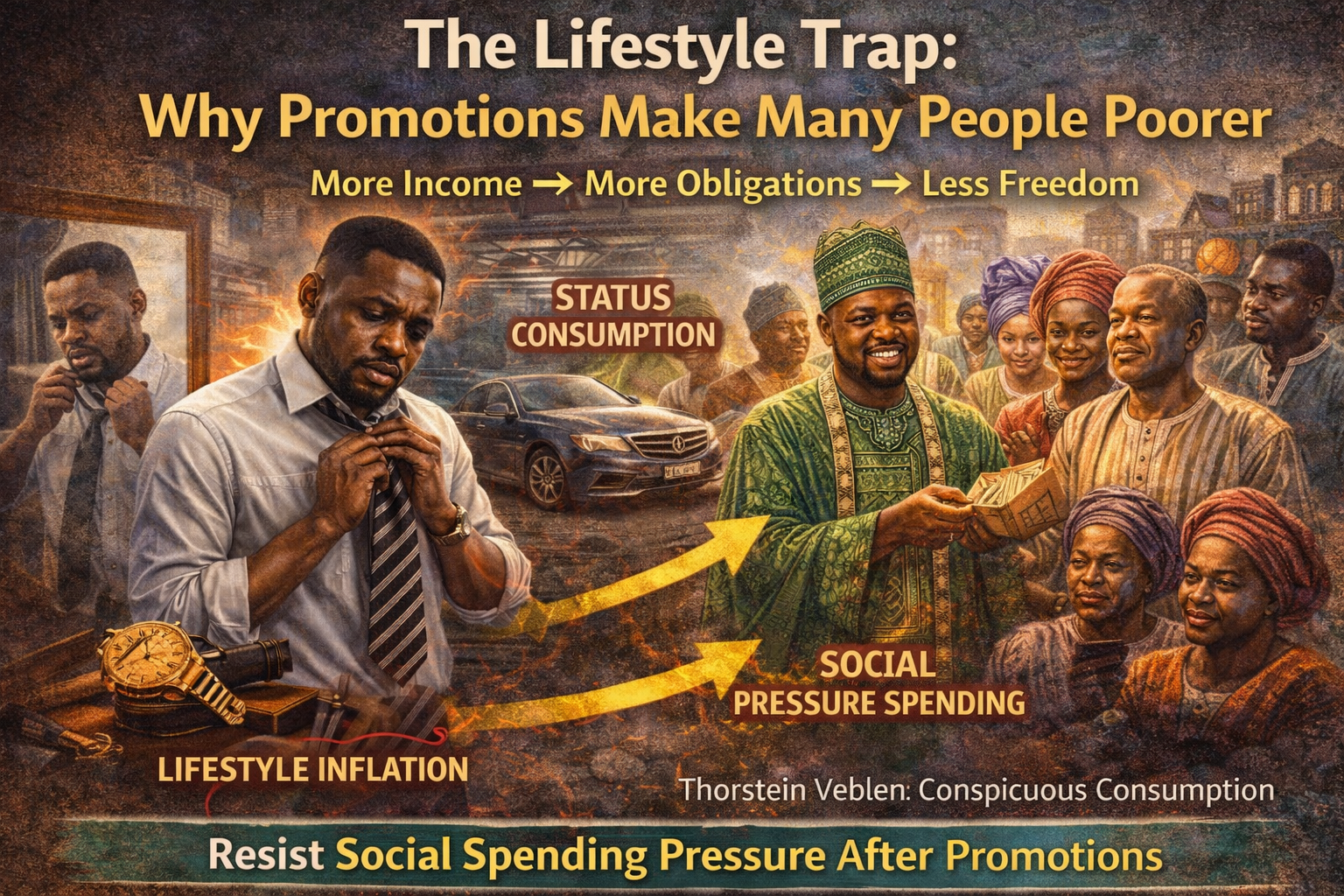
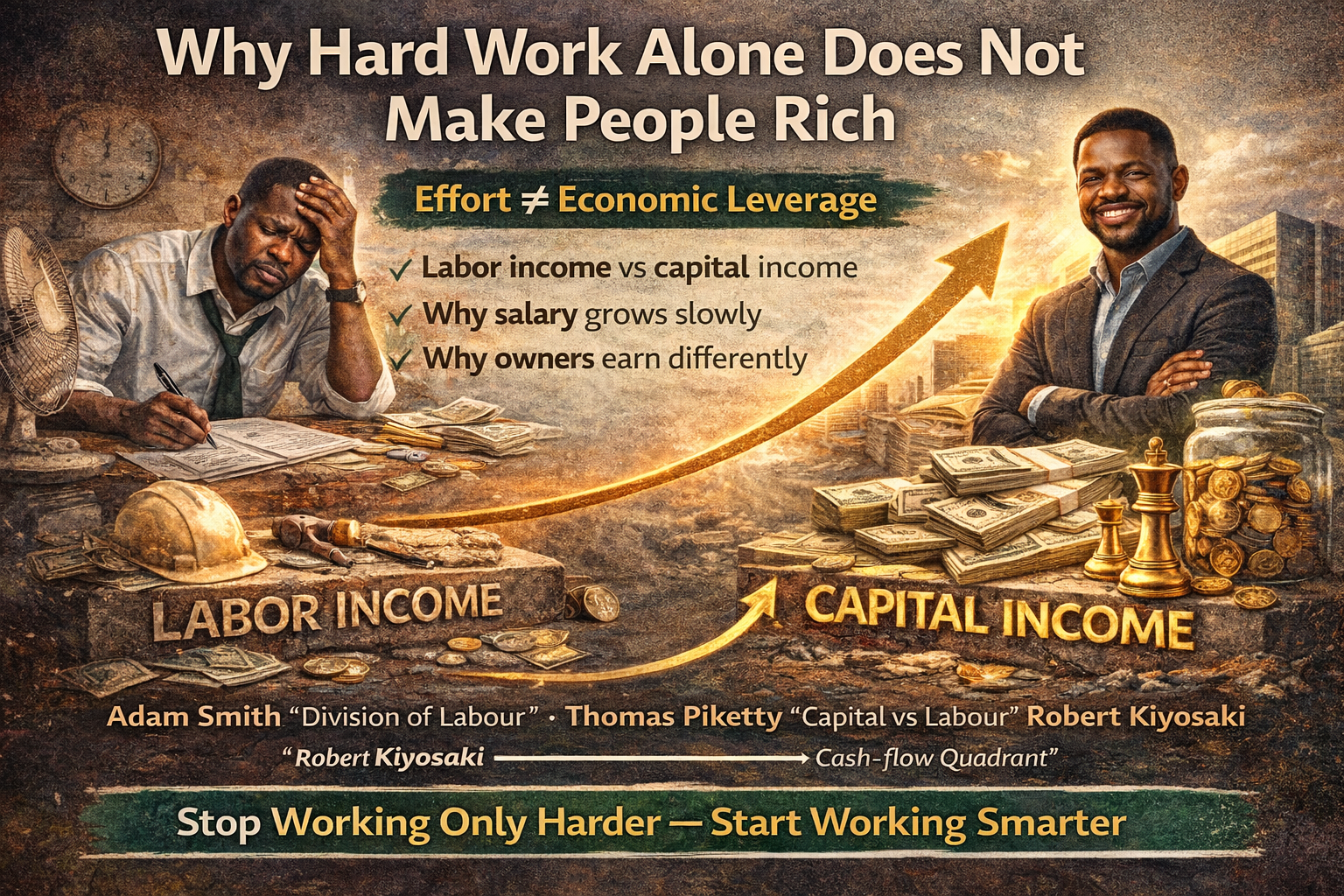
Thomas Piketty’s research shows that returns on capital exceed returns on labor over long periods. Those who avoid ownership due to perceived risk inevitably fall behind those who accept managed uncertainty.
This explains why:
- Savers struggle to build wealth
- Asset owners absorb volatility but gain long-term advantage
- Wealth concentrates among those who tolerate uncertainty
Avoiding risk does not preserve wealth. It transfers wealth—away from the risk-averse and toward the risk-tolerant.
6. Risk, Leverage, and Asymmetry
Not all risks are equal.
The wealthy and sophisticated do not take blind risks; they seek asymmetric risk:
- Limited downside
- Significant upside
- Long time horizons
This principle underlies venture capital, entrepreneurship, and strategic investing. Nassim Nicholas Taleb refers to this as positive optionality—exposing oneself to favorable uncertainty while avoiding catastrophic ruin.
Risk becomes dangerous only when:
- Leverage is misused
- Time horizons are mismatched
- Losses are irreversible
The problem is not risk itself, but poorly structured exposure to risk.
7. Risk in Developing and Inflation-Prone Economies
In currency-weak or policy-unstable environments, the cost of avoiding risk is even higher. Doing nothing becomes a high-risk decision because:
- Currency depreciates
- Savings erode
- Fixed incomes collapse
In such contexts, measured risk-taking is not speculative—it is defensive. Ownership of productive assets, even volatile ones, often represents the only path to preserving real value.
8. Reframing Risk Correctly
A productive understanding of risk recognizes that:
- Risk is uncertainty, not danger
- Volatility is temporary; inflation is permanent
- Time reduces risk for productive assets
- Avoidance of risk compounds loss
As Ray Dalio succinctly puts it: “The biggest mistake investors make is believing that what happened in the recent past is likely to persist.”
Conclusion
Risk is not the enemy. Ignorance of risk is.
The greatest financial losses rarely come from taking informed, structured risks over time. They come from standing still in a world that is constantly changing. Stability in nominal terms often hides deterioration in real terms.
True financial progress requires accepting uncertainty, understanding time, and distinguishing emotional discomfort from economic danger. In the long run, the refusal to engage with risk is not conservative—it is costly.
As history, data, and economic theory consistently show:
Those who fear volatility lose to inflation; those who understand risk gain from time.