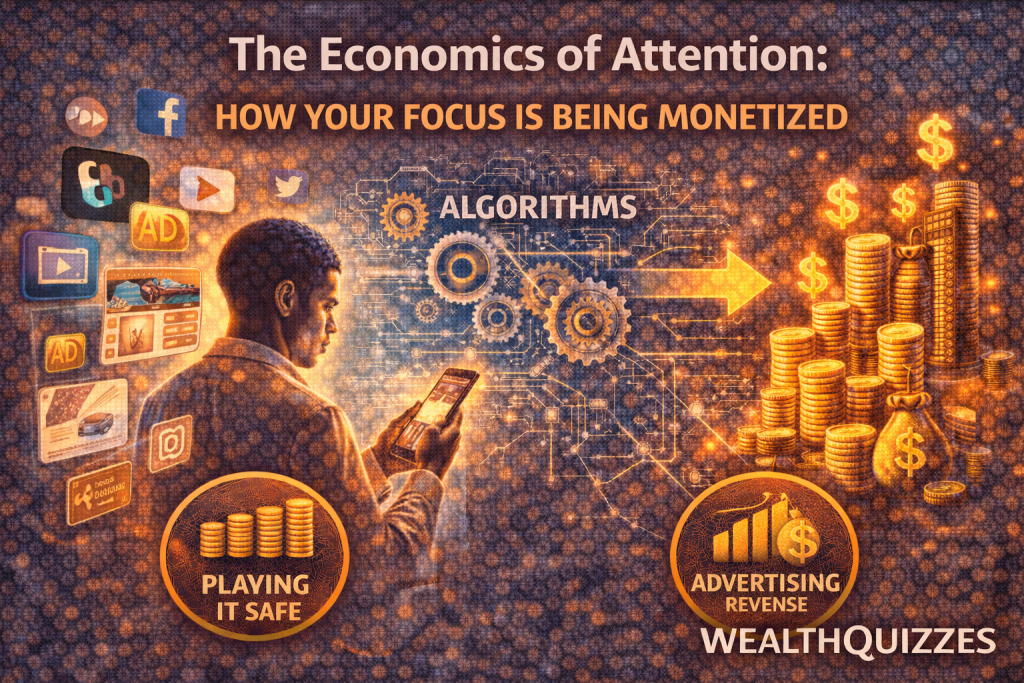
The Economics of Attention: How Your Focus Is Being Monetized
Introduction: Attention as the World’s Most Valuable Currency
In the modern economy, money no longer sits at the top of the value hierarchy. Attention does.
In an age of infinite content but finite human focus, the scarcest resource is no longer capital or labor — it is human attention.
Technology companies, advertisers, media platforms, and political actors increasingly compete not just for market share, but for minutes, clicks, and cognitive space. As Nobel laureate Herbert Simon famously observed:
“A wealth of information creates a poverty of attention.”
This article explains how attention became an economic asset, how it is monetized, who profits from it, and why understanding the attention economy is now a critical component of financial literacy — especially in emerging markets like Africa.
What Is the Attention Economy?
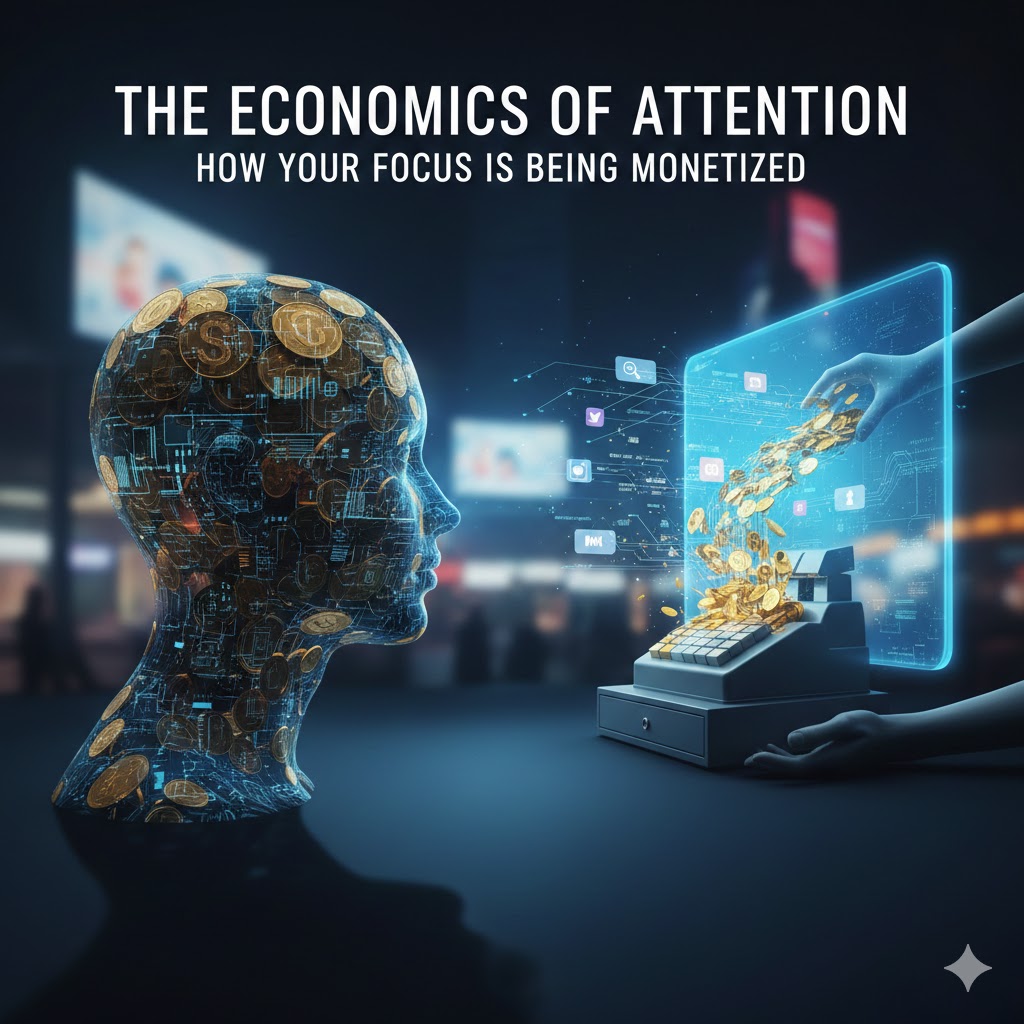
The attention economy is an economic system where human attention is treated as a scarce commodity that can be captured, traded, measured, and monetized.
In traditional economics:
- Land generated rent
- Labor generated wages
- Capital generated interest and profits
In the digital economy:
- Attention generates revenue
Platforms do not primarily sell products to users. Instead, they sell users’ attention to advertisers, data brokers, and market influencers.
As economist Thomas Davenport explains in The Attention Economy:
“Attention is what determines the success or failure of information systems.”
How Attention Became a Marketable Asset
1. The Collapse of Information Scarcity
Before the internet:
- Information was scarce
- Distribution was expensive
- Gatekeepers controlled access
Today:
- Content is abundant
- Distribution is nearly free
- Attention is the bottleneck
This reversal shifted economic power away from producers of information to curators of attention.
2. Platforms as Attention Intermediaries
Companies like:
- Meta (Facebook, Instagram)
- TikTok
- YouTube
- X (formerly Twitter)
do not charge most users money. Instead, they:
- Capture attention
- Measure engagement
- Package it
- Sell it to advertisers
This model is known as surveillance capitalism, a term popularized by Harvard professor Shoshana Zuboff.
How Attention Is Monetized in Practice
1. Advertising Revenue
The most direct monetization method.
Advertisers pay for:
- Impressions
- Clicks
- Watch time
- Engagement rates
The longer you stay on a platform, the more ads you see — and the more revenue is generated.
Google and Meta alone earn hundreds of billions of dollars annually from advertising fueled entirely by user attention.
2. Algorithmic Amplification
Algorithms are designed not to inform, but to retain attention.
They prioritize:
- Emotional content
- Controversy
- Fear and outrage
- Novelty and shock
As former Google design ethicist Tristan Harris notes:
“The race is not for truth. It’s for attention.”
This explains why extreme content often spreads faster than nuanced analysis.
3. Data Extraction and Behavioral Prediction
Attention is not only watched — it is studied.
Platforms track:
- Scroll behavior
- Pause duration
- Reaction timing
- Search patterns
This data is used to:
- Predict future behavior
- Influence purchasing decisions
- Shape beliefs and preferences
Economist Yuval Noah Harari warns that whoever controls data and attention may ultimately control human decision-making itself.
Why Your Attention Is More Valuable Than Your Money
You can earn more money.
You cannot earn more time.
Every minute of attention:
- Shapes habits
- Reinforces beliefs
- Influences spending decisions
Behavioral economist Richard Thaler emphasizes that repeated exposure subtly alters preferences — even without conscious awareness.
In effect:
- Attention precedes consumption
- Consumption precedes wealth outcomes
Your financial future is influenced not just by what you earn, but by what constantly occupies your mind.
The Attention Economy and Consumer Behavior
Impulse Spending
Attention-driven marketing:
- Creates artificial urgency
- Exploits fear of missing out (FOMO)
- Encourages emotional purchases
This undermines rational financial planning.
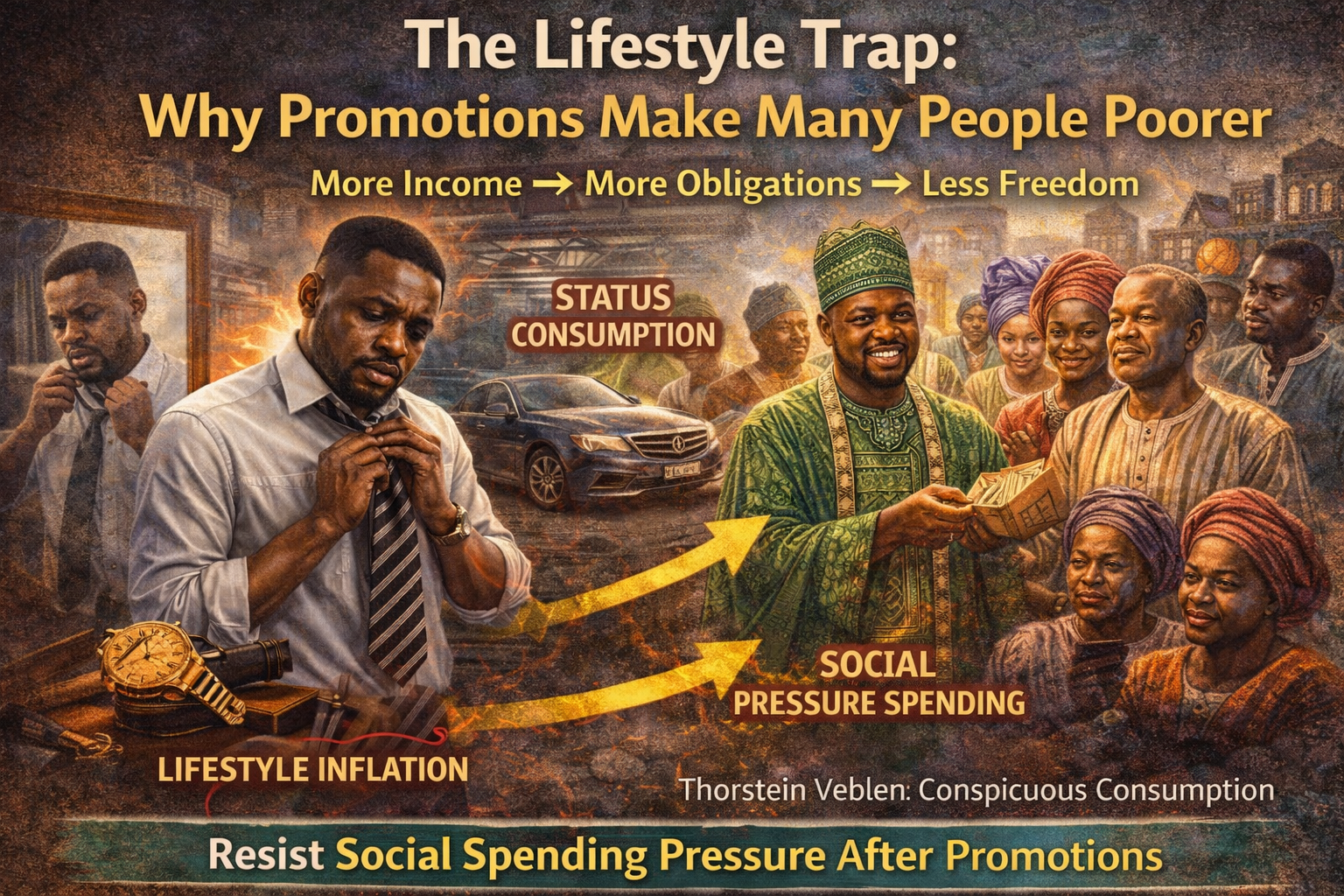
Debt and Lifestyle Inflation
Constant exposure to:
- Luxury lifestyles
- Influencer culture
- Curated success narratives
leads to distorted expectations and increased borrowing — especially among young people.
Africa’s Place in the Attention Economy
Africa is not merely a consumer in the attention economy — it is an emerging attention frontier.
Key dynamics include:
- Rapid smartphone adoption
- Youth-heavy population
- Expanding social media usage
However, attention extraction often benefits:
- Foreign platforms
- Global advertisers
while local users pay the hidden costs:
- Reduced productivity
- Misinformation
- Financial distraction
Without attention literacy, digital inclusion risks becoming digital exploitation.
Attention, Power, and Inequality
Those who control attention flows influence:
- Markets
- Elections
- Cultural norms
- Consumer demand
As economist Joseph Stiglitz notes, markets do not operate in a vacuum — they are shaped by information asymmetries.
In the attention economy:
- Platforms have informational advantage
- Users bear cognitive costs
- Wealth concentrates among attention brokers
This contributes to widening inequality — not just of income, but of mental autonomy.
Reclaiming Attention as an Economic Strategy
Attention management is now a form of financial strategy.
High-performing individuals and institutions:
- Curate information diets
- Limit algorithmic exposure
- Prioritize long-term thinking
As investor Warren Buffett famously avoids noise to focus on fundamentals, individuals must now protect attention to protect wealth.
The WealthQuizzes Perspective: Attention as Financial Capital
WealthQuizzes recognizes that:
- Financial literacy begins with mental discipline
- Learning requires sustained attention
- Economic empowerment starts with focus
In a world competing aggressively for your mind, thinking clearly is an economic advantage.
By encouraging structured learning, delayed gratification, and intentional engagement, WealthQuizzes promotes a critical truth:
Whoever controls your attention influences your financial destiny.
Conclusion: Follow the Attention, Find the Money
The modern economy does not merely follow capital.
Capital follows attention.
Understanding how attention is captured, sold, and exploited is no longer optional. It is essential for:
- Personal wealth building
- Business strategy
- National economic resilience
In the end, the most important financial question is no longer just:
“Where is the money?”
But:
“Who controls what I pay attention to — and at what cost?”