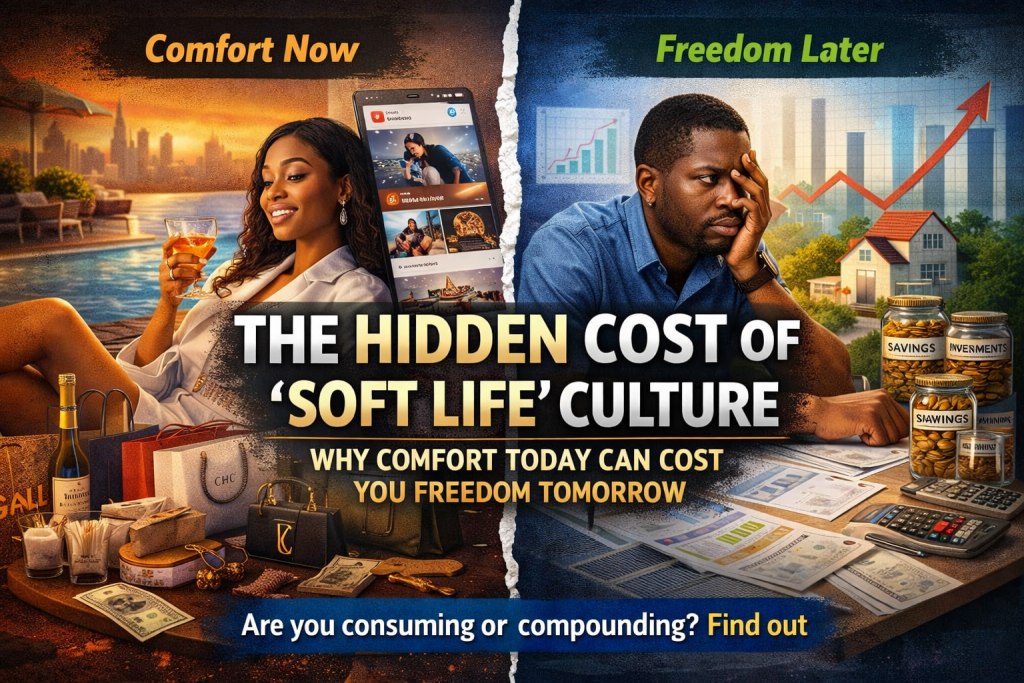
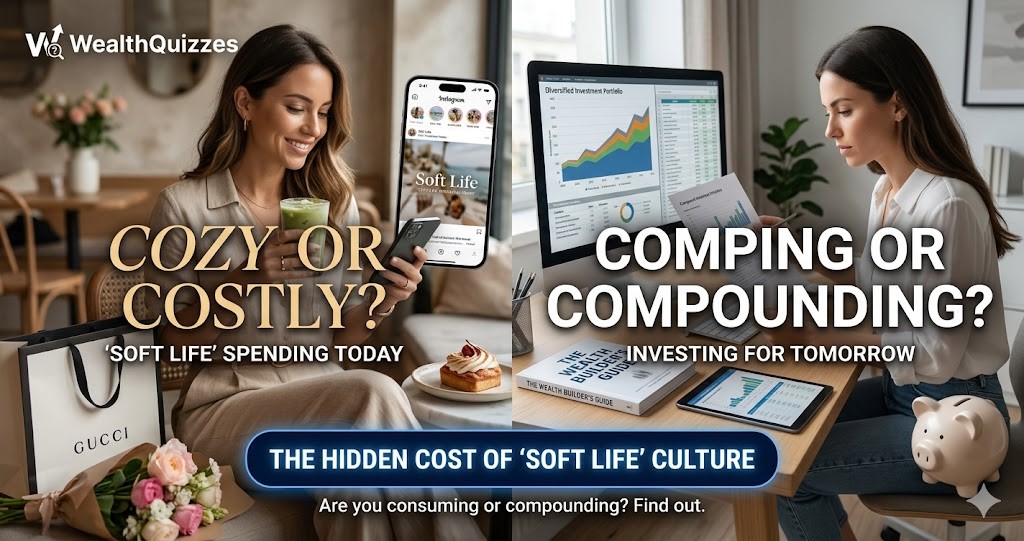
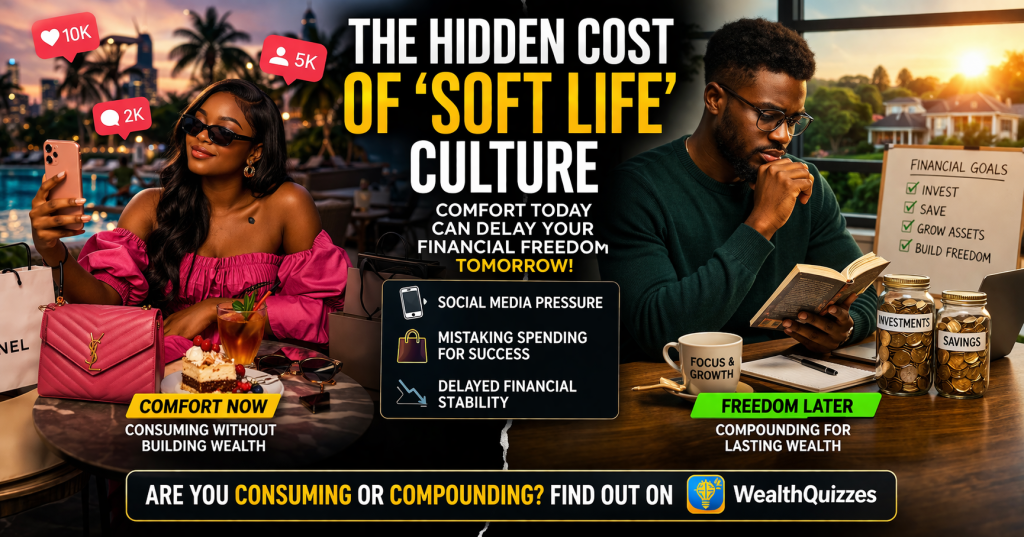
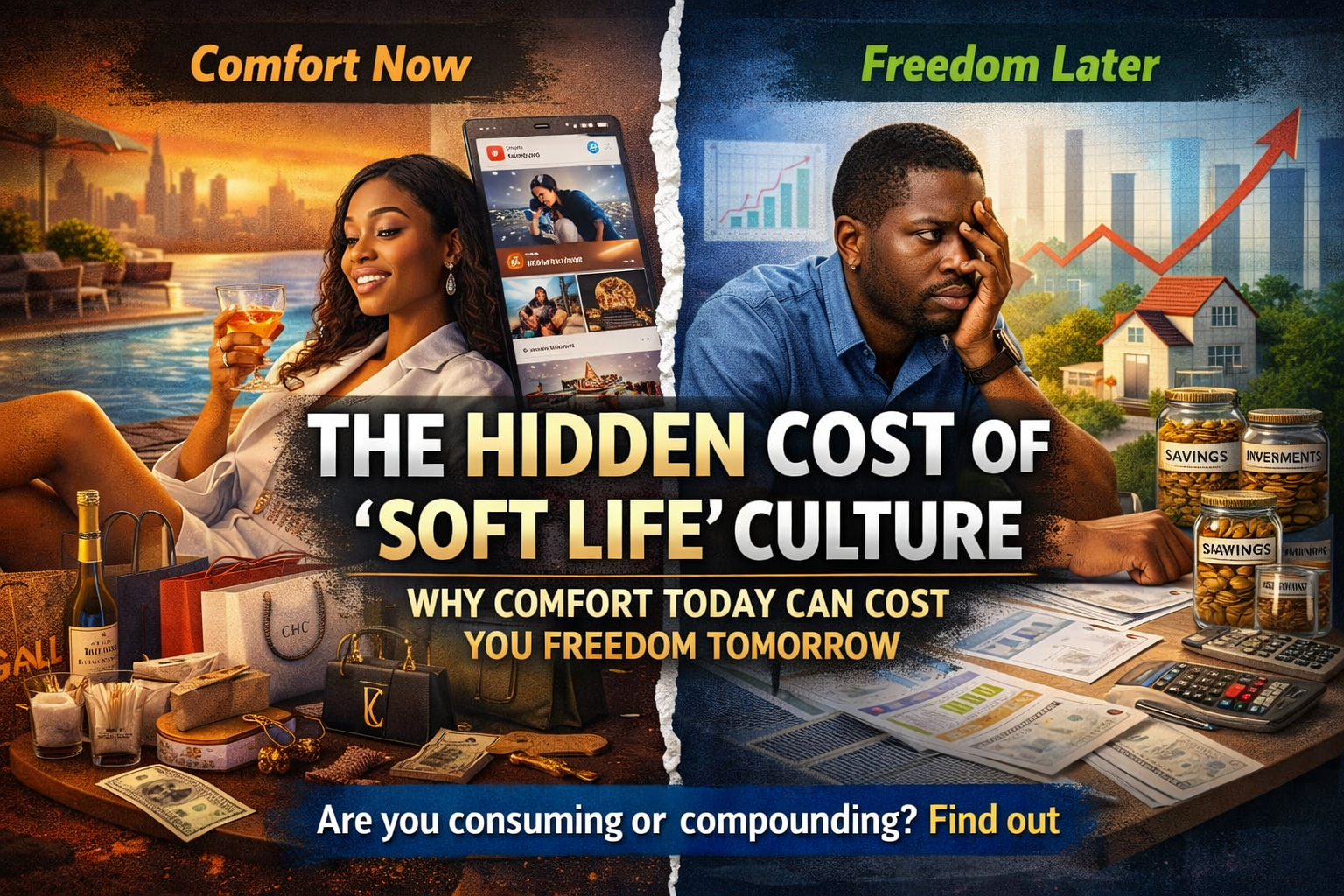
The Hidden Cost of ‘Soft Life’ Culture Why Comfort Today Can Cost You Freedom Tomorrow
The Hidden Cost of ‘Soft Life’ Culture
Why Comfort Today Can Cost You Freedom Tomorrow
Introduction: The Seductive Promise of the “Soft Life”
Across Nigeria and much of the world, a new aspiration has taken center stage—the “soft life.”
It is marketed as:
Peace over pressure
Comfort over struggle
Enjoyment over stress
On the surface, it appears harmless—even desirable. After all, who doesn’t want ease, enjoyment, and a break from the harsh realities of daily life?
But beneath the aesthetic lies a deeper financial truth:
Comfort, when misunderstood, can quietly sabotage long-term financial stability.
The problem is not the desire for comfort.
The problem is confusing comfort with success—and consumption with progress.
Understanding the “Soft Life” Phenomenon
The “soft life” originated within Nigerian social media culture and has since gone global, largely driven by platforms like TikTok and Instagram. (Forbes)
At its core, it promotes:
Rest
Emotional well-being
Reduced stress
Psychologists acknowledge that this shift is, in part, a reaction to the damaging effects of extreme hustle culture, which has historically equated success with constant productivity and burnout. (Forbes)
However, as the concept spread, something changed.
What began as a mental health movement gradually evolved into a consumption-driven lifestyle:
The issue is not enjoying life.
The issue is enjoying life without financial structure or discipline.
When comfort becomes the priority:
Savings are postponed
Investments are ignored
Long-term planning is delayed
Over time, this creates what can be described as “fragile finances”—a situation where one unexpected expense can cause a financial crisis.
Research into the “soft life” trend in Lagos highlights that frequent spending to maintain a lifestyle image compresses savings and weakens financial resilience, leaving individuals vulnerable to shocks. (Pulse Nigeria)
The Hidden Cost of ‘Soft Life’ Culture: Why Comfort Today Can Cost You Freedom Tomorrow
Social Media Pressure: The Engine Behind the Illusion
1. Curated Reality vs Financial Reality
Social media has fundamentally altered how people define success.
Platforms are filled with:
Perfectly curated lifestyles
Luxury experiences
“Effortless” living
But what is rarely shown is:
Debt
Financial stress
Lack of savings
This creates a distorted benchmark for success.
A study on consumer behavior shows that conspicuous consumption on social media directly influences people’s desire to spend, as individuals attempt to replicate what they see online. (arXiv)
In simple terms:
The more you see, the more you want.
The more you want, the more you spend.
2. The Comparison Trap
Constant exposure to curated lifestyles leads to social comparison.
And comparison creates pressure:
“I should be doing better”
“I deserve this too”
“I don’t want to look left behind”
This pressure drives spending decisions that are:
Emotional
Reactive
Unsustainable
As observed in Nigeria, many young people are now spending heavily just to maintain appearances, even in the face of rising living costs and economic instability. (Punch Newspapers)
Misinterpreting Enjoyment as Success
1. The Redefinition of Success
Traditionally, success was measured by:
Assets
Stability
Long-term growth
Today, success is often measured by:
Experiences
Aesthetics
Visibility
This shift is subtle—but powerful.
You move from building wealth to displaying lifestyle.
2. The Rise of “Cosmetic Wealth”
The “soft life” culture has fueled what can be called cosmetic wealth:
Looking rich without being financially secure
Spending without building
Enjoying without sustaining
In reality:
Many are not wealthy—they are temporarily comfortable.
A report on lifestyle trends in Africa shows that the pressure to maintain a “soft life” is pushing many young people into unsustainable financial habits driven by lifestyle inflation. (Citizen Digital)
The Hidden Costs of the Soft Life
1. Opportunity Cost
Every naira spent on lifestyle is a naira not invested.
According to financial analyses, money and time spent on short-term enjoyment could instead be used for:
Skill acquisition
Business development
Asset building
Over time, this trade-off compounds significantly. (Pulse Nigeria)
2. Delayed Wealth Building
When comfort becomes habitual:
Investing feels like sacrifice
Saving feels restrictive
Discipline feels unnecessary
This delays:
Financial independence
Asset accumulation
Wealth creation
3. Financial Fragility
The most dangerous outcome is vulnerability.
Without:
Emergency funds
Insurance
Investments
Even a minor financial shock—medical bills, job loss, or unexpected expenses—can collapse the illusion of stability.
4. Distorted Career Decisions
As lifestyle expenses increase, individuals often:
Chase higher-paying jobs for survival
Ignore roles that offer growth
Sacrifice long-term development for short-term income
This creates a cycle where:
Your lifestyle controls your career—not the other way around.
The Hidden Cost of ‘Soft Life’ Culture: Why Comfort Today Can Cost You Freedom Tomorrow
The Psychological Trap
The “soft life” is not just financial—it is deeply psychological.
a. Instant Gratification Bias
Humans prefer immediate rewards over delayed benefits.
Enjoy now
Think later
b. Emotional Reward System
Spending becomes tied to:
Happiness
Relief
Validation
c. Identity Formation
People begin to identify with the lifestyle, not the financial reality.
“I live a soft life” becomes:
A brand
A personality
A social identity
And once identity is involved, behavior becomes harder to change.
The Truth Most People Avoid
The real “soft life” is not consumption—it is control.
True comfort comes from:
Financial security
Predictability
Independence
Not from:
Constant spending
Social validation
Lifestyle pressure
Ironically:
The people who truly live a soft life are often the most financially disciplined.
The Required Mindset Shift
Comfort Now vs Freedom Later
This is the defining trade-off:
Path
Outcome
Comfort Now
Temporary enjoyment, long-term stress
Discipline Now
Delayed gratification, long-term freedom
How to Enjoy Life Without Destroying Your Future
1. Redefine “Soft Life”
Make it about:
Peace of mind
Financial security
Controlled enjoyment
2. Separate Enjoyment from Identity
You are not your lifestyle.
3. Build Before You Display
Invest first
Spend later
4. Create a Lifestyle Ceiling
Just because your income increases does not mean your expenses should.
5. Prioritize Assets Over Aesthetics
Assets:
Pay you
Aesthetics:
Cost you
Conclusion: The Real Cost of Comfort
The “soft life” is not inherently bad.
In fact, its original intention—to reduce stress and prioritize well-being—is valuable and necessary.
But when misinterpreted, it becomes:
A beautifully packaged financial trap.
Because at the end of the day:
Comfort without structure leads to instability
Enjoyment without discipline leads to stagnation
Lifestyle without strategy leads to regret
Final Thought
Before your next expense, ask yourself:
“Is this building my future—or just improving my appearance?”
Because the difference between wealth and struggle is not how soft your life looks—
It is how strong your financial decisions are.
👉 Are you consuming or compounding? Find out on WealthQuizzes