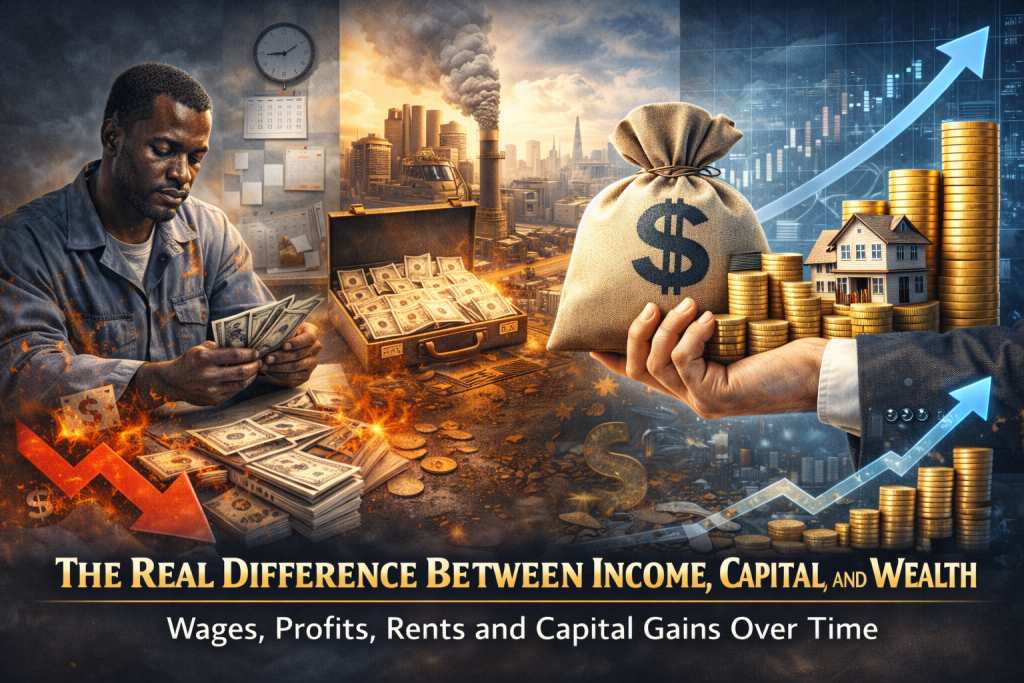
The Real Difference Between Income, Capital, and Wealth
Why confusing wages with wealth keeps people economically stagnant
Introduction
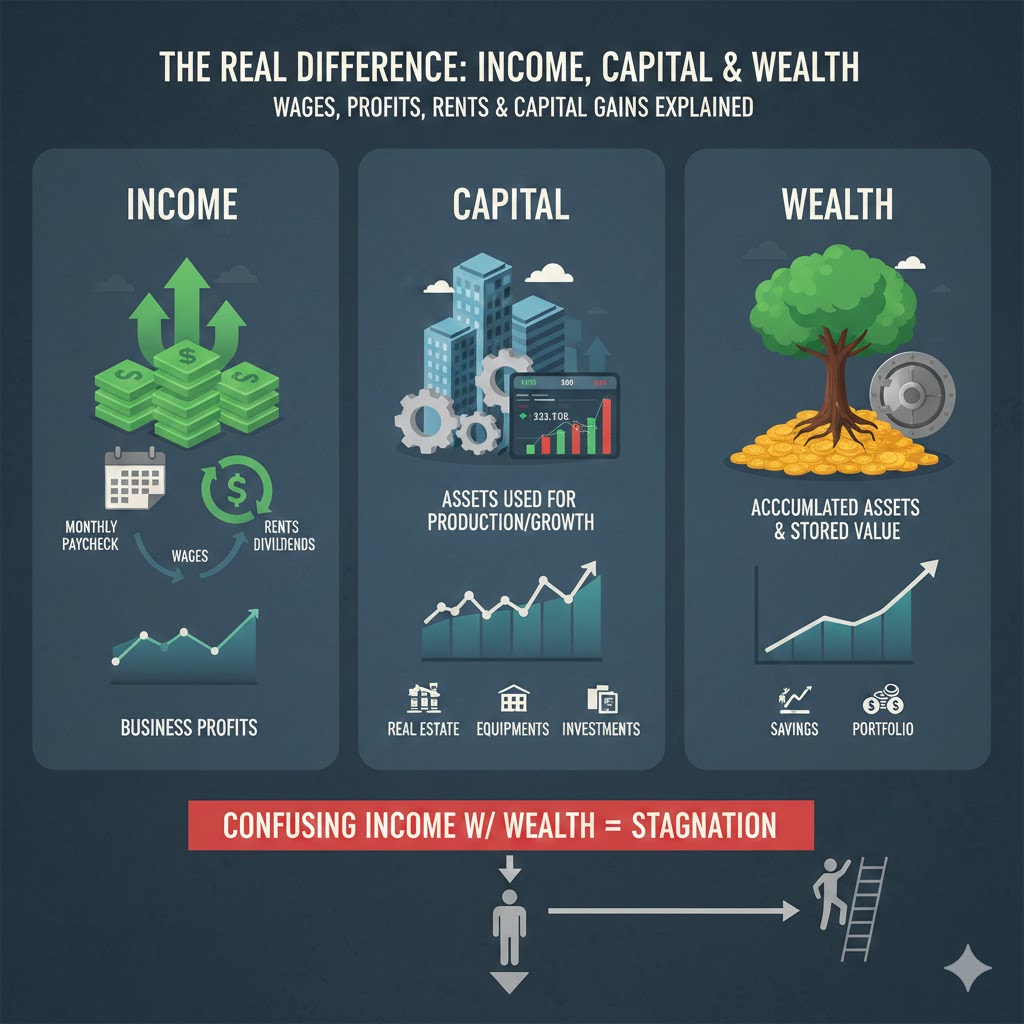
One of the most persistent causes of economic stagnation—both at the individual and societal level—is the failure to distinguish clearly between income, capital, and wealth. These terms are often used interchangeably in everyday conversation, yet in economics and finance they describe fundamentally different phenomena, each with distinct behaviors over time.
As Adam Smith observed in The Wealth of Nations, “The annual labour of every nation is the fund which originally supplies it with all the necessaries and conveniences of life.” That “annual labour” refers to income, not wealth. Wealth, by contrast, is accumulated over time through ownership of productive assets. Understanding this distinction is essential for anyone seeking long-term financial security.
This article examines income, capital, and wealth in clear terms, analyzes how wages, profits, rents, and capital gains behave differently over time, and explains why conflating income with wealth often traps people in a cycle of economic vulnerability.
Defining the Concepts Clearly
Income: A Flow, Not a Stock
Income is a flow variable. It represents money received over a period—weekly, monthly, or annually. Income typically comes from four primary sources:
- Wages and salaries (labour income)
- Business profits
- Rents
- Interest and dividends
John Maynard Keynes emphasized this distinction by describing income as something earned within a defined accounting period, unlike capital, which exists independently of time.
The defining feature of income is this: when the activity producing it stops, the income stops.
Capital: The Means of Production
Capital refers to assets used to produce goods or generate income. These include:
- Land
- Machinery
- Buildings
- Intellectual property
- Financial instruments (shares, bonds)
David Ricardo and Karl Marx, despite ideological differences, agreed on one fundamental point: capital is not consumption; it is productive capacity. Capital exists to generate income, not to be spent like wages.
Capital may or may not produce income immediately, but it retains value even when not actively generating cash flow.
Wealth: Accumulated Ownership
Wealth is the stock of valuable assets owned by an individual or entity at a given point in time. It includes:
- Capital assets
- Savings
- Investments
- Real estate
- Business equity
Thomas Piketty defines wealth as “the total market value of everything owned by households, minus everything they owe.” Unlike income, wealth persists across time and can grow independently of personal labour.
How Different Forms of Income Behave Over Time
Wages: Linear and Fragile
Wages are the most common form of income, but also the most economically fragile.
Key characteristics:
- Directly tied to time and physical or mental effort
- Stops immediately when employment ends
- Rarely compound
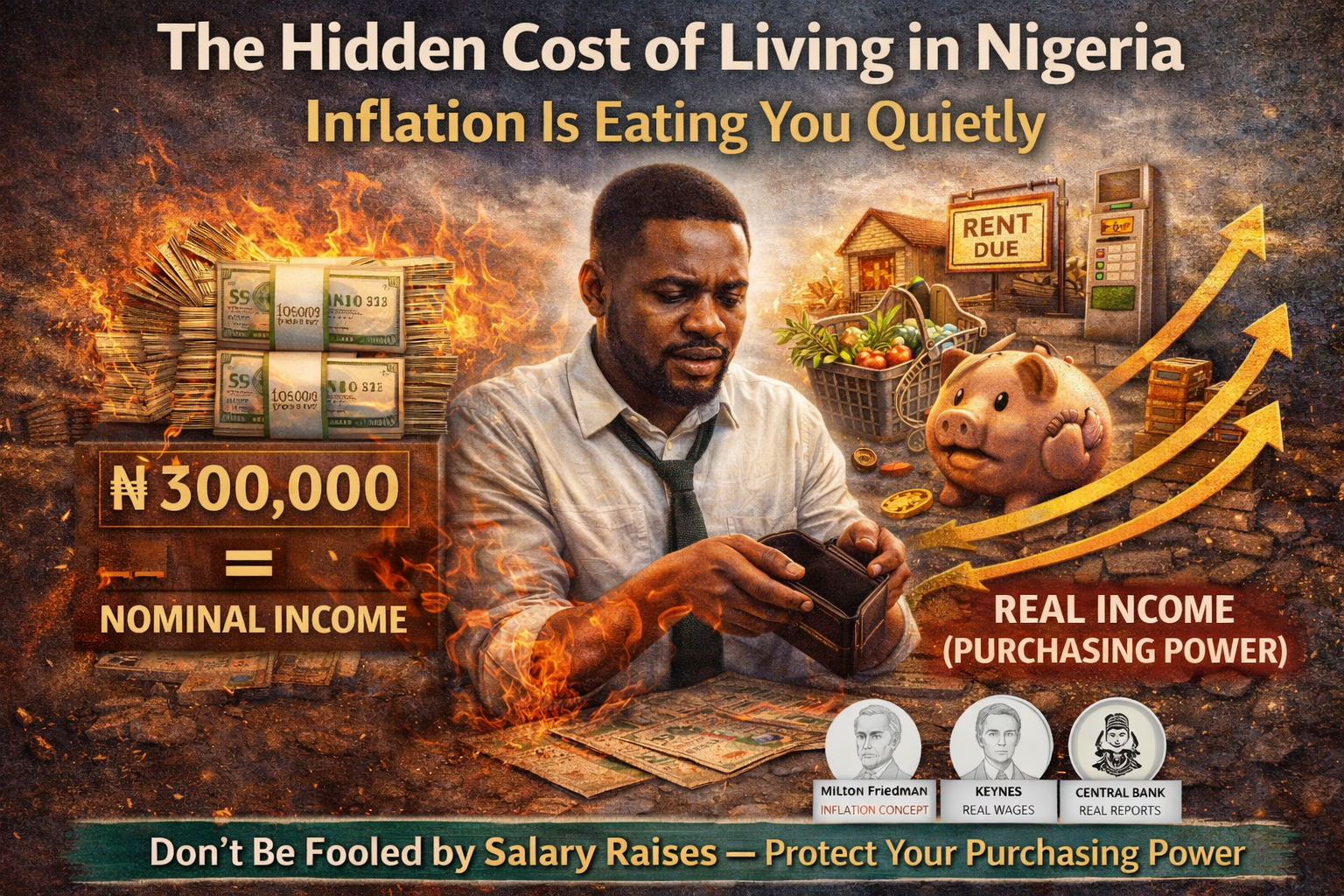
- Often adjusted downward by inflation
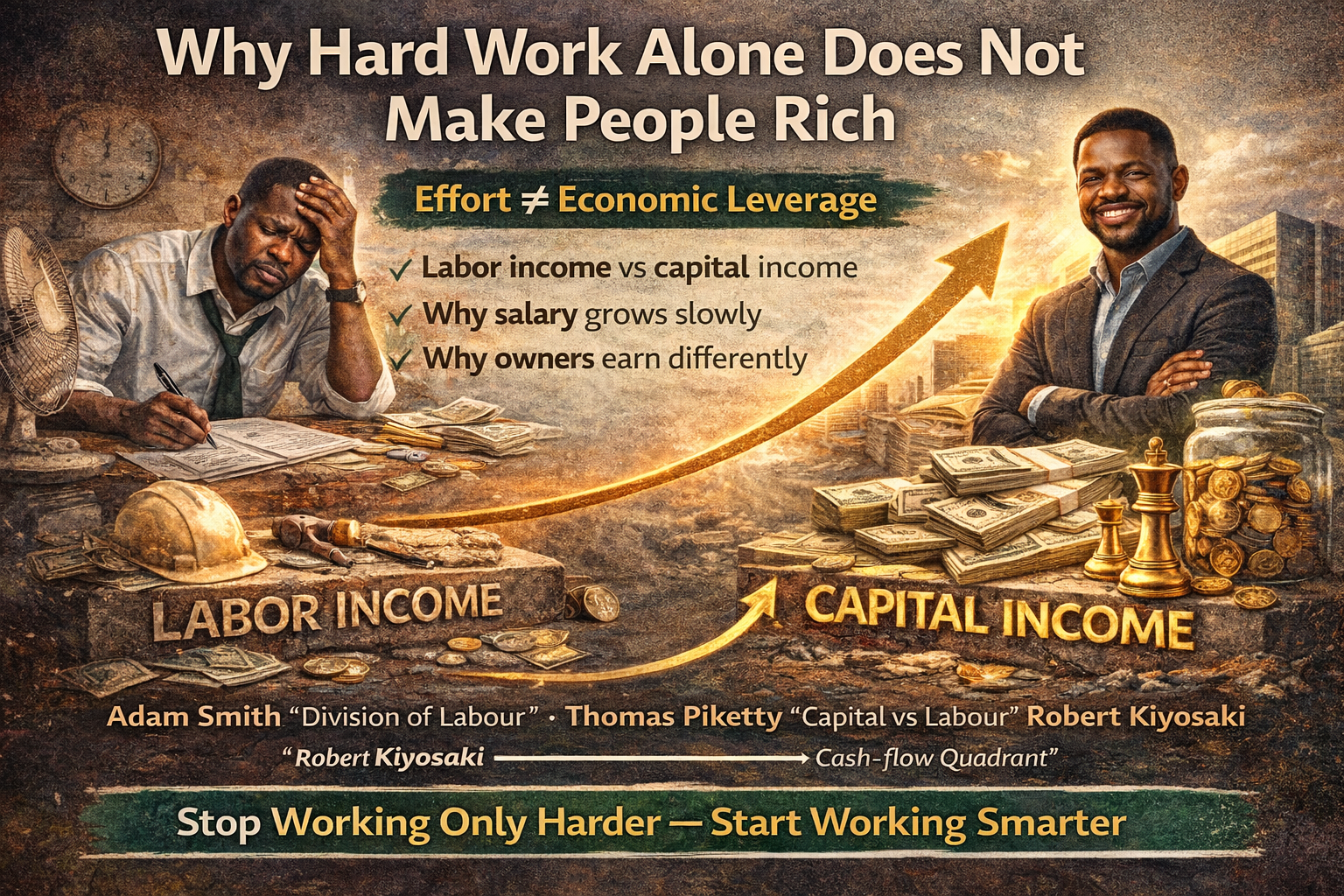
As Milton Friedman noted, labour income is constrained by human capacity—there are only so many hours in a day. This makes wage income inherently limited.
Profits: Scalable but Risk-Dependent
Business profits differ fundamentally from wages:
- They are not strictly tied to hours worked
- They scale with systems, leverage, and capital
- They are exposed to market risk
Joseph Schumpeter emphasized that profits arise from innovation and entrepreneurial risk. While profits can exceed wages significantly, they are not guaranteed and often fluctuate.
Rents: Persistent and Historically Dominant
Rent income—derived from land, property, or exclusive rights—has historically been one of the most stable income forms.
Characteristics:
- Often inflation-resistant
- Less dependent on active labour
- Supported by scarcity
Henry George famously argued that land rent, rather than wages or profits, was the primary driver of inequality. Even today, rental income tends to persist across generations.
Capital Gains: Exponential and Often Untaxed
Capital gains arise from the appreciation of asset values over time.
Key features:
- Do not require ongoing labour
- Benefit disproportionately from compounding
- Often taxed more favorably than wages
Albert Einstein reportedly described compound interest as the most powerful force in the universe. Whether or not the quote is apocryphal, the principle remains sound: capital gains grow geometrically, while wages grow arithmetically.
Why Confusing Income with Wealth Is Economically Dangerous
The Consumption Trap
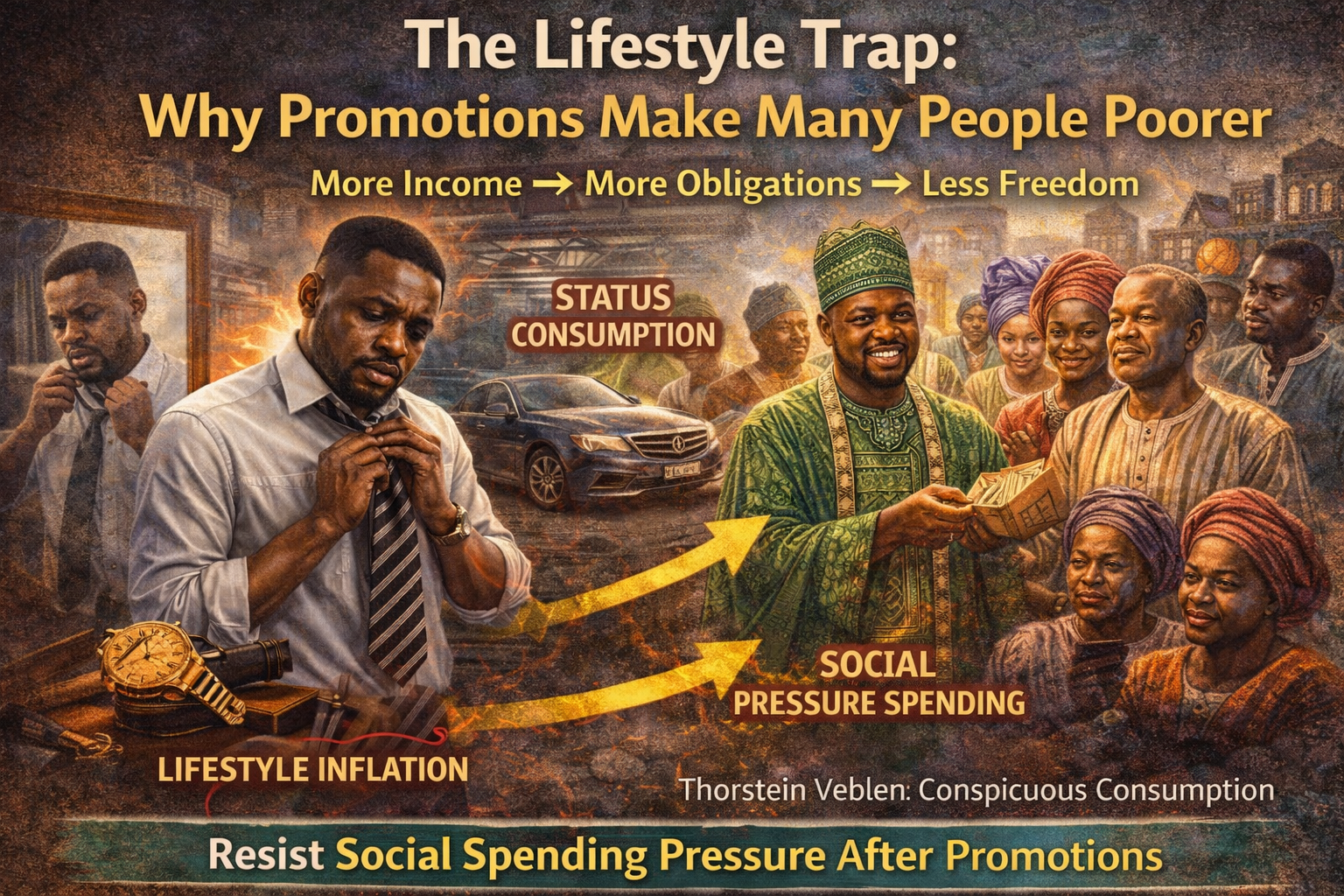
When people treat high income as wealth, they often increase consumption instead of acquiring assets. This creates the illusion of prosperity without durability.
Thorstein Veblen warned of “conspicuous consumption,” where income is used to signal status rather than build capital. The result is high cash flow with low net worth.
Inflation and Time Erosion
Income that is not converted into assets loses purchasing power over time due to inflation. Wealth, particularly asset-based wealth, often adjusts upward with inflation.
This is why people can earn steadily for decades yet retire financially insecure.
Intergenerational Consequences
Income generally dies with the earner. Wealth does not.
Families that focus on asset accumulation pass advantages forward; those that rely solely on wages reset to zero each generation. As Piketty’s empirical research shows, returns on capital tend to exceed economic growth over the long term, reinforcing wealth concentration among asset owners.
The Central Insight: Wealth Is Ownership, Not Effort
The critical distinction is this:
- Income rewards effort
- Capital rewards ownership
- Wealth rewards time
Effort is finite. Time and compounding are not.
This does not diminish the dignity of labour, but it explains why labour alone rarely produces financial independence. Economic mobility depends not merely on earning more, but on owning more—particularly assets that appreciate or generate cash flow independent of personal labour.
Conclusion
Understanding the difference between income, capital, and wealth is not academic hair-splitting; it is foundational economic literacy.
Wages pay bills.
Capital produces income.
Wealth creates security.
Those who confuse income with wealth may work harder without becoming more secure. Those who understand the distinction can make deliberate choices—transforming income into capital, and capital into enduring wealth.
As Adam Smith, Keynes, Ricardo, and modern economists alike have shown, prosperity is not merely about how much you earn, but about what you own—and how long you allow it to grow.