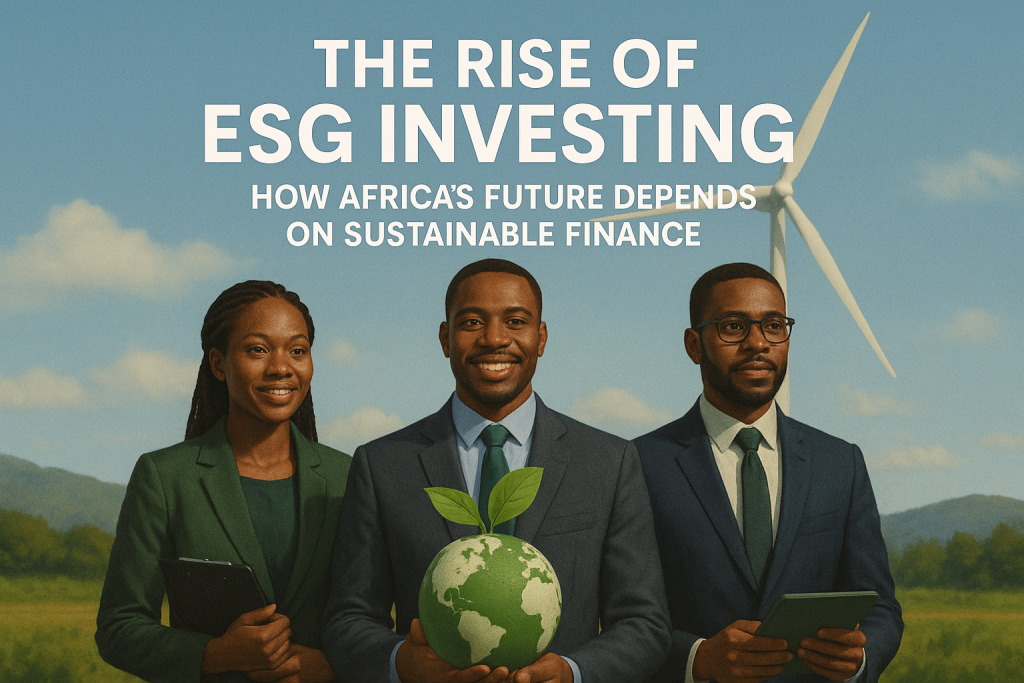
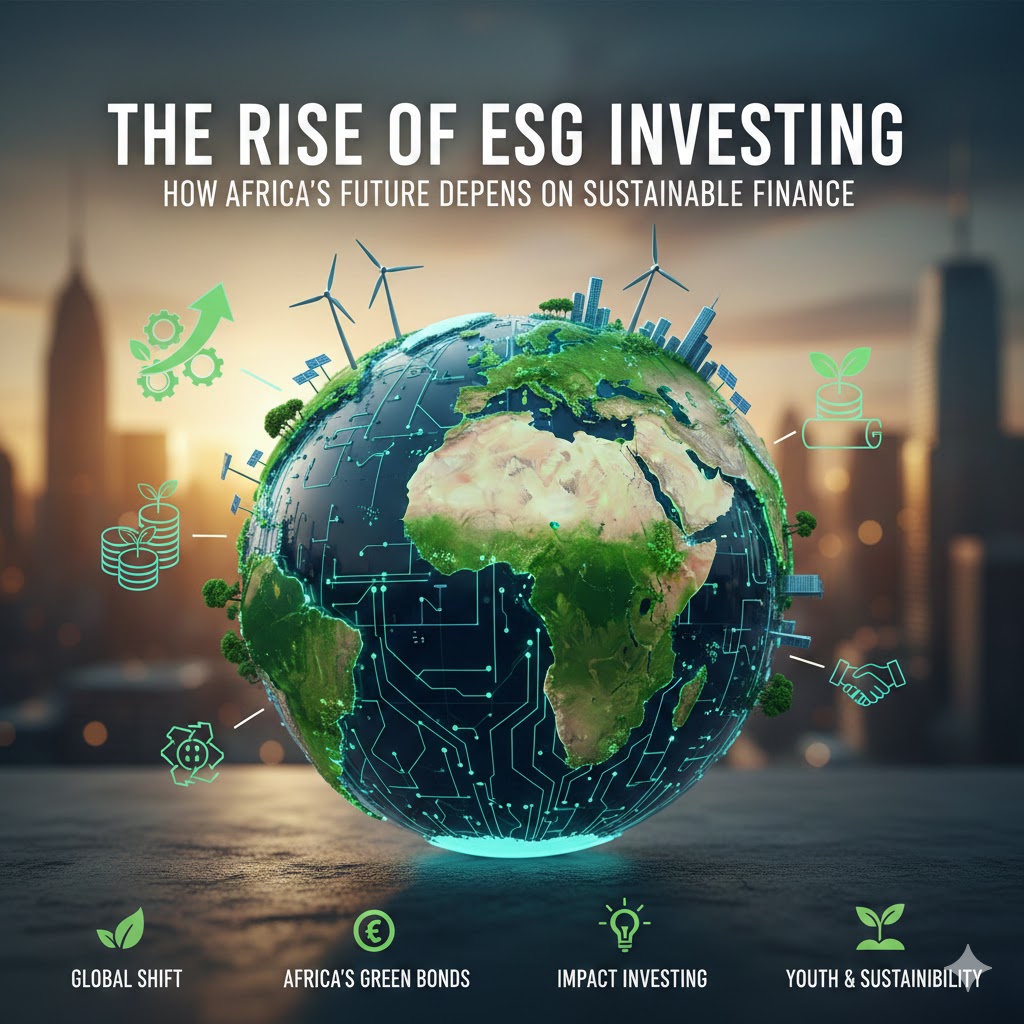
The Rise of ESG Investing: How Africa’s Future Depends on Sustainable Finance
By WealthQuizzes Editorial Team
What Is ESG and Why Does It Matter
For decades, investment decisions were driven by one central goal: profit. But in today’s world, success means more than just financial returns. Investors, governments, and even consumers now want to know how companies make their money — not just how much they make.
That shift gave birth to ESG investing — an approach that evaluates businesses based on their Environmental, Social, and Governance performance.
- Environmental looks at how companies impact the planet — energy use, carbon emissions, waste, and resource management.
- Social considers how businesses treat people — employees, communities, customers, and suppliers.
- Governance focuses on leadership ethics — transparency, accountability, diversity, and corporate integrity.
Simply put, ESG investing measures whether a business is profitable responsibly. It’s finance with a conscience — and it’s redefining what “success” means in the global economy.
The Global Shift: From Profit to Purpose
Across the world, investors are embracing the idea that doing good and doing well can coexist. Global ESG assets surpassed $30 trillion, according to Bloomberg Intelligence, and are projected to reach $50 trillion by 2025.
Large institutional investors — from BlackRock to Goldman Sachs — now evaluate companies through ESG lenses. Pension funds, sovereign wealth funds, and asset managers are prioritizing sustainability in their portfolios.
This marks a fundamental transformation:
- Capital is moving toward companies with purpose.
- Businesses are rewarded for ethical behavior.
- Social and environmental responsibility is becoming a financial advantage.
This evolution is not just about moral leadership — it’s also about risk management. A company that pollutes heavily, mistreats workers, or hides financial data is a long-term liability.
Africa’s ESG Landscape — Green Bonds, Impact Investing, and SDG Projects
Africa, once seen as a passive participant in global finance, is now becoming a proving ground for ESG-driven investment. The continent’s vast renewable energy potential, youthful population, and development needs make it ideal for impact finance — investments that generate measurable social and environmental returns alongside profit.
Here’s how ESG is taking root across the continent:
- Green Bonds: Nigeria issued Africa’s first sovereign green bond in 2017 — a N10.69 billion initiative funding renewable energy and afforestation projects. Kenya and Egypt have followed suit.
- Impact Investing: Institutions like the African Development Bank (AfDB) and the International Finance Corporation (IFC) are channeling billions into projects that align with the UN Sustainable Development Goals (SDGs).
- Renewable Energy Projects: Countries like Morocco and South Africa are pioneering large-scale solar and wind farms that attract ESG-conscious investors.
- Social Enterprises: Startups across Nigeria, Ghana, and Kenya are combining profit-making with community empowerment — from agritech platforms supporting smallholder farmers to fintech startups enabling women’s financial inclusion.
Africa’s ESG story is one of innovation meeting necessity — using finance to solve social and environmental challenges.
Challenges Facing ESG Adoption in Emerging Markets
While momentum is growing, ESG investing in Africa still faces structural hurdles:
- Data Gaps: Reliable ESG metrics are scarce. Many African companies lack standardized sustainability reporting frameworks.
- Policy Inconsistency: Weak regulatory enforcement often discourages investors seeking transparency and accountability.
- Short-Term Economic Pressures: Many businesses prioritize survival over sustainability, especially in volatile markets.
- Investor Education: Awareness of ESG principles remains low among local investors and fund managers.
Yet, these challenges also signal opportunities for growth. As data improves, governance strengthens, and local investors demand ethical transparency, Africa’s ESG market will mature — potentially faster than expected.
Real-World Examples: Nigerian Sovereign Green Bond and AfDB Climate Finance
Africa is already demonstrating success stories that prove ESG finance is not a Western ideal, but a global necessity.
- Nigeria’s Sovereign Green Bond:
Launched in 2017, it funded renewable energy, reforestation, and transportation projects aligned with Nigeria’s commitment to the Paris Agreement. It showcased how public finance can drive sustainability while attracting foreign investors seeking climate-conscious assets. - African Development Bank (AfDB):
The AfDB’s Green Climate Fund and Sustainable Energy Fund for Africa (SEFA) are channeling millions into clean energy infrastructure, energy efficiency, and climate resilience. - South Africa’s Corporate ESG Movement:
Many of the Johannesburg Stock Exchange’s largest companies — including MTN and Standard Bank — now publish annual sustainability reports, aligning with global ESG benchmarks.
These examples show that Africa is not waiting to be invited into the future — it’s actively building it.
How Businesses Can Integrate ESG Practices
Every business, regardless of size, can start its ESG journey today. Key steps include:
- Measure and Monitor Impact: Track environmental use, community relations, and governance practices.
- Be Transparent: Publish sustainability reports — even basic ones — to attract credibility and investors.
- Empower Employees and Communities: Encourage diversity, fair wages, and local development.
- Adopt Governance Best Practices: Strong boards, ethical leadership, and regulatory compliance are non-negotiable.
- Partner for Progress: Collaborate with NGOs, government agencies, and ESG-focused financiers.
Ultimately, integrating ESG is not just about ethics — it’s about competitive advantage. Companies that embrace sustainability attract better financing terms, talent, and long-term investors.
Why Young Investors Should Care About Sustainability
Africa’s youth make up over 60% of its population — and they are the continent’s next generation of business leaders and investors.
For them, ESG investing is more than a financial concept; it’s a mindset. It’s about believing that profits should not come at the planet’s or society’s expense.
Young Africans who learn to evaluate companies not just by their earnings but by their impact will shape a more resilient and fair economy. This is where financial literacy meets moral intelligence — a value WealthQuizzes passionately promotes.
Conclusion: The Future of Finance Is Ethical
The rise of ESG investing represents a profound transformation in global finance — one that Africa cannot afford to miss. Sustainable finance offers the continent a path to long-term prosperity, inclusive growth, and environmental resilience.
By aligning profit with purpose, African investors and entrepreneurs can ensure that every naira, dollar, or cedi invested builds not just wealth — but a sustainable future.
WealthQuizzes Perspective
At WealthQuizzes, we believe that true financial intelligence goes beyond money management — it includes understanding the social and environmental impact of our financial decisions. ESG investing embodies that principle: it’s about learning to earn responsibly.
Through our platform, we aim to help learners, professionals, and young investors grasp complex finance ideas easily — and apply them toward creating a better world.