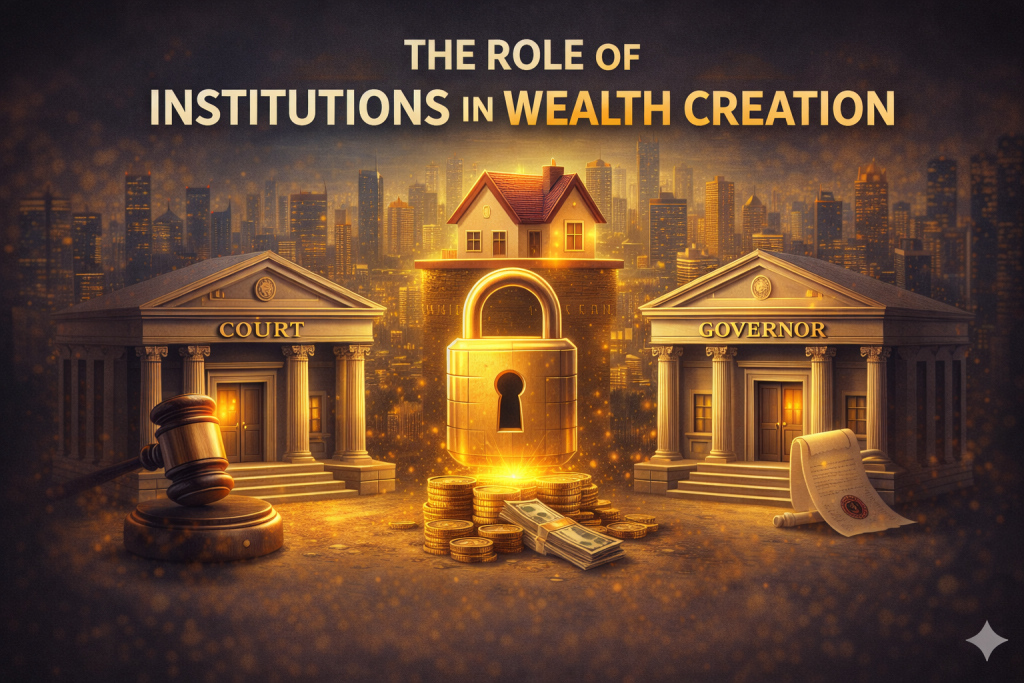
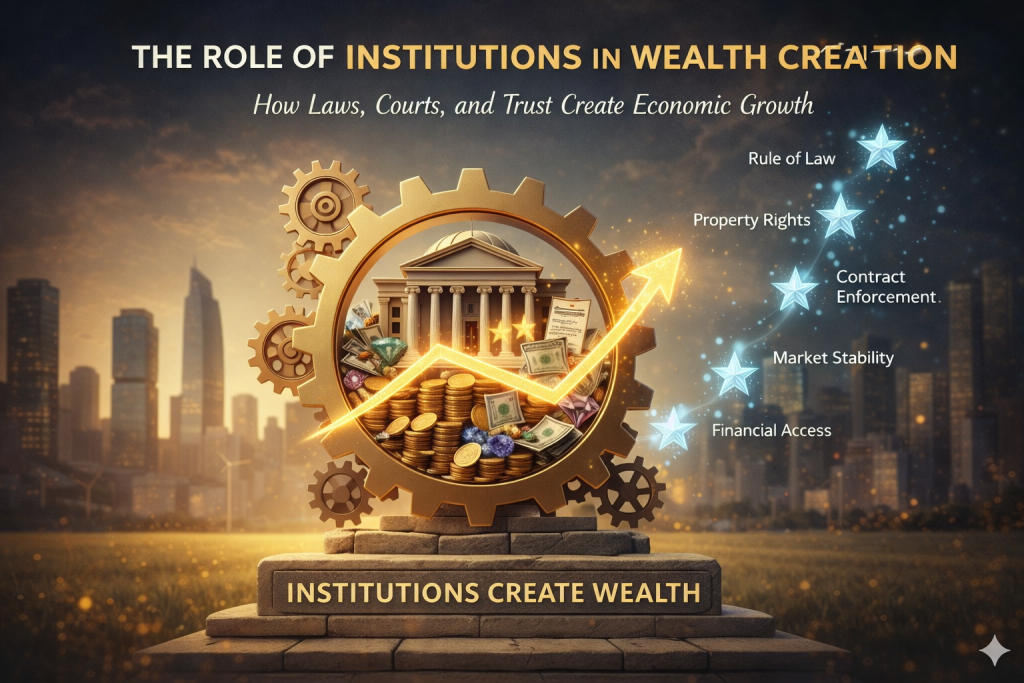
The Role of Institutions in Wealth Creation
Introduction
Why are some countries rich and others poor?
For decades, people assumed the answer was natural resources, intelligence, or hard work. Yet the evidence contradicts this assumption. Countries rich in minerals — Congo, Venezuela, Nigeria — remain economically unstable, while countries with almost no natural resources — Singapore, Japan, Switzerland — became extraordinarily prosperous.
The modern economic consensus is clear:
Wealth is not primarily created by individuals.
Wealth is created by institutions.
What Economists Mean by “Institutions”
Nobel Prize-winning economist Douglass North defined institutions as:
“The rules of the game in a society — the humanly devised constraints that shape human interaction.”
Institutions include:
• property rights
• contract enforcement
• courts
• regulatory systems
• corporate law
• banking systems
They determine whether effort becomes wealth — or disappears.
Property Rights: The Foundation of All Wealth
The Peruvian economist Hernando de Soto, in The Mystery of Capital, demonstrated a powerful insight:
The poor in developing countries are not asset-poor.
They are legally poor.
Millions own land, houses, and businesses — but without legally recognized titles. Because the assets are not formally documented, they cannot be:
• used as collateral
• financed by banks
• sold efficiently
• transferred securely
He called this “dead capital.”
In advanced economies, property rights transform a house into:
- a loan guarantee
- a business start-up fund
- an inheritance vehicle
Without enforceable ownership, assets cannot generate capital.
Why Courts Matter More Than Entrepreneurs
Entrepreneurs do not create wealth by effort alone.
They create wealth because contracts can be enforced.
If a supplier delivers goods and a buyer refuses payment, the existence of an independent court determines whether commerce survives.
This is why rule of law correlates strongly with GDP per capita.
Investors do not fear risk.
They fear uncertainty without legal remedy.
No serious long-term investment flows into environments where:
• contracts are ignored
• judgments are unenforced
• political actors override courts
Regulation: The Thin Line
Regulation performs two opposite roles.
Good regulation:
• protects investors
• standardizes markets
 • enables trust
Bad regulation:
• increases barriers
• encourages bribery
• drives businesses informal
Economist Daron Acemoglu (Why Nations Fail) distinguishes:
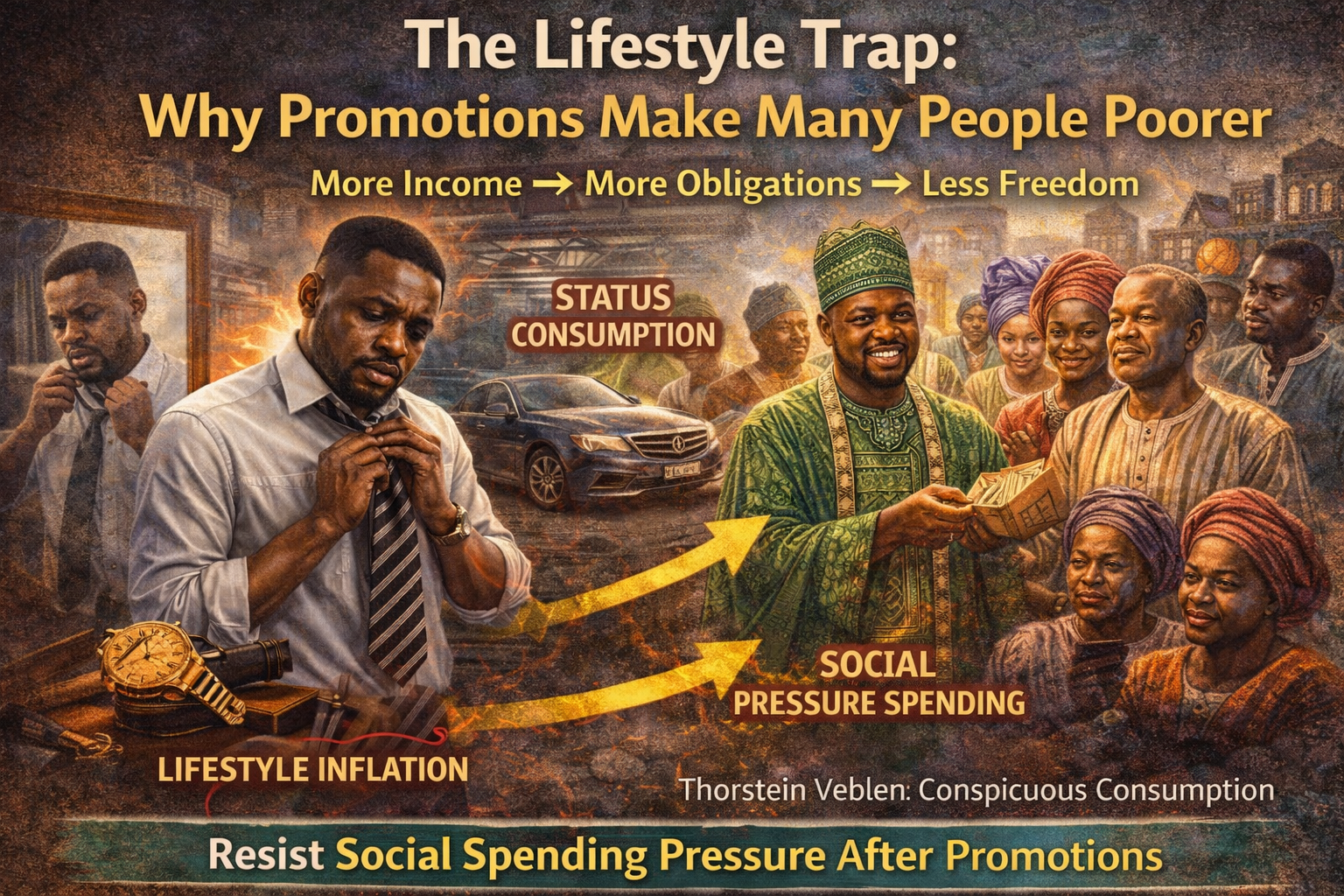
Inclusive institutions — enable participation and innovation
Extractive institutions — concentrate benefits to elites
The difference explains why some economies industrialize and others stagnate.
Enforcement: The Invisible Engine
Laws on paper do not matter.
Only enforced laws matter.
A country may have:
- corporate statutes
- securities laws
- anti-fraud provisions
But if enforcement agencies are weak, wealth creation collapses because contracts become unreliable promises.
Commerce ultimately runs on one assumption:
Agreements made today will still be honored tomorrow.
That assumption is institutional, not cultural.
Informal Economies and the Poverty Trap
Where institutions are weak, economic activity moves informal:
• cash transactions
• undocumented employment
• unregistered businesses
This seems harmless but creates a systemic effect:
Informality → no records → no credit → no scaling → no capital accumulation
Thus many hardworking populations remain poor not due to laziness, but due to institutional exclusion from capital systems.
The Real Lesson
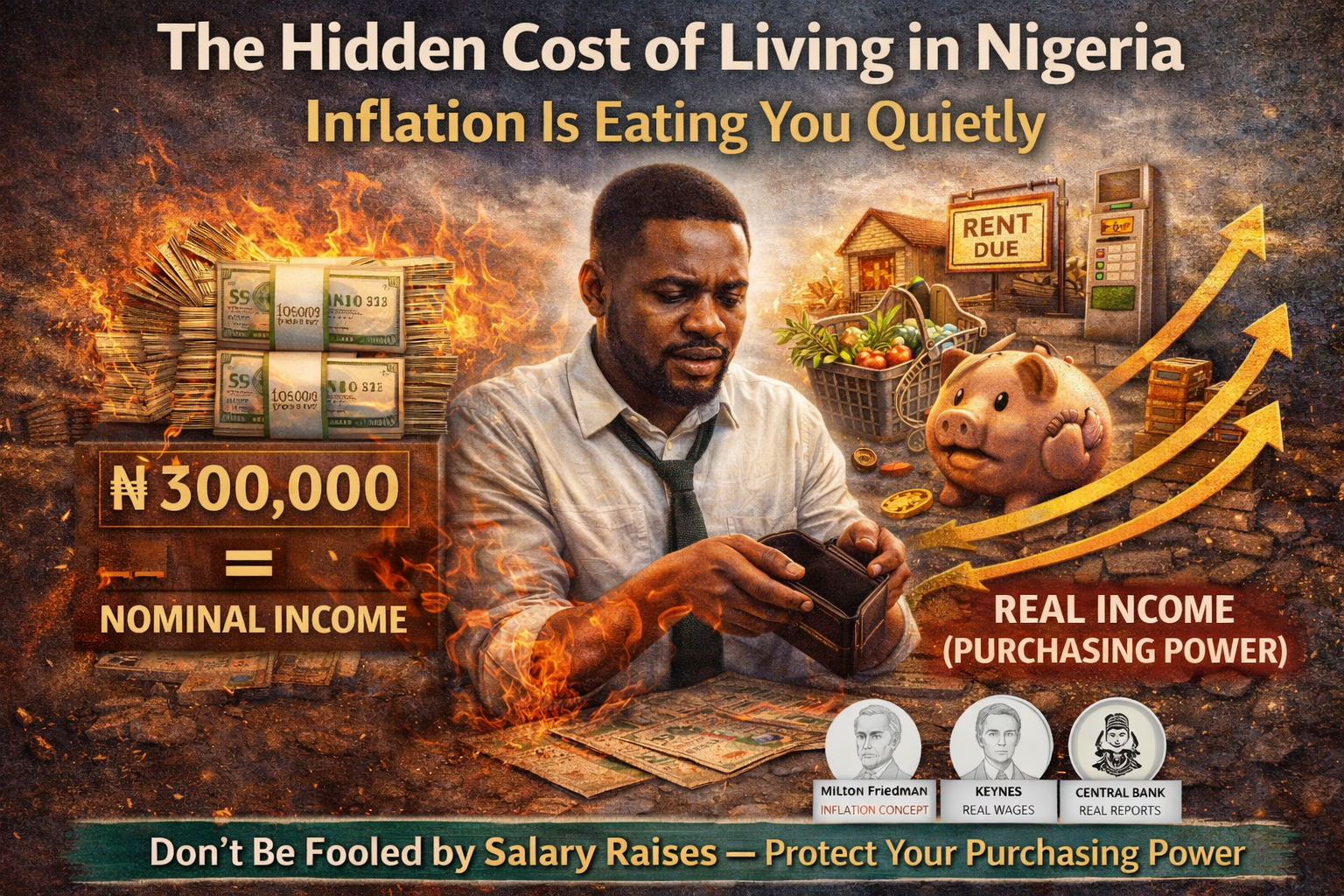
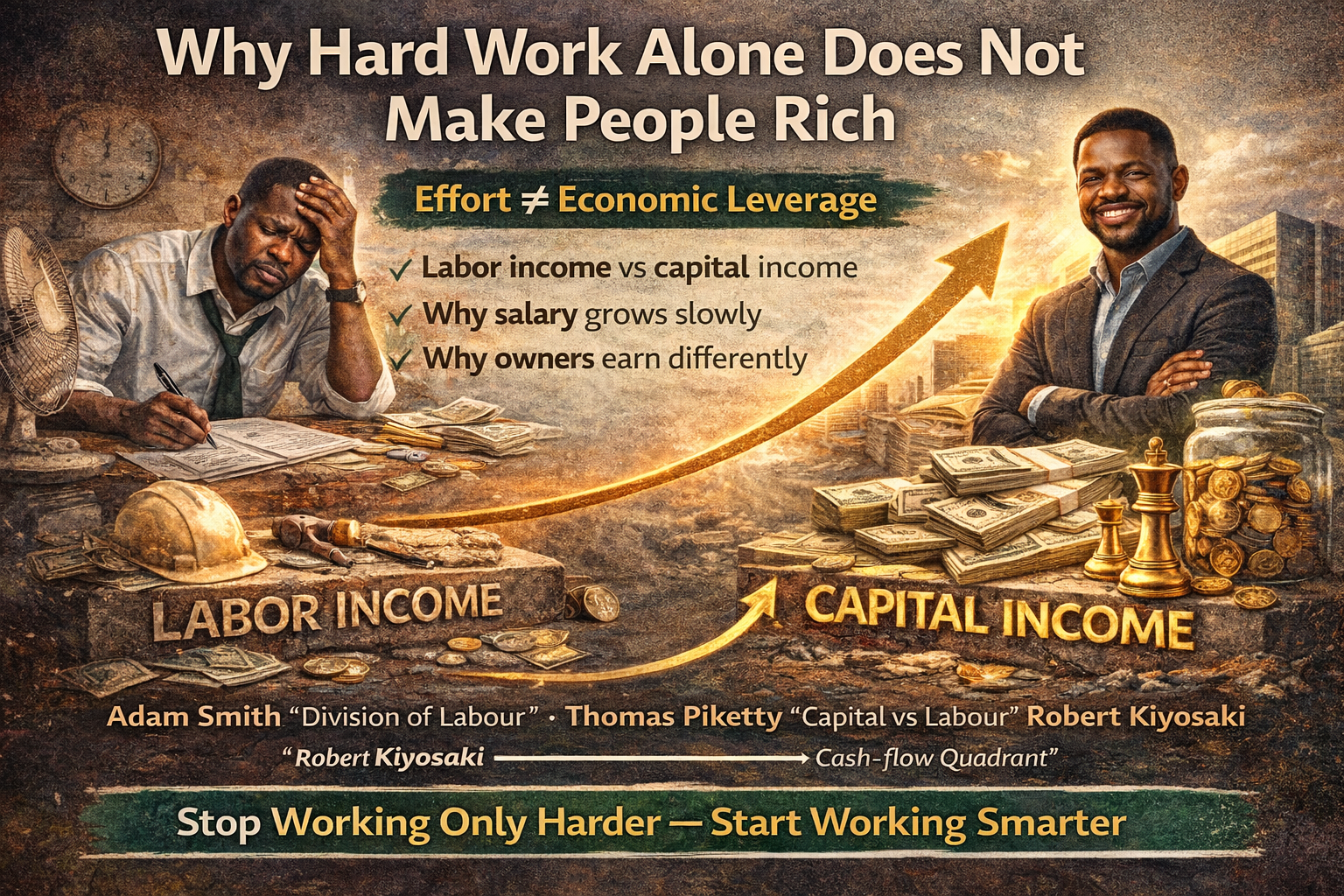
Hard work produces income.
Institutions determine whether income becomes wealth.
A lawyer, doctor, trader, or software developer in a weak institutional environment must work continuously to earn.
In a strong institutional environment, ownership structures allow wealth to grow even when the individual is not working.
Conclusion
The central economic lesson is profound:
Prosperity is not simply a personal achievement.
It is a legal and institutional outcome.
Property rights convert effort into assets.
Courts convert promises into contracts.
Regulation converts markets into systems.
Enforcement converts laws into trust.
Where institutions are reliable, wealth compounds.
Where institutions are weak, wealth evaporates.
Understanding this is the first step toward personal financial strategy — because individuals must learn not only how to earn, but where and how to position their economic activity within functioning systems.