
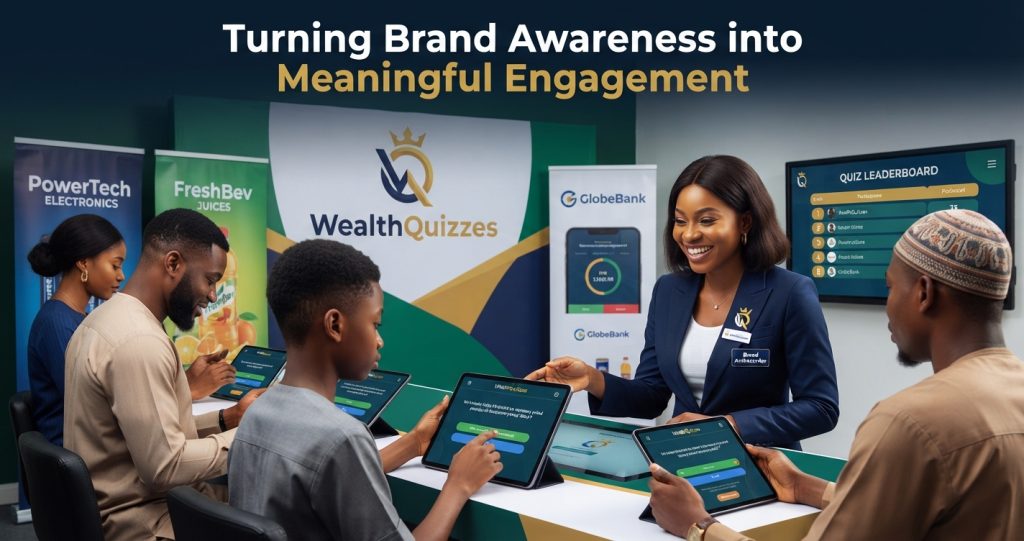
Turning Brand Awareness into Meaningful Engagement: How Consumer Brands Can Connect with Audiences Through Knowledge
From Passive Advertising to Interactive Brand Experiences
In an increasingly competitive marketplace, consumer-facing businesses face a fundamental challenge: getting people to notice a brand is no longer sufficient. Organisations must also find meaningful ways to sustain attention, build relationships, encourage participation and create experiences that consumers remember.
Traditional advertising remains important for communicating product information, establishing brand identity and reaching large audiences. However, consumers are increasingly exposed to promotional messages across social media, digital advertising, television, mobile applications, websites and other communication channels. In this environment, brands must compete not only for visibility but also for relevance, trust and engagement.
One promising approach is the use of knowledge-based engagement. By combining educational content, interactive quizzes, product-awareness challenges, themed competitions and sponsored knowledge activities, consumer brands can create experiences that invite audiences to participate rather than merely receive advertising messages.
This approach offers opportunities for organisations across sectors including banking, telecommunications, fast-moving consumer goods, insurance, retail, technology, healthcare, entertainment, transportation and lifestyle services.
The central idea is simple: brands can connect with consumers by giving them opportunities to learn, participate, discover and demonstrate knowledge, while integrating the brand into an experience that provides value beyond the promotional message itself.
1. The Changing Meaning of Brand Awareness
Brand awareness traditionally concerns whether consumers recognise or recall a particular brand when considering a product or service category.
Awareness is an important starting point. A consumer who does not know that a product exists may be unlikely to consider purchasing it. However, recognition alone does not necessarily translate into trust, preference, loyalty or purchasing behaviour.
A consumer may recognise a telecommunications provider without understanding its data plans, know a bank’s name without appreciating its digital services, or recognise an insurance company without understanding the protection its products offer.
This distinction creates an opportunity for brands to move beyond merely communicating their existence.
Rather than repeatedly presenting logos, slogans and promotional messages, organisations can create activities that help consumers understand what the brand offers, how its products work, what problems it solves and how its services may be relevant to their lives.
Meaningful engagement occurs when consumers actively interact with the brand, invest attention in the experience, develop an understanding of its offerings or voluntarily participate in activities associated with it.
The objective is not to abandon advertising, but to complement traditional promotional strategies with experiences that encourage deeper interaction.
2. Why Knowledge-Based Engagement Is Valuable
Knowledge-based engagement combines information, participation and interaction.
Instead of asking consumers merely to view a promotional message, a brand could invite them to answer questions, complete challenges, explore facts, test their understanding or participate in themed competitions.
This approach can potentially create several forms of value.
First, it encourages active participation. Participants must think, respond and interact rather than simply scroll past a message.
Second, it creates an opportunity for learning. Consumers may discover information about products, services, financial concepts, health issues, technology or other subjects relevant to the brand.
Third, it can improve the experience of brand communication by making promotional interaction more interesting and less repetitive.
Fourth, it may provide useful insights into audience interests and participation patterns, subject to appropriate data protection and consent arrangements.
Finally, it creates opportunities for brands to build relationships that extend beyond a single advertisement or transaction.
The academic literature supports the importance of understanding engagement as more than a simple behavioural response.
A 2023 meta-analysis published in the Journal of the Academy of Marketing Science, examining 395 samples involving 434,233 customers, found that customer engagement initiatives can influence cognitive, emotional and behavioural engagement, with effectiveness depending partly on the type of initiative and the characteristics of the platform.
The study distinguished task-based initiatives, which encourage participation in structured activities, from experiential initiatives, which aim to create enjoyable experiences. Its findings suggest that the effectiveness of these approaches depends on the context in which engagement takes place.
This provides a useful foundation for brands considering structured knowledge challenges and interactive digital campaigns.
Authority: Blut, M., Kulikovskaja, V., Hubert, M., Brock, C., et al. (2023), Effectiveness of Engagement Initiatives Across Engagement Platforms: A Meta-Analysis, Journal of the Academy of Marketing Science, 51, 941–965.
https://doi.org/10.1007/s11747-023-00925-7
3. Sponsored Quizzes: An Alternative Promotional Experience
Sponsored quizzes provide one of the most straightforward ways for consumer brands to participate in knowledge-based engagement.
A company could sponsor a quiz programme built around a relevant subject, theme or audience interest, with its brand appropriately integrated into the experience.
For example, a telecommunications company could sponsor a digital knowledge challenge covering technology, communication, internet safety, digital innovation and general knowledge.
A bank could sponsor financial literacy quizzes covering savings, budgeting, fraud awareness, responsible borrowing and financial planning.
A beverage company could sponsor a general knowledge competition during a major sporting event, while an insurance company could support challenges relating to risk awareness, safety and responsible decision-making.
A consumer electronics company could sponsor technology-themed competitions covering digital devices, innovation, computing and emerging technologies.
The sponsored activity need not consist entirely of product advertisements. Indeed, an experience dominated by promotional content may undermine the very engagement it seeks to create.
A more effective approach would be to provide genuinely interesting questions, useful information, enjoyable participation and a clear connection between the campaign theme and the sponsoring organisation.
The brand becomes associated with the experience without necessarily interrupting it at every stage.
Sponsorship arrangements could include brand identification, campaign naming, selected promotional messages, themed question categories, approved educational content, campaign-specific prizes and post-competition communications, subject to the agreed terms and appropriate disclosures.
4. Product-Awareness Challenges: Helping Consumers Understand What They Buy
Many products and services have features that consumers either do not understand or do not fully appreciate.
Product-awareness challenges can provide an opportunity to address this problem through interactive communication.
A brand could develop quizzes designed to help consumers understand product features, usage instructions, benefits, limitations, safety precautions, eligibility requirements or differences between available options.
For example:
- A telecommunications brand could introduce challenges about data management, mobile connectivity, digital safety and network technology.
- A bank could create challenges explaining digital banking, account security, payment services and financial planning.
- An insurance company could develop activities about insurance terminology, risk, claims processes and coverage.
- A consumer goods company could sponsor quizzes on product ingredients, storage, nutrition or responsible usage, where claims are properly substantiated.
- A technology company could introduce challenges on device features, cybersecurity and responsible technology use.
The commercial benefit is potentially significant because informed consumers may be better positioned to appreciate the relevance of a product or service.
However, product-awareness campaigns must remain accurate and balanced. A knowledge challenge should not misrepresent product benefits, conceal limitations, exaggerate performance or present advertising claims as independently established facts.
The strongest campaigns are those that genuinely help consumers understand the product rather than simply reward them for memorising promotional slogans.
5. Themed Knowledge Competitions: Connecting Brands With Shared Interests
Consumer brands can also use themed competitions to connect with audiences around interests that extend beyond their immediate products.
Sport, music, entertainment, history, technology, entrepreneurship, culture, financial literacy and current affairs provide opportunities for campaigns that can attract diverse audiences.
A sportswear brand, for example, could sponsor football knowledge competitions covering major tournaments, legendary players, sporting records, fitness and sportsmanship.
A telecommunications company could sponsor a technology and innovation challenge.
A food brand could support a culture, nutrition or culinary knowledge competition.
A travel company could sponsor geography, tourism and cultural awareness challenges.
An entertainment brand could organise competitions around films, music, popular culture or creative knowledge.
The key is relevance. The subject matter should connect naturally with the brand’s identity, target audience or commercial objectives.
A themed competition can create multiple opportunities for brand interaction: campaign discovery, registration, participation, repeat engagement, sharing, discussion and subsequent exposure to relevant products or services.
The competition becomes an experience in its own right, while the sponsoring brand benefits from being associated with an activity audiences voluntarily engage with.
6. Beyond Advertising: Creating Value for the Consumer
An important consideration in knowledge-based marketing is the value proposition presented to participants.
Consumers are more likely to find an activity worthwhile when it offers something beyond a demand for attention.
That value may include:
- Learning useful or interesting information.
- Participating in an enjoyable activity.
- Testing personal knowledge.
- Discovering products or services.
- Competing with others.
- Receiving recognition for participation or performance.
- Accessing appropriately structured incentives.
- Joining a community centred on shared interests.
Research on online customer engagement also highlights the importance of authenticity.
Eigenraam, Eelen and Verlegh, in their 2021 Journal of Interactive Marketing study, examined how the relationship between the nature of an engagement initiative and consumers’ perceptions of a brand affects perceived authenticity. Their findings indicate that the consistency between the engagement activity and the brand’s perceived character matters.
This has practical implications.
A brand known for expertise, reliability and technical competence may benefit more from informative, useful knowledge activities than from an engagement campaign that feels disconnected from its identity.
Similarly, brands positioned around entertainment, lifestyle or emotional experiences may find that enjoyable, participatory campaigns fit naturally with their established image.
Engagement should therefore be designed around the brand’s identity and audience, rather than treating quizzes as a universal promotional formula.
Authority: Eigenraam, A.W., Eelen, J. & Verlegh, P.W.J. (2021), Let Me Entertain You? The Importance of Authenticity in Online Customer Engagement, Journal of Interactive Marketing, 54, 53–68.
https://doi.org/10.1016/j.intmar.2020.11.001
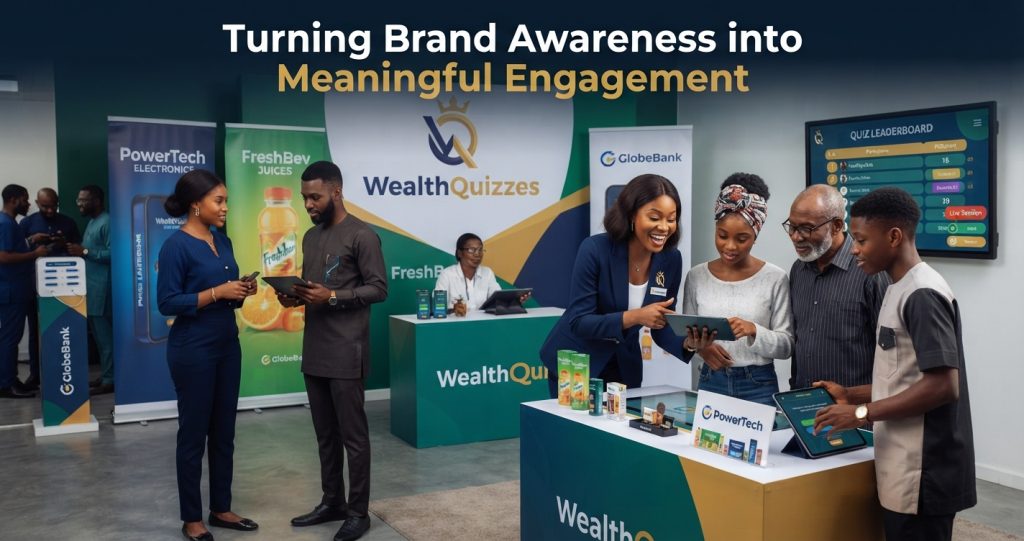
7. Building Trust Through Meaningful Interaction
Trust is a critical component of consumer relationships.
Consumers may be willing to interact with a brand, explore its offerings, share feedback or consider purchasing its products when they perceive the organisation as credible, competent, transparent and responsive.
Edelman’s 2023 Trust Barometer Special Report on the changing purchase funnel argues that the consumer-brand relationship does not necessarily end with a transaction. It identifies ongoing interaction, brand experience and trust as important elements of the relationship.
The report found that many consumers interact directly with brands beyond simply using their products or services, including through brand activities, content consumption, social media and feedback.
Knowledge-based engagement can contribute to this relationship when it is designed transparently and delivers genuine value.
A brand that sponsors useful educational activities may create opportunities to demonstrate its commitment to consumers in a way that is more participatory than conventional advertising.
Nevertheless, sponsorship of a quiz or educational campaign does not automatically establish trust. The experience must be consistent with the brand’s conduct, product quality, customer service, claims and overall reputation.
Trust is built through repeated, credible actions—not merely through promotional association.
Authority: Edelman (2023), The Trust Barometer Special Report: The Collapse of the Purchase Funnel.
https://www.edelman.com/trust/2023/trust-barometer/special-report-brand-trust/collapse-purchase-funnel
8. Digital Platforms as Channels for Interactive Brand Campaigns
Digital knowledge platforms can provide a structured environment in which sponsored activities are organised, presented and measured.
Depending on the platform’s capabilities, brands could explore campaigns involving:
- Sponsored knowledge categories.
- Brand-themed quiz events.
- Product-awareness challenges.
- Limited-period competitions.
- Campaign-specific participation incentives.
- Educational awareness programmes.
- Seasonal or event-based competitions.
- Audience participation and feedback.
- Digital campaign reporting.
A platform may also provide a mechanism through which participants encounter a campaign, interact with its content, complete activities and return for subsequent engagement.
The value of the platform should not be assessed merely by the number of people who see a brand logo.
The quality of participation, audience relevance, completion rates, repeat engagement, user experience and measurable campaign outcomes are potentially more meaningful indicators.
Brands should also assess the platform’s technical reliability, audience composition, data protection practices, moderation arrangements, transparency, reporting capabilities and operational capacity before entering into sponsorship agreements.
9. WealthQuizzes and the Opportunity for Corporate Brand Partnerships
WealthQuizzes could explore knowledge-based sponsorship and engagement programmes as an additional opportunity for consumer-facing businesses seeking more interactive ways to connect with audiences.
Its knowledge-based quiz format potentially offers a framework through which organisations could sponsor themed activities, educational challenges and competitions across different areas of public interest.
Possible partnership concepts include:
Brand-sponsored knowledge challenges: A company sponsors a themed competition, with brand identification and approved campaign messaging integrated into the activity.
Product-awareness quizzes: A partner sponsors questions designed to help consumers understand selected products, services, features or responsible usage.
Sector-themed competitions: Organisations sponsor competitions covering topics connected with their industries, such as finance, technology, sports, entertainment, consumer goods or insurance.
Educational awareness campaigns: Brands support knowledge activities addressing financial literacy, digital safety, health awareness, entrepreneurship or other relevant themes.
Special-event campaigns: Sponsorship opportunities are developed around sporting events, cultural celebrations, product launches, seasonal campaigns or public awareness initiatives.
Reward-supported engagement: A brand sponsors approved rewards or campaign incentives, subject to transparent participation rules, agreed commercial terms and applicable requirements.
These are potential commercial partnership concepts, rather than representations that WealthQuizzes currently has established sponsorship arrangements with these categories of businesses.
The strongest proposition would be to demonstrate how a brand’s objectives could be translated into a properly designed engagement campaign, with defined deliverables, audience considerations, reporting metrics and measurable commercial or social outcomes.
10. Measuring Meaningful Engagement: Beyond Impressions and Reach
A major weakness in some digital marketing campaigns is the tendency to equate visibility with success.
Impressions, reach, clicks and downloads can be useful indicators, but they do not necessarily establish whether consumers meaningfully engaged with a brand.
A sponsored knowledge campaign should ideally be evaluated through a combination of indicators.
| Measurement area | Possible indicators |
|---|---|
| Awareness | Campaign reach, impressions and brand recall |
| Participation | Registrations, quiz attempts and completed activities |
| Engagement | Completion rates, repeat participation and time spent |
| Knowledge | Improvement in understanding where properly assessed |
| Brand interaction | Feedback, campaign-related enquiries and voluntary sharing |
| Conversion | Click-throughs, qualified leads or purchases where measurable |
| Retention | Repeat participation and subsequent engagement |
| Cost effectiveness | Cost per participant, completed activity or qualified outcome |
Where feasible, campaigns should establish baseline measures and clearly define the intended outcome before implementation.
A campaign designed to increase product awareness should not be evaluated solely by the number of quiz participants. A campaign designed to generate leads should not be judged exclusively by impressions.
Measurement should reflect the actual commercial or social objective.
Brands should also avoid attributing sales increases to a campaign without a credible basis for establishing causation. Campaign reporting should distinguish observed results from estimates and inferences.
11. Responsible Engagement, Data Protection and Consumer Protection
Interactive campaigns may involve the collection of participant information, particularly where registration, rewards, leaderboards, marketing communications or follow-up activities are involved.
Brands and their digital partners should therefore address data protection, transparency, consent where required, security, retention, access and the responsibilities of each party.
Nigeria’s Data Protection Act 2023 provides the relevant legal framework for personal data processing. Campaign design should reflect applicable data protection requirements and avoid collecting information that is unnecessary for the stated purpose.
Sponsored campaigns should also disclose material commercial relationships, communicate participation conditions clearly and ensure that promotional claims are accurate and substantiated.
Where competitions involve prizes, eligibility, selection criteria, timing, prize conditions and relevant restrictions should be clearly communicated.
Consumer engagement should never be built on misleading advertising, hidden charges, deceptive reward promises, unnecessary data collection or manipulative participation practices.
The credibility of a campaign is part of its commercial value.
Conclusion: Brands Must Give Consumers a Reason to Participate
Brand awareness remains important, but the future of brand communication increasingly requires organisations to create meaningful opportunities for interaction.
Consumers do not necessarily want every digital experience to be another advertisement. They may respond more positively when brands provide opportunities to learn, participate, discover useful information, test knowledge and engage with subjects they genuinely find interesting.
Knowledge-based engagement offers consumer-facing businesses a practical opportunity to complement traditional advertising with interactive experiences.
Sponsored quizzes, product-awareness challenges, educational campaigns and themed knowledge competitions can potentially help brands build visibility, stimulate participation, communicate relevant information and strengthen relationships with audiences.
For WealthQuizzes, this represents a potential strategic partnership opportunity across multiple industries. By positioning the platform as a possible channel for structured, knowledge-driven brand engagement, the company could explore commercial collaborations that connect corporate marketing objectives with interactive participation.
The ultimate measure of success, however, should not be how many times a brand is displayed.
It should be whether the campaign creates meaningful value for participants, delivers measurable outcomes for the sponsoring organisation and establishes an experience worth returning to.
In an increasingly crowded digital marketplace, the brands that create reasons for consumers to participate—not merely reasons to look—may be better positioned to build enduring relationships.
WealthQuizzes — Learn • Engage • Earn
Where Knowledge Becomes Wealth.


