Financial Blind Spots: What You Don’t See Is Costing You Money
The Silent Financial Leaks Draining Your Wealth
Introduction: The Most Dangerous Financial Problem
Most people think their financial struggles come from:
- Low income
- Big expenses
- Lack of opportunities
But the truth is far more subtle—and more dangerous.
Most financial losses do not come from big mistakes. They come from small, unnoticed habits.
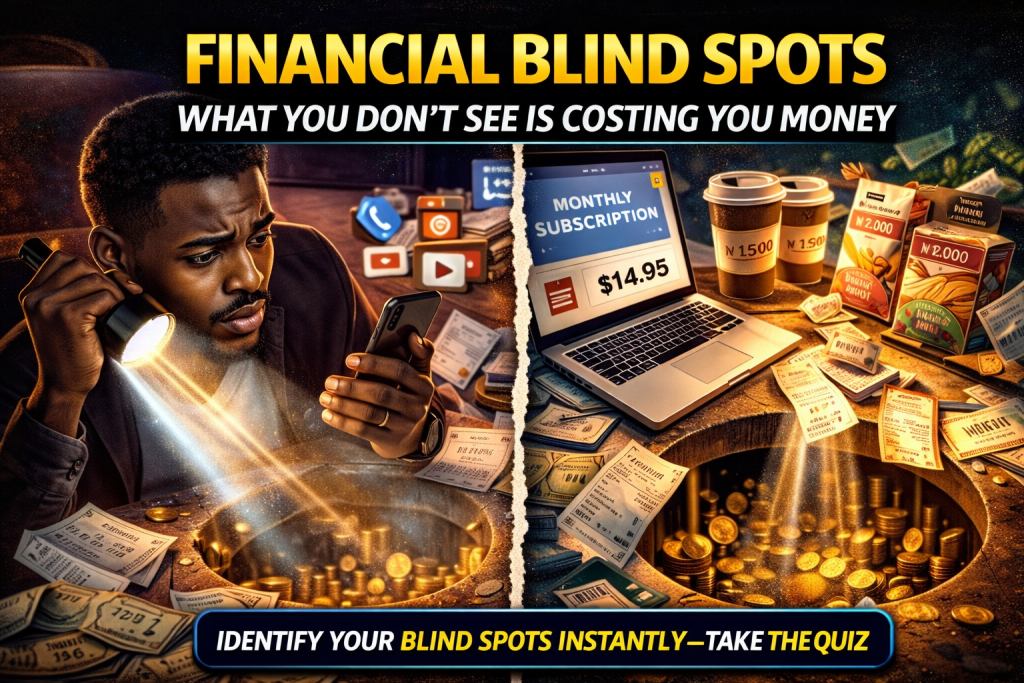
These are called financial blind spots—areas of your financial life where money is leaking without your awareness.
And the most dangerous part?
You cannot fix what you cannot see.
What Are Financial Blind Spots?
Financial blind spots are:
- Hidden spending patterns
- Unnoticed habits
- Ignored financial behaviors
They exist because human decision-making is limited.
As noted by financial expert Morgan Housel, people make money decisions based on incomplete information and personal biases—meaning what feels “normal” to you may actually be financially harmful. (CNBC)
This leads to a critical insight:
Financial problems are often not visible until they become serious.
The Core Truth
Core Idea: Most losses come from unnoticed habits
Mindset Shift: Awareness precedes growth
Before you can grow financially, you must first see clearly.
The Science of Financial Blindness
Modern behavioral finance explains why blind spots exist.
Research shows that people underestimate their spending by 20% to 40%, a phenomenon known as spending blindness. (Yomio)
Why does this happen?
Because:
- The brain ignores small transactions
- Digital payments reduce “pain of paying”
- Habits become invisible over time
This means:
You are likely spending more than you think—right now.
Blind Spot #1: Subscription Culture (The Silent Drain)
The Rise of Invisible Spending
We live in a subscription economy:
- Streaming services
- Apps
- Software
- Memberships
Each one seems small:
- ₦2,000 here
- ₦5,000 there
But collectively?
They become significant.
Financial research shows that people drastically underestimate subscription costs, often by more than double their actual spending. (Yomio)
Why Subscriptions Are Dangerous
Subscriptions are designed to:
- Be automatic
- Be low-cost individually
- Avoid attention
This creates:
- Financial invisibility
- Psychological detachment
As behavioral studies explain, automatic recurring charges rely on habit and forgetfulness, making them difficult to track. (Finanmath)
The Real Problem
It’s not just paying for subscriptions.
It’s paying for:
- What you don’t use
- What you forgot
- What you no longer need
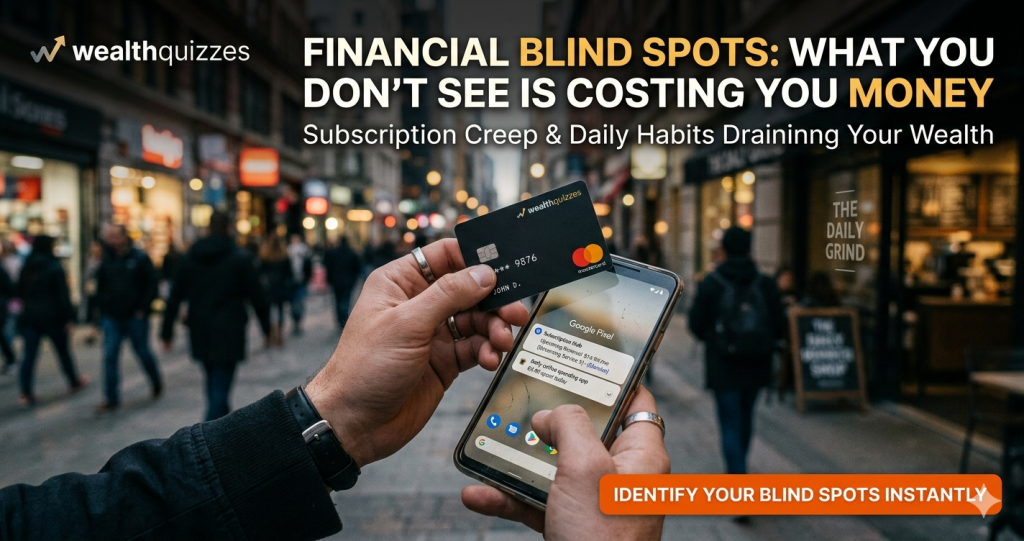
Blind Spot #2: Daily Micro-Spending
The Illusion of “It’s Just Small Money”
Micro-spending includes:
- Snacks
- Transport upgrades
- Delivery fees
- Small impulse buys
Individually:
- They feel insignificant
Collectively:
- They are powerful
Financial analysis shows that small, frequent purchases can quietly accumulate into thousands over time. (Expensinator)
Why Micro-Spending Is Invisible
- No emotional pain
Small purchases don’t trigger caution - Habit formation
They become routine - Mental justification
“It’s just ₦1,000”
But repeated daily:
- ₦1,000 × 30 days = ₦30,000
- ₦30,000 × 12 months = ₦360,000
That is not small.
The Psychology Behind Blind Spots
1. The Brain Ignores Small Losses
Behavioral research shows that low-value spending does not activate strong emotional responses, making it easy to ignore. (Finanmath)
2. Digital Spending Feels Less Real
Studies on digital payments reveal that people spend more when using cards or mobile apps because the transaction feels less tangible than cash. (PMC)
3. Emotional Spending
Your brain is wired for:
- Immediate reward
- Comfort
- Convenience
This explains why:
- Spending feels good
- Saving feels difficult
4. Social Normalization
Social media subtly reshapes:
- What you consider “normal”
- What you think you “need”
Research shows that exposure to lifestyle content gradually increases spending expectations without conscious awareness. (wagetap.com)
The Real Cost of Financial Blind Spots
1. Hidden Wealth Loss
You are not just spending money—you are losing:
- Investment opportunities
- Compounding growth
- Financial stability
2. False Financial Confidence
You may feel:
- “I’m doing okay”
But in reality:
- You are leaking money
3. Delayed Wealth Building
Blind spots delay:
- Saving
- Investing
- Asset creation
The Visibility Problem (The Real Issue)
A powerful insight from real-world financial discussions:
“Most people don’t have a spending problem—they have a visibility problem.” (Reddit)
This captures the essence of financial blind spots.
It’s not always about:
- Discipline
It’s about:
- Awareness
Real-Life Wake-Up Moments
Many people only realize their blind spots when they track spending.
One real user reported:
“Daily coffee, small orders, and subscriptions added up to nearly $250/month.” (Reddit)
That is:
- $3,000 per year
From “small” expenses.
How to Identify Your Financial Blind Spots
1. Do a Financial Audit
Review:
- Bank statements
- App payments
- Subscriptions
2. Track Every Expense (Even the Small Ones)
For 30 days:
- Write everything down
3. Categorize Your Spending
Group into:
- Needs
- Wants
- Waste
4. Question Every Recurring Charge
Ask:
- Do I use this?
- Do I need this?
5. Increase Financial Visibility
Use:
- Budget apps
- Alerts
- Expense tracking
Research shows that tracking spending can reduce overspending by up to 20–30%. (Yomio)
The Real Transformation
When you eliminate blind spots:
You move from:
- Confusion → Clarity
- Leakage → Control
- Consumption → Strategy
The Ultimate Truth
You don’t lose money because you earn too little.
You lose money because you don’t see clearly.
Conclusion: Awareness Is the Beginning of Wealth
Financial growth does not start with:
- More income
- Better opportunities
It starts with:
Awareness
Because:
- Awareness reveals problems
- Awareness creates control
- Awareness enables growth
Final Thought
Before you try to earn more, ask yourself:
“Where is my money going that I’m not seeing?”
Because the biggest threat to your financial future is not what you spend intentionally—
It is what you spend unconsciously.
👉 Identify your blind spots instantly—take the quiz on WealthQuizzes