
The Asset Illusion: What You Think Is Wealth But Isn’t
Why Many “Assets” Are Quietly Draining Your Financial Future
Introduction: The Misunderstood Idea of Wealth
Ask most people what it means to be wealthy, and you’ll hear answers like:
- Owning a car
- Living in a big house
- Using the latest gadgets
- Wearing expensive brands
These are widely accepted symbols of success.
But here is the uncomfortable truth:
Many of these so-called “assets” are not building wealth—they are quietly destroying it.
This is what we call:
The Asset Illusion
The Core Truth
Core Idea: Many “assets” are actually liabilities
Mindset Shift: Ownership vs value generation
Owning something does not make it an asset.
What matters is:
Does it generate value—or consume it?
Defining Assets vs Liabilities
The distinction between assets and liabilities is often misunderstood.
As Robert Kiyosaki explains:
“An asset puts money in your pocket. A liability takes money out of your pocket.”
This definition is simple—but powerful.
True Assets:
- Generate income
- Appreciate in value
- Create financial leverage
Liabilities:
- Cost money to maintain
- Depreciate over time
- Do not generate income
The Asset Illusion Explained
The asset illusion occurs when:
You believe you own wealth—but in reality, you own expenses.
This creates a false sense of financial progress.
Common “Assets” That Are Actually Liabilities
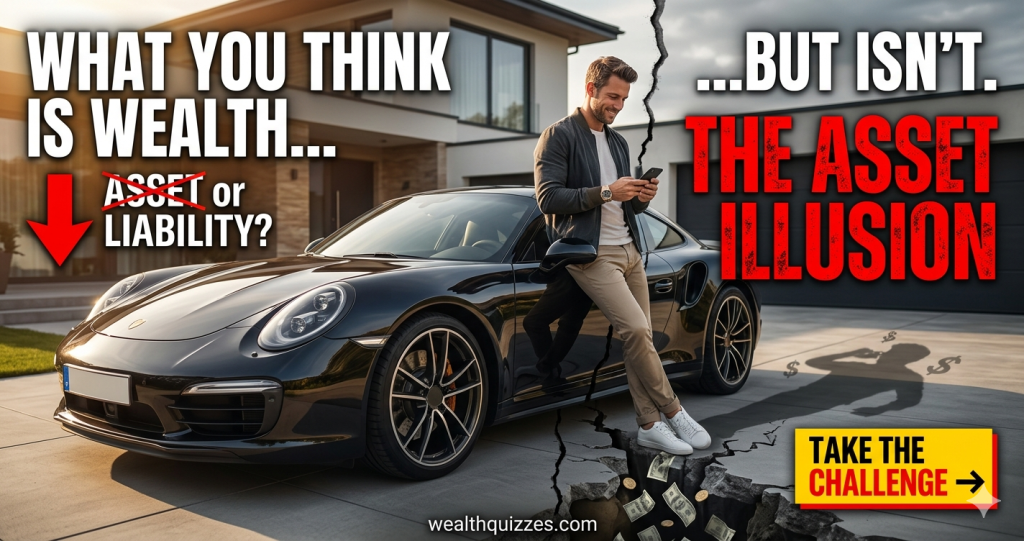
1. Cars: The Status Symbol Trap
Cars are often seen as:
- A sign of success
- A reward for hard work
But financially, most cars:
- Depreciate rapidly
- Require maintenance
- Consume fuel and insurance costs
As Thomas J. Stanley observed, many wealthy individuals avoid excessive spending on depreciating assets like luxury cars.
The Real Cost
A car:
- Does not produce income
- Continuously costs money
Unless used for:
- Business
- Income generation
It is:
A liability—not an asset
2. Gadgets: The Illusion of Progress
New phones, laptops, and devices:
- Feel like upgrades
- Signal modern living
But in most cases:
- They depreciate quickly
- Require frequent replacement
The Psychological Trap
You feel:
- Productive
- Upgraded
But financially:
- Nothing is being built
3. Luxury Items: The Visibility Problem
Designer clothes, accessories, and lifestyle items:
- Create visibility
- Signal status
But:
They do not create value.
As Morgan Housel explains:
“Spending money to show people how much money you have is the fastest way to have less money.”
Why People Fall for the Asset Illusion
1. Social Conditioning
Society equates:
- Ownership → Success
But rarely distinguishes:
- Productive vs non-productive assets
2. Emotional Satisfaction
Buying things provides:
- Instant gratification
- Temporary happiness
3. Lack of Financial Education
Many people are never taught:
- The difference between assets and liabilities
The Ownership Trap
Ownership feels powerful.
But ownership alone is not wealth.
You can own:
- Expensive items
- High-maintenance assets
And still be:
Financially unstable
The Wealth Perspective
True wealth is built on:
Value generation—not consumption
As Warren Buffett emphasizes:
“If you don’t find a way to make money while you sleep, you will work until you die.”
The Key Question
Before acquiring anything, ask:
“Does this put money in my pocket—or take money out?”
The Nigerian Context: Why the Illusion Is Strong
In Nigeria, the asset illusion is intensified by:
1. Social Visibility
- Success is often displayed materially
2. Cultural Expectations
- Owning certain items signals progress
3. Economic Pressure
- People reward themselves for hard work through spending
This creates a system where:
Appearance often replaces actual financial strength
The Hidden Cost of False Assets
1. Reduced Investment Capacity
Money spent on liabilities:
- Cannot be invested
- Cannot grow
2. Increased Financial Burden
Maintenance costs:
- Add up over time
3. Delayed Wealth Creation
Resources are diverted from:
- Asset-building
- Income-generating opportunities
4. Financial Illusion
You feel:
- Successful
But are:
- Not progressing
What Real Assets Look Like
True assets typically include:
- Businesses
- Investments (stocks, bonds)
- Rental properties
- Income-generating skills
These:
- Produce income
- Increase in value
- Create leverage
The Shift: From Ownership to Value
To escape the asset illusion, you must shift from:
Ownership Thinking:
- “I own this”
To:
Value Thinking:
- “What does this produce?”
Practical Framework: Asset or Liability?
Before any major purchase, ask:
- Does it generate income?
- Does it appreciate in value?
- Does it reduce or increase my expenses?
The Balanced Approach
This is not about:
- Avoiding all spending
It is about:
Intentional ownership
You can:
- Enjoy your money
But also:
- Build your future
The Real Transformation
When you understand the asset illusion:
You move from:
- Consuming → Investing
- Showing → Building
- Owning → Growing
The Hard Truth
Most people are not poor because:
- They don’t earn enough
They are poor because:
They mistake liabilities for assets.
Conclusion: Redefining Wealth
Wealth is not:
- What you own
It is:
What your assets produce
Because:
- Ownership can be deceptive
- Value is measurable
Final Thought
Before your next major purchase, pause and ask:
“Is this building my future—or funding my illusion?”
Because the difference between appearing wealthy and actually becoming wealthy is not what you buy—
It is what produces for you.
👉 Asset or liability? Take the challenge on WealthQuizzes