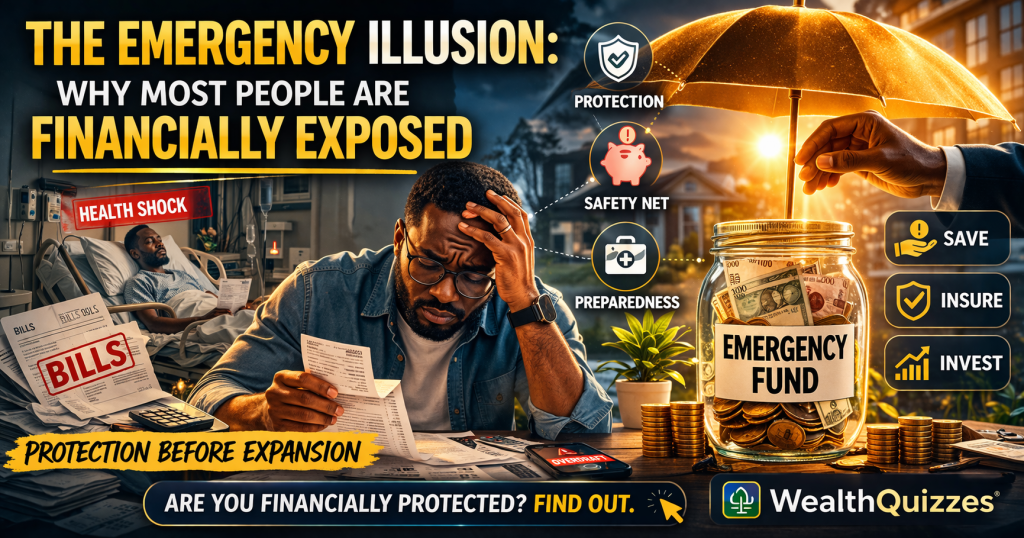
The Emergency Illusion: Why Most People Are Financially Exposed
The Hidden Risk Behind Living Without a Financial Safety Net
Introduction: The Dangerous Assumption
Most people believe they are financially “fine.”
They:
- Earn regularly
- Pay their bills
- Maintain a routine
And this creates a quiet confidence:
“Nothing will go wrong.”
But reality does not operate on assumptions.
Emergencies are not rare events—they are inevitable.
The real question is not if something will happen.
It is:
“Are you prepared when it does?”
The Core Truth
Core Idea: Lack of safety nets creates vulnerability
Mindset Shift: Protection before expansion
Before you think about:
- Investing
- Expanding
- Building wealth
You must first secure:
Financial protection
What Is the Emergency Illusion?
The Emergency Illusion is the false belief that:
- Your current income is enough
- Your situation is stable
- You can handle unexpected events
Without actually having:
- Savings
- Insurance
- Financial buffers
It is:
The illusion of security without real protection
Why This Illusion Is So Common
1. Stability Feels Like Safety
A steady income creates:
- Confidence
- Predictability
- Comfort
But income is not protection.
As Robert Kiyosaki emphasizes:
“It’s not how much money you make. It’s how much money you keep—and how long it works for you.”
2. Emergencies Are Underestimated
People assume:
- “It won’t happen to me”
- “I’ll figure it out”
But financial shocks are:
- Sudden
- Expensive
- Disruptive
3. Cultural Financial Patterns
In many environments, including Nigeria:
- Income is used immediately
- Savings are minimal
- Planning is short-term
This increases vulnerability.
The Reality: Emergencies Are Inevitable
Emergencies can include:
- Medical issues
- Job loss
- Business failure
- Family obligations
- Economic downturns
As Nassim Nicholas Taleb explains, rare but impactful events—“Black Swan” events—can drastically change financial outcomes.
The Cost of Being Unprepared
1. Financial Collapse
Without a safety net:
- One event can wipe out savings
- Debt becomes unavoidable
2. Forced Decisions
You are forced to:
- Borrow
- Sell assets
- Accept unfavorable terms
3. Delayed Wealth Building
Money meant for:
- Investment
- Growth
Is redirected to:
- Crisis management
4. Emotional Stress
Financial emergencies create:
- Anxiety
- Pressure
- Uncertainty
Emergency Funds: The First Line of Defense
What Is an Emergency Fund?
An emergency fund is:
Money set aside specifically for unexpected situations
Why It Matters
As Dave Ramsey advises:
“An emergency fund turns a crisis into an inconvenience.”
Recommended Structure
Financial experts generally suggest:
- 3 to 6 months of living expenses
This provides:
- Stability
- Breathing room
- Decision-making power
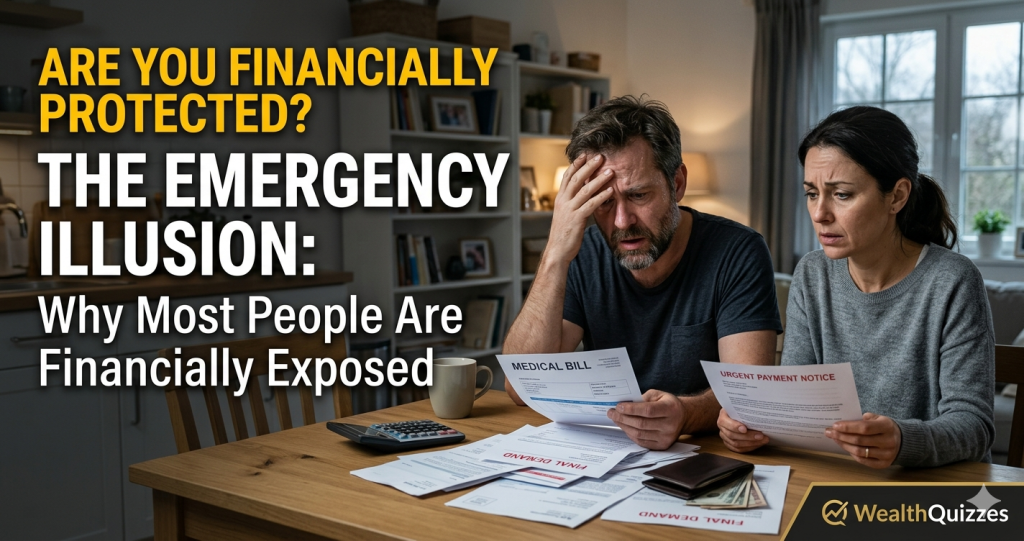
The Nigerian Context: Why Protection Is Critical
In Nigeria:
- Healthcare costs are unpredictable
- Job security is limited
- Economic volatility is high
This makes emergency planning not optional—but essential.
Health and Financial Shocks
1. Medical Emergencies
Healthcare expenses can:
- Drain savings instantly
- Force borrowing
Without preparation:
Health issues become financial crises
2. Income Disruptions
Job loss or business slowdown can:
- Stop income immediately
Without savings:
- Survival becomes difficult
3. Family Obligations
Unexpected responsibilities:
- Can arise suddenly
- Require immediate financial response
The Protection Before Expansion Principle
Most people make a critical mistake:
They try to:
- Invest
- Build wealth
- Expand financially
Without first securing protection.
This is risky.
As Warren Buffett emphasizes:
“Do not test the depth of a river with both feet.”
The Correct Financial Order
Step 1: Protection
- Emergency fund
- Basic insurance
Step 2: Stability
- Controlled expenses
- Consistent income
Step 3: Growth
- Investments
- Asset building
Skipping Step 1 leads to:
Financial fragility
Why People Avoid Building Safety Nets
1. Immediate Gratification
Saving for emergencies feels:
- Boring
- Unnecessary
2. Low Income Pressure
People feel:
- “I don’t earn enough to save”
But the issue is often:
- Structure, not just income
3. Overconfidence
Belief that:
- “I will handle it when it comes”
The Real Risk: Living Without a Buffer
Without a safety net:
- Every problem becomes urgent
- Every expense becomes stressful
- Every setback becomes severe
Building Your Financial Protection System
1. Start Small
Even:
- ₦5,000
- ₦10,000
Regularly saved builds momentum
2. Automate Savings
Remove:
- Emotional decision-making
3. Separate Emergency Funds
Keep it:
- Accessible
- Untouched for non-emergencies
4. Add Basic Insurance
Where possible:
- Health insurance
- Life protection
5. Build Gradually
Consistency matters more than size.
The Real Transformation
When you build financial protection:
You move from:
- Vulnerability → Stability
- Reaction → Preparedness
- Fear → Confidence
The Hard Truth
Most people are not financially secure.
They are:
One emergency away from crisis.
Conclusion: Security Before Success
Wealth is not just about:
- Growth
- Income
- Expansion
It is about:
Protection
Because:
- Growth without protection is fragile
- Income without savings is unstable
- Success without security is temporary
Final Thought
Before you focus on making more money, ask yourself:
“Can I survive a financial shock today?”
Because the strongest financial position is not how much you earn—
It is how well you are protected.
👉 Are you financially protected? Find out on WealthQuizzes