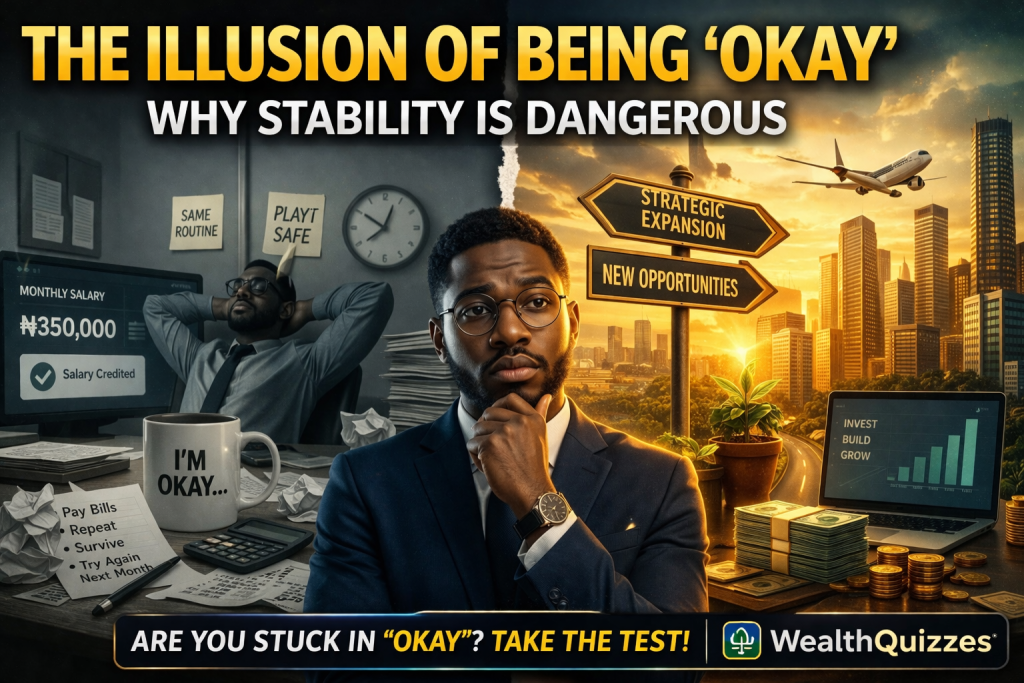
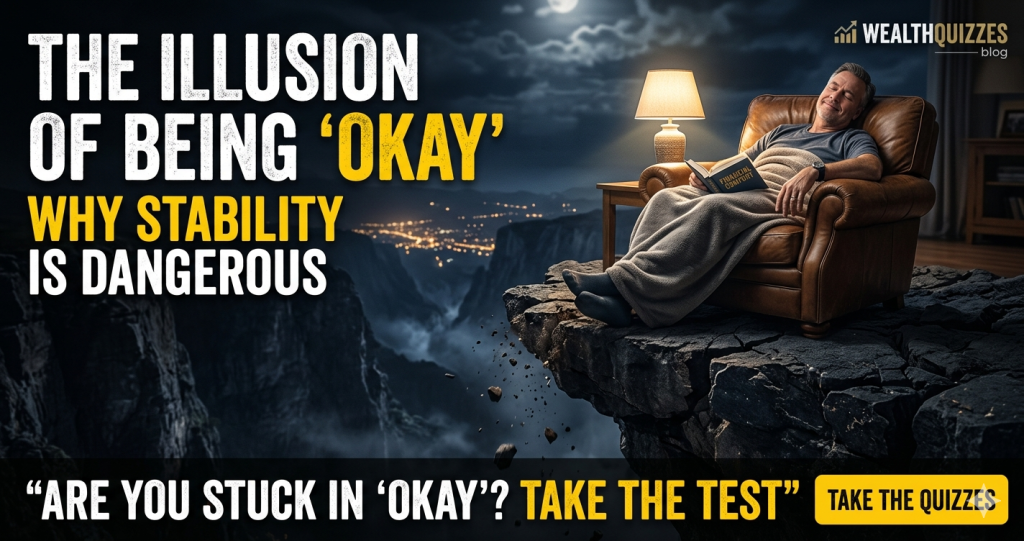
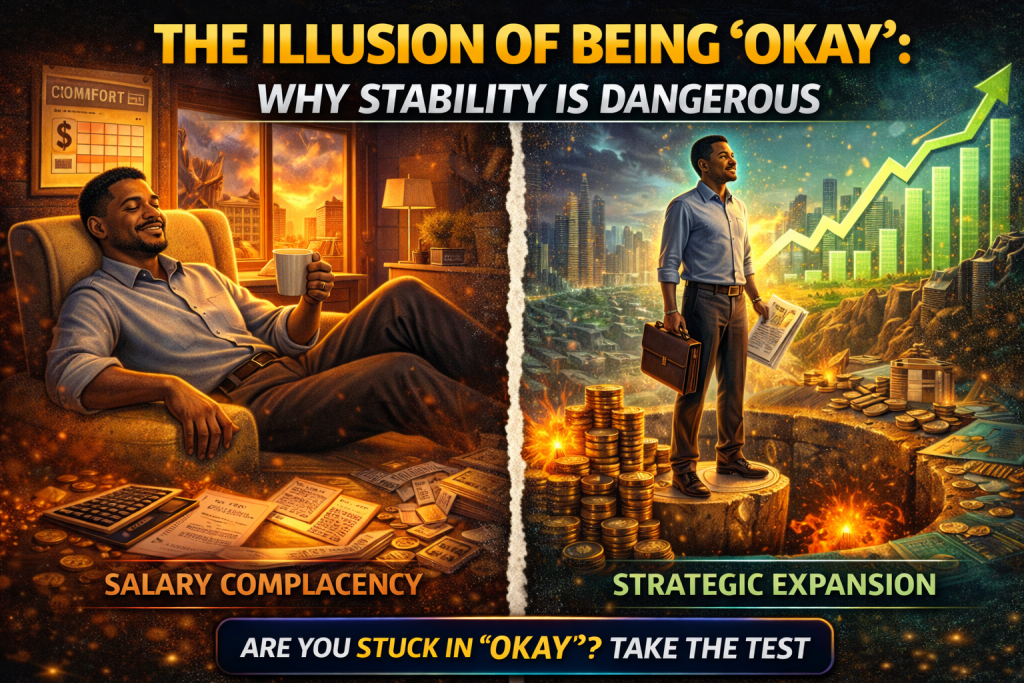
The Illusion of Being ‘Okay’: Why Stability Is Dangerous
How Comfort Can Quietly Kill Your Financial Growth
Introduction: The Most Deceptive Financial State
There is a dangerous place many people find themselves in financially.
It is not poverty.
It is not wealth.
It is something in between:
“I’m okay.”
You can:
- Pay your bills
- Afford your lifestyle
- Avoid financial stress (for now)
And this creates a powerful illusion:
That you are progressing.
But in reality:
Stability without growth is stagnation.
The Core Truth
Core Idea: Comfort zones kill financial growth
Mindset Shift: Stability → Strategic expansion
Being “okay” often feels safe—but financially, it is one of the most dangerous positions to remain in.
The Stability Trap: Why “Okay” Feels Good
Humans are wired to seek:
- Comfort
- Predictability
- Security
From a psychological standpoint, this aligns with what behavioral economists like Daniel Kahneman describe as loss aversion—the tendency to avoid risk even when potential gains are significant.
This means:
- You prefer maintaining your current state
- Even if it limits your future growth
The Illusion of Progress
Being “okay” creates:
- A sense of control
- Emotional satisfaction
- Reduced urgency
But it hides a deeper issue:
No intentional movement forward
As financial author Morgan Housel explains, financial success is less about intelligence and more about behavior over time.
And the most dangerous behavior is:
Staying still when you should be advancing.
Salary Complacency: The Comfort That Costs You
1. The Fixed Income Illusion
A steady salary creates:
- Predictability
- Routine
- Comfort
You know:
- What comes in
- What goes out
But here is the problem:
Your income is capped.
No matter how stable your job is:
- Your earning potential has limits
- Your growth depends on external decisions
2. The Complacency Effect
When income is consistent:
- Urgency disappears
- Ambition reduces
- Innovation declines
You begin to think:
“At least I’m okay.”
But financially:
- You are not building assets
- You are not expanding income streams
- You are not increasing leverage
3. The Hidden Risk
Stability feels safe—until it isn’t.
Economic realities (especially in Nigeria) include:
- Inflation
- Currency depreciation
- Job insecurity
This means:
What feels stable today can become insufficient tomorrow.
Risk Avoidance: The Silent Growth Killer
1. The Fear of Losing
Most people avoid:
- Investments
- Business opportunities
- New income paths
Because they fear:
- Losing money
- Making mistakes
But as Warren Buffett emphasizes, risk often comes from not understanding what you are doing, not from taking action itself.
2. The Cost of Playing Safe
Avoiding risk leads to:
- Missed opportunities
- Limited growth
- Financial stagnation
In finance:
Not taking calculated risks is itself a risk.
3. The Comfort Zone Cycle
The cycle looks like this:
- You earn
- You spend
- You maintain
- You repeat
No expansion.
No scaling.
No wealth creation.
Time vs Growth: The Silent Erosion
One of the most overlooked dangers of stability is time erosion.
If your financial position remains the same for years:
- Inflation reduces your purchasing power
- Opportunities pass you by
- Your growth potential declines
As economic research consistently shows:
Money that is not growing is effectively shrinking in real value over time.
The Psychology of “Enough”
Another dangerous mindset is:
“I don’t need more—I’m okay.”
While contentment is valuable, financial stagnation is not.
The distinction is critical:
- Contentment = emotional state
- Stagnation = financial condition
You can be content while still growing.
The Nigerian Context: Why “Okay” Is Riskier
In Nigeria, “okay” is particularly dangerous because:
1. Inflation Is Aggressive
Prices rise faster than income
2. Economic Stability Is Uncertain
Jobs and businesses are vulnerable
3. Social Pressure Increases Spending
Maintaining appearances reduces savings
This means:
Standing still financially is actually moving backward.
The Growth Principle: Why Expansion Matters
Financial growth requires:
- Intentional movement
- Strategic risk
- Continuous improvement
As emphasized in modern financial thinking:
Wealth is built through expansion—not maintenance.
Stability vs Strategic Expansion
Let’s compare:
| Stability | Strategic Expansion |
|---|---|
| Maintains income | Increases income |
| Avoids risk | Manages risk |
| Feels safe | Builds strength |
| Stagnates | Grows |
The Real Danger: Invisible Stagnation
The most dangerous part of being “okay” is that:
It does not feel like a problem.
You are not:
- Struggling
- Panicking
- Failing
So you don’t:
- Change
- Improve
- Act
Breaking Free from the “Okay” Trap
1. Redefine Stability
Stability should not mean:
- Staying the same
It should mean:
- Having a strong foundation for growth
2. Introduce Strategic Risk
Not reckless risk—but calculated moves:
- Investments
- Skill development
- Side income
3. Build Growth Systems
Move beyond:
- Salary dependence
Into:
- Multiple income streams
- Asset building
4. Measure Progress, Not Comfort
Ask:
- Am I growing?
- Am I improving?
- Am I expanding my capacity?
5. Think Long-Term
Short-term comfort often sacrifices long-term freedom.
The Real Transformation
When you shift from stability to growth:
You move from:
- Maintenance → Expansion
- Safety → Strategy
- Comfort → Capability
The Hard Truth
Being “okay” is not the goal.
Because:
- “Okay” does not build wealth
- “Okay” does not create freedom
- “Okay” does not scale
Conclusion: Comfort Is Not Progress
Stability is only valuable if it leads somewhere.
Otherwise:
It becomes a financial trap.
Because:
- Comfort delays action
- Safety reduces urgency
- Routine limits growth
Final Thought
Before you settle into being “okay,” ask yourself:
“Am I stable—or am I stuck?”
Because the difference between financial security and financial stagnation is not comfort—
It is growth.
👉 Are you stuck in ‘okay’? Take the test on WealthQuizzes