Football and National Identity: Why the Game Means More Than Sport: Culture and Patriotism
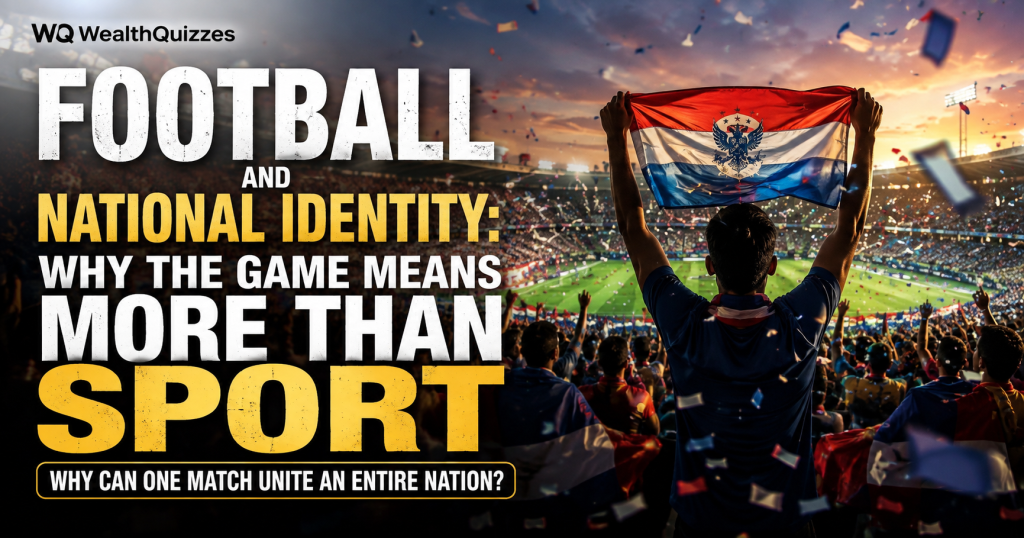
Why can one football match unite an entire nation?
There are moments when a football match ceases to be merely a football match.
A goal is scored, and millions of people who have never met one another embrace in streets, homes, bars and stadiums. Flags appear on balconies. National colours fill city centres. Families gather around television screens. Strangers suddenly become brothers and sisters in celebration. For ninety minutes—or sometimes longer—social class, profession, geography and political differences can appear to fade into the background.
The players on the pitch are eleven individuals, but they are perceived as representing millions.
That is the extraordinary power of international football.
Football is one of the world’s most globalised sports, yet international football can produce an intensely local and national emotional experience. The contradiction is fascinating: the same sport that connects people across borders can also make national identity extraordinarily visible.
As sociologist Richard Giulianotti has argued, major football events and the memories attached to them play a central role in the construction of personal and collective identities at local, national and transnational levels. (Taylor & Francis Online)
Football, therefore, does not simply reflect national identity.
It helps people experience it.
The Nation Becomes Visible
The concept of national identity can sometimes feel abstract.
A nation is made up of millions of people who will never know most of their fellow citizens personally. Yet they imagine themselves as belonging to the same political and cultural community.
Political scientist Benedict Anderson famously described nations as “imagined communities.”
Football gives this imagined community something remarkably tangible.
There is the national flag.
There is the anthem.
There is the shirt.
There is the national crest.
There are the colours.
There is the collective singing.
And then there is the team.
Research on football and national identity repeatedly identifies these symbols as mechanisms through which people are reminded of belonging to a wider national community. Contemporary scholarship describes international football as a particularly powerful channel for what Michael Billig called “banal nationalism”—the everyday reproduction of national identity through familiar symbols, language and rituals. (Taylor & Francis Online)
When supporters stand together to sing a national anthem before kick-off, they are doing more than preparing for a sporting contest.
They are participating in a national ritual.
Why International Football Is Different
Club football can inspire extraordinary loyalty.
A supporter may identify with Manchester United, Barcelona, Real Madrid, Liverpool, Bayern Munich or another club for an entire lifetime.
But international football activates a different category of belonging.
The club represents a community of choice.
The national team represents a community of citizenship, heritage, ancestry or belonging.
This distinction becomes especially powerful during the FIFA World Cup.
A national team does not simply carry the name of a country.
It carries its colours, history, symbols and collective memories.
A match against another country can therefore become a symbolic encounter between two national communities.
That does not mean that every supporter interprets the match in explicitly political terms. Most do not.
But the symbolism remains powerful.
Research published in Nationalities Papers examining football, emotion and collective identity argues that football can help construct national identity precisely because it transforms abstract ideas of nationhood into emotionally experienced collective moments. (Taylor & Francis Online)
That is perhaps football’s greatest psychological achievement.
It makes the abstract feel personal.
The Emotional Power of a Shared Victory
Why does a national victory feel so different from an ordinary sporting victory?
Part of the answer lies in collective emotion.
Imagine a World Cup final.
Millions of people are watching simultaneously.
The match enters stoppage time.
The score is level.
A goal arrives.
For a few seconds, millions experience essentially the same emotional event.
The experience is individual, but the emotion is collective.
This phenomenon has been studied by sociologists and historians of sport. Football matches can become emotional landmarks around which people organise personal memories.
People remember where they watched a historic final.
They remember who they watched it with.
They remember the streets afterwards.
They remember the celebrations.
They remember the disappointment.
Years later, a single goal can transport an entire generation back to a particular evening.
Giulianotti’s work on football events and memory emphasises precisely this connection between major football moments, collective memory and identity. (Taylor & Francis Online)
Football does not merely create memories.
It creates shared memories.
And shared memories are among the strongest foundations of collective identity.
Italy 1982: When Football Became a National Story
One of the most compelling examples is Italy’s triumph at the 1982 FIFA World Cup.
Italy’s victory became much more than a sporting achievement. Academic research into the tournament has examined how the success became intertwined with Italian national identity, emotion and collective memory.
The scholarship surrounding the so-called “Pertini myth”—associated with President Sandro Pertini’s passionate celebration of Italy’s victory—illustrates how sporting events can become embedded in wider national narratives. (Taylor & Francis Online)
The importance of 1982 was not simply that Italy won.
It was the story created around the victory.
The players became symbols.
The matches became memories.
The celebrations became part of national mythology.
Football provided a narrative through which Italians could experience something collectively.
And this is a recurring phenomenon.
South Africa 2010: Football and a Nation Still Defining Itself
The relationship between football and national identity can become even more profound in countries with complicated histories.
South Africa’s hosting of the 2010 World Cup is an important example.
The tournament arrived two decades after apartheid’s formal end and was presented as an opportunity to showcase a new South Africa.
Academic research examined whether the World Cup could contribute to a strengthened national identity and consciousness while also warning that sport can produce narrower forms of nationalism. (Sage Journals)
The symbolism was powerful.
The World Cup brought global attention to a country whose history had been defined by racial segregation and political conflict.
Football became part of a broader national conversation about belonging.
But scholarship also reminds us that sporting mega-events should not automatically be romanticised. Research into the 2010 South African World Cup questioned some of the claims surrounding its economic and social legacy and highlighted tensions between public investment, private interests and FIFA’s commercial structure. (Sage Journals)
This is an important distinction.
Football can unite people emotionally without automatically solving a country’s structural problems.
The two things must not be confused.
Football Can Build Bridges Across Difference
One of football’s most remarkable qualities is its capacity to create a temporary common identity among people who differ enormously in everyday life.
A wealthy businessman and a market trader can support the same national team.
A university professor and a mechanic can celebrate the same goal.
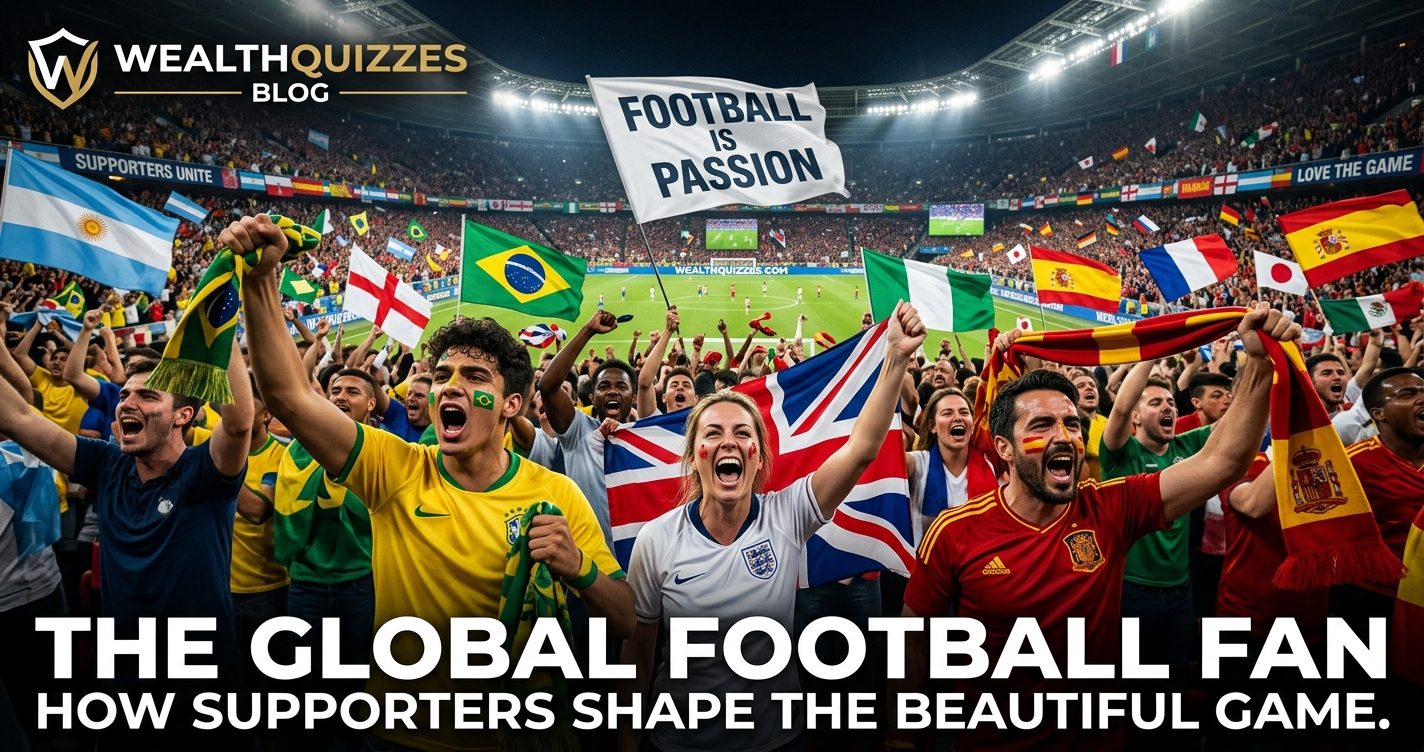
People from different ethnic groups, regions, religions and social classes can stand behind the same flag.
This does not eliminate their differences.
It temporarily places those differences within a larger identity.
That is why national football can become particularly powerful in diverse societies.
The team becomes a common reference point.
The national shirt becomes a shared symbol.
The match becomes common ground.
FIFA itself explicitly recognises football’s potential for social cohesion. Its 2026 “Unite for Peace” campaign presents football as a vehicle for dialogue, respect and social cohesion, with all 48 participating World Cup teams carrying the campaign’s message during the group stage. (FIFA Football Technology)
The aspiration is significant because football’s influence extends far beyond the pitch.
But Football Can Also Divide
It would be naïve to portray football as an automatic force for harmony.
The same emotional power that unites supporters can also intensify hostility.
National competition creates an obvious “us” and “them.”
Media coverage can reinforce this distinction through military language, historical rivalries and narratives of national superiority. Contemporary scholarship on football and nationalism specifically identifies the way media and sporting rituals can intensify national boundaries and patriotic sentiment. (Taylor & Francis Online)
Football therefore possesses a dual character.
It can encourage:
solidarity, pride and belonging.
But it can also produce:
exclusion, xenophobia and hostility.
That is why responsible football culture matters.
Patriotism does not require hatred of another country.
Supporting one’s national team does not require believing that another nation is inferior.
The healthiest form of sporting nationalism says:
“I am proud of who we are.”
It does not require:
“You are worthless because you are not us.”
Migration Has Changed What a National Team Means
Modern football has also challenged simplistic definitions of national identity.
National teams increasingly include players whose lives cross borders.
Some are born abroad.
Some have parents or grandparents from another country.
Some migrate as children.
Some grow up in one country and represent another.
This phenomenon has made football a fascinating window into modern citizenship and belonging.
Research on football, citizenship, migration and national identity notes that the World Cup provides numerous historical examples of the complex relationship between nationality, migration and representation. (Taylor & Francis Online)
Another study examining footballing journeys argues that national teams can illuminate the increasingly multilayered nature of identity in a globalised world. Players may simultaneously possess connections to birthplace, residence, ancestry, citizenship and family heritage. (Taylor & Francis Online)
This is particularly important in contemporary football.
A national team is rarely a perfect biological or ethnic representation of a nation.
It is better understood as a civic and cultural representation of belonging.
The modern national team can therefore tell a more sophisticated story about the nation itself.
France Provides a Powerful Example
France’s national teams have repeatedly illustrated the relationship between football, immigration and national identity.
The country’s football culture has been influenced by generations of migration, particularly from Africa and other parts of the French-speaking world.
The 2018 World Cup-winning team became an important symbol in debates about French identity because many of its players had family roots outside metropolitan France.
The lesson was profound.
French identity did not have to be represented by a narrow conception of ancestry.
It could be represented by people whose family histories crossed continents but whose footballing identity was French.
Research into the relationship between football, citizenship and migration specifically identifies France 2018 as an important case for understanding colonial and post-colonial dimensions of national representation. (Taylor & Francis Online)
Football therefore sometimes forces societies to confront a fundamental question:
Who belongs?
And sometimes, the answer is more inclusive than political rhetoric suggests.
Football Gives History a Human Face
National history can be complicated.
Textbooks contain dates.
Political speeches contain arguments.
Historical documents contain facts.
Football can compress those complexities into human stories.
A player scores a decisive goal.
A goalkeeper saves a penalty.
A captain lifts a trophy.
A nation celebrates.
Suddenly history has a face.
That is why legendary footballers can become national symbols.
They are remembered not merely for their technical ability but for what their achievements came to represent.
Diego Maradona’s relationship with Argentina is a powerful example.
His footballing brilliance became inseparable from Argentine sporting identity and collective memory.
Likewise, Pelé became a global symbol of Brazil’s footballing culture.
And more recently, Lionel Messi’s World Cup triumph with Argentina in 2022 became an extraordinarily powerful national sporting memory.
The player and the nation become connected through narrative.
The World Cup Is the Ultimate National Stage
No football competition demonstrates the relationship between football and national identity more clearly than the FIFA World Cup.
Every four years, the world’s footballing nations assemble.
Flags dominate stadiums.
Anthems echo through arenas.
Supporters travel across continents.
National shirts become cultural symbols.
And for a few weeks, international football becomes one of the world’s most visible expressions of collective identity.
The 2026 tournament has demonstrated the continuing global reach of this phenomenon. FIFA’s social-impact reporting stated that its anti-discrimination and social-impact initiatives around the tournament reached millions of people, with more than 15.2 million visitors attending stadiums, FIFA Fan Festivals and related attractions ahead of the final. (Inside FIFA)
Football’s scale makes its cultural influence difficult to match.
Why One Match Can Unite a Nation
The answer ultimately lies in shared identity, shared emotion and shared experience.
A nation is an enormous community.
Its citizens may never meet one another.
They may disagree about politics.
They may belong to different ethnicities.
They may speak different languages or practise different religions.
They may live thousands of kilometres apart.
But when their national team plays, they can experience the same event simultaneously.
The football match creates a temporary national theatre.
Everyone knows the rules.
Everyone understands what is at stake.
Everyone recognises the colours.
Everyone knows the anthem.
Everyone understands the significance of victory.
For ninety minutes, the nation becomes visible.
And when the final whistle blows, the result becomes a piece of collective history.
The Deeper Meaning of Football
Football’s extraordinary relationship with national identity teaches us something larger about society.
Humans do not live by institutions alone.
They live through stories, symbols, rituals, memories and shared experiences.
Football happens to combine all five.
It provides symbols through flags and shirts.
It provides rituals through anthems and matchday traditions.
It provides stories through competition.
It creates memories through dramatic moments.
And it creates shared experiences through mass participation.
That is why football can mean far more than sport.
The ball may be round.
The pitch may be rectangular.
The rules may be simple.
But the emotions surrounding the game are anything but simple.
Conclusion: When Football Becomes a Nation’s Story
The greatest football matches eventually become more than scores.
They become stories parents tell their children.
They become memories passed from one generation to another.
They become images preserved in national consciousness.
They become symbols of resilience, triumph, disappointment, belonging and hope.
This is why one football match can unite an entire nation.
Not because football magically eliminates political, social or economic differences, but because it provides something extraordinarily rare: a shared emotional experience capable of making millions of individuals feel, temporarily, like one community.
Football does not create national identity from nothing.
Rather, it gives national identity a stage.
It gives it colours.
It gives it songs.
It gives it heroes.
It gives it memories.
And sometimes, when a national team walks onto the pitch and an entire stadium rises to sing the anthem, the game becomes something greater than the sport itself.
It becomes a nation’s story being played out in real time.
And that may be football’s greatest power: the ability to turn an imagined community into a visible, emotional and unforgettable experience.