Football Rivalries: Why Some Matches Mean More: Rivalries Shape Football Culture: History, Identity and Emotion
What Makes a Football Rivalry Legendary?
Football is often described as the world’s most popular sport, but to millions of supporters, it is far more than a game. It is identity. It is heritage. It is community. It is pride passed from one generation to another. Nowhere is this more evident than in football’s greatest rivalries—matches that transcend league tables, trophies and statistics to become defining moments in the lives of players and supporters alike.
Some fixtures command global audiences not merely because of the quality of football on display but because of the stories, traditions and emotions that accompany them. Whether it is Real Madrid versus Barcelona, Manchester United versus Liverpool, Boca Juniors versus River Plate, Celtic versus Rangers, or fierce international encounters such as Argentina versus Brazil, football rivalries possess an intensity that few sporting events can rival.
The recently concluded FIFA World Cup 2026, jointly hosted by the United States, Canada and Mexico, once again demonstrated how historic rivalries elevate football to extraordinary heights. Every knockout stage carried echoes of previous battles, while supporters around the world invested emotionally in contests that represented much more than ninety minutes of play.
This raises an enduring question:
What makes a football rivalry truly legendary?
The answer lies in a unique combination of history, identity, culture, geography, politics, sporting excellence and human emotion.
As the celebrated Uruguayan writer Eduardo Galeano, author of Soccer in Sun and Shadow, observed, football is one of the few places where communities express both their dreams and their deepest emotions. Rivalries bring those emotions to life more vividly than any other aspect of the game.
Rivalries Are Built Over Time
Great football rivalries are never created overnight.
They evolve over decades—sometimes centuries—through repeated competition, dramatic victories, heartbreaking defeats and unforgettable moments.
Every legendary rivalry possesses its own historical narrative.
Generations of supporters inherit stories from parents and grandparents.
Former players become club legends.
Historic victories are celebrated repeatedly.
Painful defeats are remembered just as vividly.
The rivalry therefore becomes part of collective identity.
Sports historian David Goldblatt, author of the acclaimed The Ball Is Round: A Global History of Football, argues that football rivalries are deeply rooted in the social and historical development of communities rather than simply sporting competition.
History gives rivalries their emotional power.
El Clásico: Football’s Global Showcase
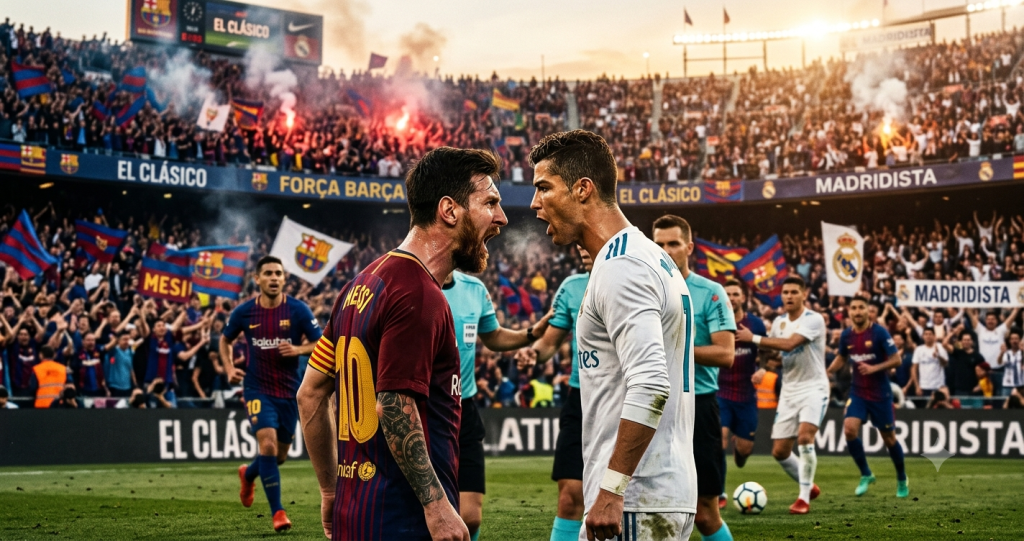
Perhaps no rivalry attracts greater worldwide attention than El Clásico between Real Madrid and FC Barcelona.
While both clubs consistently compete for domestic and European honours, their rivalry extends beyond football.
Historically, Barcelona came to symbolise Catalan identity and cultural autonomy, while Real Madrid became associated with the Spanish establishment during significant periods of Spanish history.
Although modern football has become increasingly globalised, these historical associations continue to shape the rivalry’s significance.
The fixture has also featured many of football’s greatest players, including Alfredo Di Stéfano, Johan Cruyff, Ronaldinho, Cristiano Ronaldo, Lionel Messi and countless other legends.
According to La Liga, El Clásico regularly reaches audiences in more than 180 countries, making it one of the most watched sporting events in the world.
Its appeal lies not only in quality but in history.
Liverpool Versus Manchester United
In England, few rivalries equal Liverpool versus Manchester United.
The origins of this rivalry extend beyond football into the economic and industrial history of northwest England.
Competition between the cities of Liverpool and Manchester predates professional football itself.
On the pitch, both clubs became the most successful teams in English football history.
Their battles have frequently determined league championships, domestic supremacy and national prestige.
Former Manchester United manager Sir Alex Ferguson famously described Liverpool as the club United most desired to surpass.
That competitive mentality elevated every encounter.
Boca Juniors and River Plate: The Superclásico
Few football matches equal the passion surrounding Argentina’s Superclásico between Boca Juniors and River Plate.
Originally rooted in Buenos Aires, the rivalry reflects contrasting social identities that developed during the clubs’ early histories.
The atmosphere generated inside La Bombonera and El Monumental has become legendary.
Former FIFA President Sepp Blatter once described the Superclásico as one of football’s greatest spectacles because of its extraordinary emotional intensity.
Supporters do not merely watch these matches.
They experience them.
International Rivalries
National team rivalries often carry even greater emotional significance because they involve national pride.
Among the most celebrated are:
- Argentina versus Brazil.
- Germany versus the Netherlands.
- England versus Germany.
- France versus Italy.
- Spain versus Portugal.
The FIFA World Cup has repeatedly intensified these rivalries.
Historical encounters become part of football folklore.
Future generations remember famous goals, controversial decisions and dramatic victories.
International football creates memories that often endure for decades.
The FIFA World Cup Intensifies Rivalries
The FIFA World Cup 2026 once again demonstrated football’s unique ability to transform ordinary fixtures into historic occasions.
Knockout football naturally increases emotional intensity because defeat means elimination.
Matches between traditional football powers carried additional significance due to previous World Cup encounters.
According to FIFA’s Technical Study Group (TSG), elite tournaments increasingly reward teams capable of managing emotional pressure alongside tactical preparation.
Experience matters.
So does composure.
Rivalries amplify both.
Identity Makes Rivalries Personal
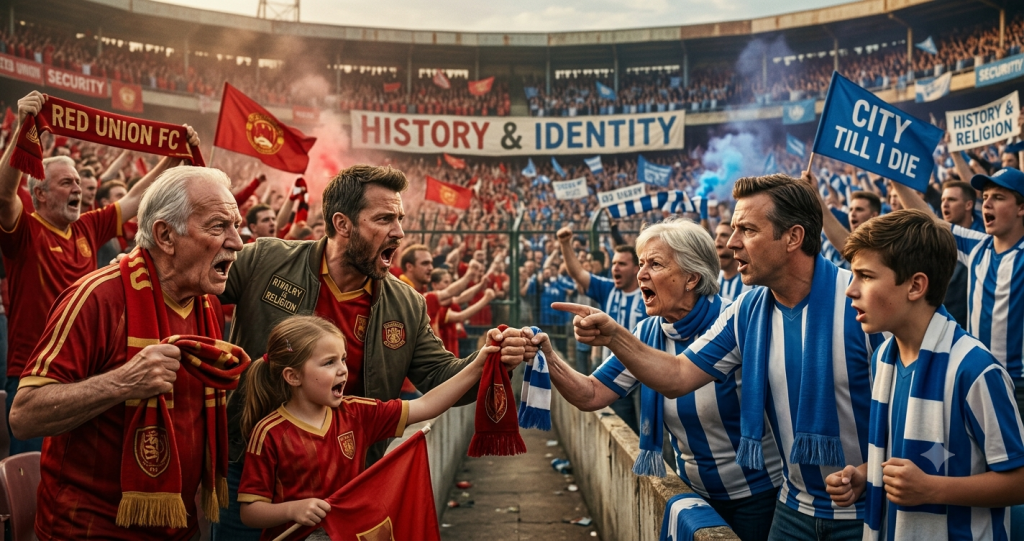
Football rivalries endure because supporters identify deeply with their clubs.
Supporting a football team often begins in childhood.
Families pass allegiances from one generation to another.
Communities organise their social lives around football.
Local pride becomes inseparable from club identity.
Professor Simon Chadwick, internationally recognised for his research into sport and geopolitics, argues that football clubs increasingly function as cultural institutions representing communities rather than merely sporting organisations.
When rivals meet, supporters feel they are defending more than a football team.
They are defending identity.
Great Players Shape Great Rivalries
Legendary footballers frequently become synonymous with particular rivalries.
Lionel Messi’s extraordinary performances in El Clásico.
Cristiano Ronaldo’s fierce battles against Barcelona.
Steven Gerrard’s leadership against Manchester United.
Diego Maradona’s unforgettable Superclásico appearances.
These individual stories become woven into football history.
Former Barcelona manager Pep Guardiola has often remarked that truly great players embrace the pressure of football’s biggest occasions rather than fear it.
Rivalries create heroes.
They also create legends.
Rivalries Drive Higher Standards
Competition inspires excellence.
Many of football’s greatest achievements emerged because clubs continually challenged one another.
The sustained rivalry between Real Madrid and Barcelona elevated standards across Spanish football.
Manchester United and Liverpool pushed English football toward greater competitiveness.
Bayern Munich’s domestic rivalries strengthened German football.
Healthy competition encourages innovation.
Better coaching.
Improved recruitment.
Greater tactical sophistication.
Higher professional standards.
Former Arsenal manager and FIFA Chief of Global Football Development Arsène Wenger has consistently argued that elite competition accelerates football development because successful teams constantly adapt to remain ahead.
Rivalries benefit football.
Rivalries Extend Beyond the Pitch
Modern football rivalries now influence:
- Television audiences.
- Sponsorship agreements.
- Merchandise sales.
- Tourism.
- Digital engagement.
- Social media interaction.
- Global broadcasting.
According to Deloitte’s Football Money League, the world’s biggest rivalries generate enormous commercial value because they consistently attract global audiences.
Broadcasters compete aggressively for broadcasting rights.
Sponsors seek association with iconic fixtures.
Supporters purchase commemorative merchandise.
Football rivalries therefore create substantial economic impact alongside sporting excitement.
Respect Must Accompany Passion
Although rivalry fuels football’s emotional appeal, respect remains essential.
FIFA, UEFA and national football associations consistently promote campaigns encouraging fair play, inclusion and mutual respect among supporters.
Competition should inspire excellence rather than hostility.
Legendary Liverpool manager Bill Shankly, despite his fierce competitive spirit, understood football’s emotional significance while respecting the game’s traditions.
Similarly, Sir Alex Ferguson frequently praised opponents who elevated competition through excellence.
True rivalry celebrates football.
It never diminishes it.
Lessons Beyond Football
Football rivalries offer valuable lessons applicable far beyond sport.
Healthy competition encourages organisations to innovate.
Businesses compete for customers.
Universities compete for academic excellence.
Law firms compete through professional service.
Entrepreneurs compete through innovation.
Management scholar Michael Porter, whose theories on competitive strategy transformed modern business thinking, argues that competition drives continuous improvement.
Football illustrates this principle perfectly.
Without rivals, excellence becomes difficult to sustain.
Competition creates progress.
Why Some Rivalries Become Timeless
Not every football fixture becomes legendary.
The greatest rivalries share several defining characteristics:
- Rich historical foundations.
- Strong regional or national identity.
- Memorable encounters.
- Elite players.
- Passionate supporters.
- Competitive balance.
- Cultural significance.
- Global attention.
These elements combine to create fixtures that transcend ordinary sporting contests.
Supporters remember where they were during famous rivalry matches.
Children inherit those memories.
History repeats itself.
The rivalry lives on.
Conclusion
Football rivalries represent the heartbeat of the beautiful game.
They transform ordinary fixtures into unforgettable spectacles, inspire generations of supporters and preserve the traditions that make football the world’s most beloved sport.
Whether it is El Clásico, the Superclásico, Liverpool versus Manchester United, Argentina versus Brazil or the countless other rivalries that define football culture, these contests remind us that football is ultimately about far more than goals and trophies.
The FIFA World Cup 2026 once again demonstrated that when historic rivals meet, every tackle carries meaning, every goal becomes history and every victory resonates far beyond the final whistle.
As David Goldblatt reminds us, football reflects the societies in which it is played. Rivalries therefore become expressions of history, identity and collective memory.
Ultimately, what makes a football rivalry legendary is not simply the quality of football produced.
It is the stories told.
The generations united.
The traditions preserved.
The emotions shared.
And the enduring reminder that in football, some matches are remembered forever—not because they were played, but because they mattered.
That is the enduring power of football’s greatest rivalries.