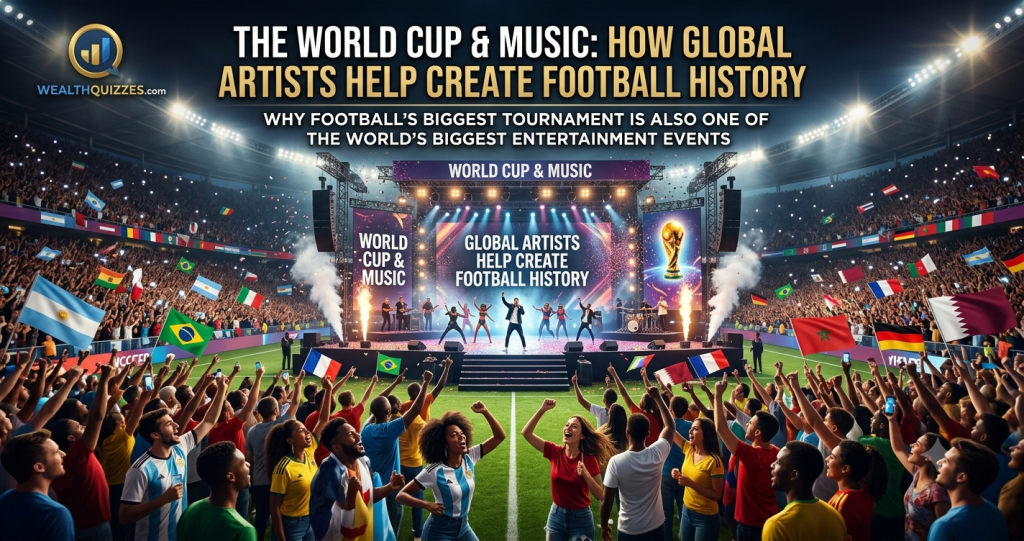
The World Cup and Music: How Global Artists Help Create Football History
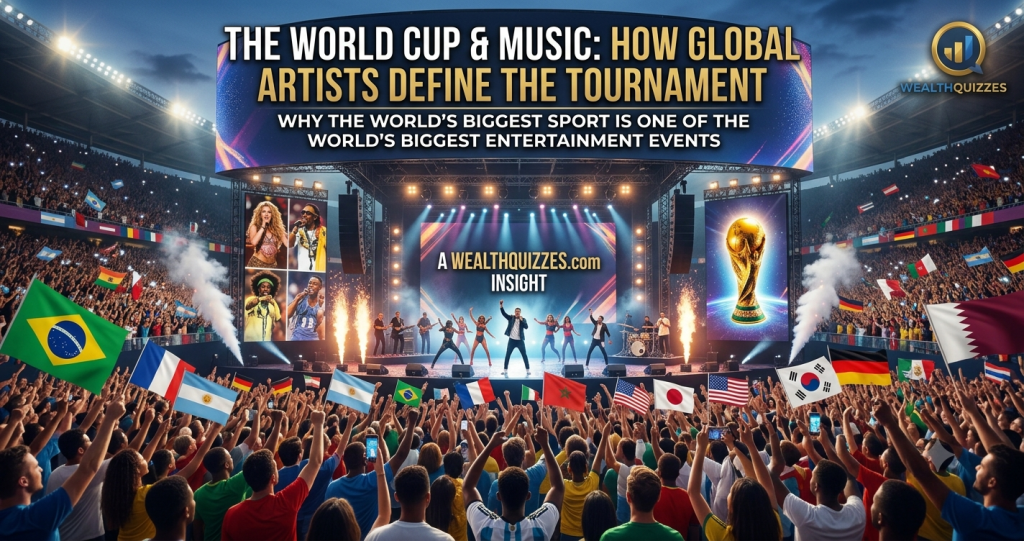
Why Football’s Biggest Tournament Is Also One of the World’s Biggest Entertainment Events
Few sporting events possess the universal appeal of the FIFA World Cup. Every four years, billions of people from virtually every corner of the globe pause to witness football’s greatest spectacle. Yet the FIFA World Cup has evolved into something far greater than a tournament of goals, tactics and trophies. It has become a global celebration of culture, identity, entertainment and artistic expression.
At the heart of this celebration lies music.
From unforgettable opening ceremonies and emotionally charged closing celebrations to official anthems that echo across continents, music has become inseparable from the World Cup experience. Long before the first whistle is blown and long after the final trophy presentation, songs associated with the tournament continue to unite supporters, preserve memories and define entire generations.
The recently concluded FIFA World Cup 2026, jointly hosted by the United States, Canada and Mexico, once again demonstrated that football and music form one of the most powerful cultural partnerships in modern history. With a record 48 participating nations, 104 matches, millions of travelling supporters and billions of global viewers, the tournament showcased not only elite football but also the extraordinary influence of music in shaping the emotions and identity of the world’s biggest sporting event.
As legendary football writer Eduardo Galeano observed in Soccer in Sun and Shadow:
“Football is the only religion that has no atheists.”
If football is the religion, music is undoubtedly one of its most powerful hymns.
The FIFA World Cup has consistently proved that unforgettable football moments are often accompanied by unforgettable songs.
Football and Music: A Partnership Built on Emotion
Football and music share remarkable similarities.
Both transcend language.
Both inspire passion.
Both unite people from different cultures.
Both create memories that last a lifetime.
When supporters sing national anthems before kick-off, chant throughout ninety minutes or celebrate victories in city streets, music becomes the emotional heartbeat of football.
Former FIFA President Gianni Infantino has repeatedly emphasized that the World Cup is more than a sporting competition; it is a celebration of humanity’s diversity and shared passion. Music embodies that vision by providing a universal language understood across borders.
During FIFA World Cup 2026, supporters from every continent brought unique musical traditions into stadiums.
Argentine drums.
Brazilian samba rhythms.
Mexican mariachi influences.
African percussion.
European football chants.
Together, they transformed every venue into a global concert as much as a sporting arena.
Official World Cup Songs Become Part of History
Every FIFA World Cup has produced official songs that continue to resonate long after the tournament concludes.
These songs do more than entertain.
They preserve history.
When supporters hear “Waka Waka (This Time for Africa)” by Shakira, memories immediately return to the 2010 FIFA World Cup in South Africa.
Likewise, Ricky Martin’s “The Cup of Life” remains inseparable from France 1998, while “Live It Up” by Nicky Jam, featuring Will Smith and Era Istrefi, instantly recalls Russia 2018.
Official FIFA songs achieve something few sporting traditions can accomplish.
They become timeless cultural symbols.
Music allows fans to relive tournaments decades later.
FIFA World Cup 2026 and the Soundtrack of a New Era
The 2026 World Cup embraced a broader musical identity than ever before.
Hosted across three nations with diverse cultural traditions, the tournament celebrated Latin American rhythms, North American popular music, African influences, European artistry and contemporary global sounds.
One of the songs that captured supporters’ imagination during the tournament was “Dai Dai.” Its energetic rhythm, multicultural appeal and celebratory atmosphere quickly made it a favourite among supporters gathering in fan festivals, public viewing centres and stadium precincts.
Although numerous songs circulated throughout the competition, “Dai Dai” became one of the musical expressions associated with the joy, excitement and multicultural spirit that defined FIFA World Cup 2026.
Like many memorable World Cup songs before it, its greatest achievement lay in bringing people together through a shared celebration of football.
Why Global Artists Matter
The FIFA World Cup attracts the world’s biggest musicians because it offers something unmatched by almost any other event—an opportunity to reach billions simultaneously.
Artists understand that performing during a World Cup connects their music with one of humanity’s most cherished collective experiences.
From Shakira and Ricky Martin to Jennifer Lopez, Pitbull, Maluma and numerous internationally acclaimed performers, global artists have helped transform FIFA ceremonies into worldwide entertainment events.
Their participation extends football beyond sport.
It becomes culture.
It becomes celebration.
It becomes history.
Music amplifies the emotional significance of football’s greatest moments.
Opening Ceremonies Set the Emotional Tone
Before a single ball is kicked, the opening ceremony introduces the emotional identity of the tournament.
FIFA has consistently collaborated with internationally renowned performers to produce ceremonies that reflect both the host nations and football’s global appeal.
These performances combine music, choreography, technology and cultural storytelling.
The opening ceremony of FIFA World Cup 2026 reflected the diversity of its three host nations while celebrating football’s ability to unite cultures.
For millions of viewers, the ceremony represented their first emotional connection with the tournament.
Music made that connection unforgettable.
National Anthems: The Most Powerful Songs in Football
While official tournament songs receive considerable attention, no music carries greater emotional significance than national anthems.
Moments before kick-off, players and supporters sing together.
Some close their eyes.
Others embrace teammates.
Many struggle to contain overwhelming emotion.
Former England manager Sir Gareth Southgate has frequently spoken about the psychological importance of these moments, noting that national anthems remind players that they represent far more than themselves.
These few minutes often define the emotional intensity with which matches begin.
No tactical briefing can replicate that feeling.
Supporters Create Their Own Musical History
Official songs tell one story.
Supporters create another.
Every World Cup produces chants unique to participating nations.
Argentina’s passionate terrace songs.
England’s famous “Three Lions.”
Brazil’s samba-inspired celebrations.
Mexico’s rhythmic chants.
Morocco’s thunderous support.
Nigeria’s energetic drum-led celebrations whenever the Super Eagles qualify for the tournament.
These supporter-created songs rarely appear on official playlists.
Yet they often become equally iconic.
They belong to the fans.
Music Strengthens Football’s Commercial Power
The relationship between football and music extends beyond entertainment.
It also contributes significantly to the World Cup’s commercial success.
According to FIFA’s commercial reports, global entertainment programming surrounding the World Cup expands audience engagement far beyond traditional football supporters.
Music attracts new demographics.
Artists bring millions of additional followers.
Streaming platforms amplify tournament visibility.
Sponsors benefit from broader cultural relevance.
Sports marketing experts, including Simon Chadwick, Professor of Sport and Geopolitical Economy, have consistently argued that football’s commercial success increasingly depends upon integrating sport with entertainment.
World Cup 2026 reinforced this trend.
Social Media Has Changed the Experience
The digital era has transformed how supporters experience World Cup music.
Songs now spread globally within minutes.
Supporters create dance challenges.
Artists release behind-the-scenes content.
Fan-made remixes gain enormous popularity.
According to FIFA, official digital content from the tournament generated billions of video views, with music-related content among the most widely shared across social media platforms.
Football no longer exists solely inside stadiums.
It exists simultaneously across digital communities worldwide.
Music Unites Cultures Better Than Politics
Perhaps football’s greatest achievement lies in its ability to unite people despite political, religious and cultural differences.
Music reinforces that unity.
Supporters who cannot speak the same language often sing together.
Artists from different continents perform on the same stage.
National identities remain proudly celebrated while global friendship flourishes.
The World Cup demonstrates that cultural diversity is not a weakness.
It is football’s greatest strength.
Former United Nations Secretary-General Kofi Annan once observed that sport possesses a unique capacity to promote understanding among peoples.
The FIFA World Cup consistently proves him correct.
Music accelerates that process.
Lessons Beyond Football
Business leaders, event organizers and policymakers can learn valuable lessons from the partnership between football and music.
Successful global events increasingly combine:
- Sport.
- Entertainment.
- Technology.
- Culture.
- Storytelling.
- Digital engagement.
The World Cup succeeds because it appeals simultaneously to the head and the heart.
Football provides competition.
Music provides emotion.
Together, they create unforgettable experiences.
The Enduring Legacy of World Cup Music
Long after trophies have been engraved and medals displayed, music continues preserving football’s greatest memories.
Supporters may eventually forget individual scorelines.
Few will forget the songs.
They will remember singing with strangers.
Dancing in fan zones.
Celebrating historic victories.
Sharing unforgettable moments with family and friends.
Music transforms football from a sporting contest into a shared human experience.
That is why World Cup songs continue to inspire generations long after tournaments conclude.
Conclusion
The FIFA World Cup has evolved into much more than the world’s premier football competition.
It is now one of humanity’s greatest cultural celebrations.
While extraordinary players create history on the pitch, musicians provide the soundtrack that allows those moments to live forever.
From legendary anthems such as “The Cup of Life” and “Waka Waka” to the vibrant energy of “Dai Dai” during FIFA World Cup 2026, music has consistently amplified football’s emotional power and global reach.
The tournament’s greatest moments are not remembered solely because of goals or trophies.
They endure because they are accompanied by melodies that reconnect billions of people to moments of joy, heartbreak, hope and celebration.
In the end, football may crown champions, but music gives those triumphs a timeless voice.
Together, they create memories that transcend generations, cultures and borders, reminding the world that the FIFA World Cup is not merely the biggest sporting event on Earth—it is also one of its greatest celebrations of art, culture, entertainment and the enduring power of the human spirit.