The World’s Most Passionate Football Nations at FIFA World Cup 2026
Which Fans Are Creating the Most Unforgettable Atmosphere?
The FIFA World Cup has never been solely about football. Every edition of the tournament is also a celebration of culture, national identity, pride and the extraordinary emotional bond between supporters and their national teams. While players compete on the pitch for football’s greatest prize, millions of fans create an atmosphere that transforms every match into a global festival.
The recently concluded FIFA World Cup 2026, jointly hosted by the United States, Canada and Mexico, once again demonstrated that football’s greatest strength lies not only in the quality of play but also in the unwavering passion of those who follow it. As the first 48-team FIFA World Cup and the largest tournament in football history with 104 matches, it attracted millions of supporters from every continent, creating one of the most colourful sporting celebrations ever witnessed.
According to FIFA, the tournament welcomed more than 6.25 million spectators across its host cities, with stadium occupancy approaching 100% throughout the competition. Beyond those physically present, billions of viewers followed the tournament through television and digital platforms, making FIFA World Cup 2026 one of the most widely consumed sporting events in history.
Yet long after supporters forget every tactical adjustment or statistical record, they will remember the sounds.
The deafening chants.
The sea of national colours.
The emotional anthems.
The tears after victory and defeat.
The spontaneous celebrations that transformed entire cities into football carnivals.
As legendary football writer Eduardo Galeano observed in Soccer in Sun and Shadow:
“Football is the only religion that has no atheists.”
World Cup 2026 proved that statement once again.
Why Fans Matter More Than Ever
Modern football has become increasingly analytical.
Sports scientists measure physical performance.
Analysts evaluate tactical systems.
Artificial intelligence assists scouting.
Yet one variable remains impossible to quantify completely:
The supporters.
Former Liverpool manager Bill Shankly famously remarked:
“Some people believe football is a matter of life and death. I assure you, it’s much more serious than that.”
Although spoken humorously, his words capture the extraordinary emotional investment football inspires.
Numerous academic studies, including research published in the Journal of Sports Economics and analyses by FIFA’s Technical Study Group, have shown that crowd support can influence player confidence, momentum and even refereeing decisions under certain circumstances.
At the FIFA World Cup, supporters become an unofficial “twelfth player.”
World Cup 2026 illustrated this better than ever before.
Argentina: The Heartbeat of the Tournament
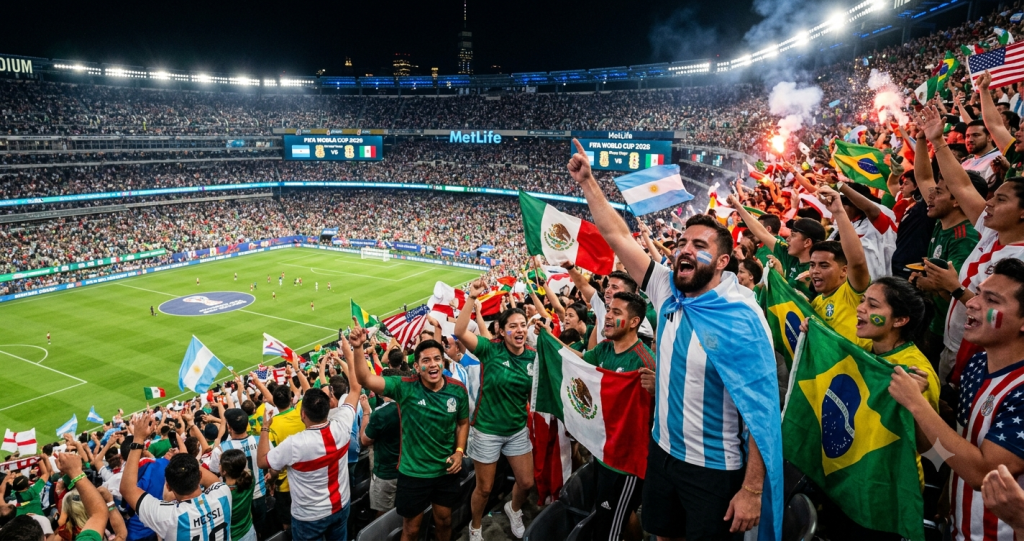
If one nation defined football passion during FIFA World Cup 2026, it was undoubtedly Argentina.
From the opening group-stage fixture until the dramatic final against Spain, Argentine supporters transformed every stadium into what often felt like a home match.
Blue-and-white shirts dominated city centres.
Traditional chants echoed for hours before kick-off.
Families travelled thousands of kilometres simply to support La Albiceleste.
Perhaps most emotional was the unwavering support shown to Lionel Messi, whose final World Cup appearance became one of the tournament’s defining narratives.
Even after Argentina narrowly lost the final, supporters remained inside the stadium applauding their players—a remarkable demonstration of loyalty and gratitude.
Former Argentina coach César Luis Menotti often argued that football represents an extension of Argentine culture.
World Cup 2026 once again validated that belief.
Spain: Champions Backed by a New Generation
Spain arrived with optimism.
They departed as world champions.
Throughout the tournament, Spanish supporters combined traditional football passion with enormous confidence in their country’s emerging generation of stars.
Every appearance by Lamine Yamal, Rodri, Pedri, Nico Williams and Pau Cubarsí generated enormous excitement.
Spanish fans celebrated not merely victories but the style with which those victories were achieved.
The chants of “¡Sí se puede!” (“Yes, we can!”) became increasingly familiar as Spain advanced through the knockout rounds before finally lifting their second FIFA World Cup trophy.
Their celebrations after the final reflected years of patient rebuilding following disappointment in previous tournaments.
England: Hope That Never Disappears
Few football cultures combine optimism, humour and unwavering belief quite like England.
Despite decades of disappointment since their historic 1966 triumph, English supporters continue arriving at every major tournament convinced that success is possible.
The famous anthem “Three Lions (Football’s Coming Home)” once again echoed across North America.
England’s exciting run to the semi-finals—and eventual third-place finish after defeating France in a thrilling 6–4 encounter—rewarded supporters with one of the nation’s strongest World Cup performances in decades.
Football writer Simon Kuper, co-author of Soccernomics, has frequently described England’s football culture as one built upon enduring hope.
World Cup 2026 demonstrated precisely why.
Brazil: Football as a National Identity
Brazilian supporters remain among football’s greatest ambassadors.
Even when Brazil fell short of lifting the trophy, their fans continued creating colourful spectacles wherever the Seleção played.
Yellow shirts.
Samba rhythms.
Dancing before kick-off.
Continuous singing throughout matches.
For Brazil, football extends beyond sport.
As renowned sociologist Gilberto Freyre argued, Brazilian football reflects the country’s cultural identity, creativity and collective joy.
The passion of Brazilian supporters ensured that every Seleção fixture became one of the tournament’s major attractions.
Morocco: Africa’s Unifying Force
Morocco once again demonstrated why African football support possesses extraordinary emotional power.
Following their historic achievements in recent World Cups, Moroccan supporters arrived in enormous numbers.
Red flags filled stadiums.
Families travelled from across Africa, Europe and the Middle East.
Supporters united behind not merely Morocco but African football itself.
The atmosphere surrounding Moroccan matches reflected football’s remarkable ability to unite diverse communities behind a shared identity.
Mexico: The Host Nation’s Incredible Energy
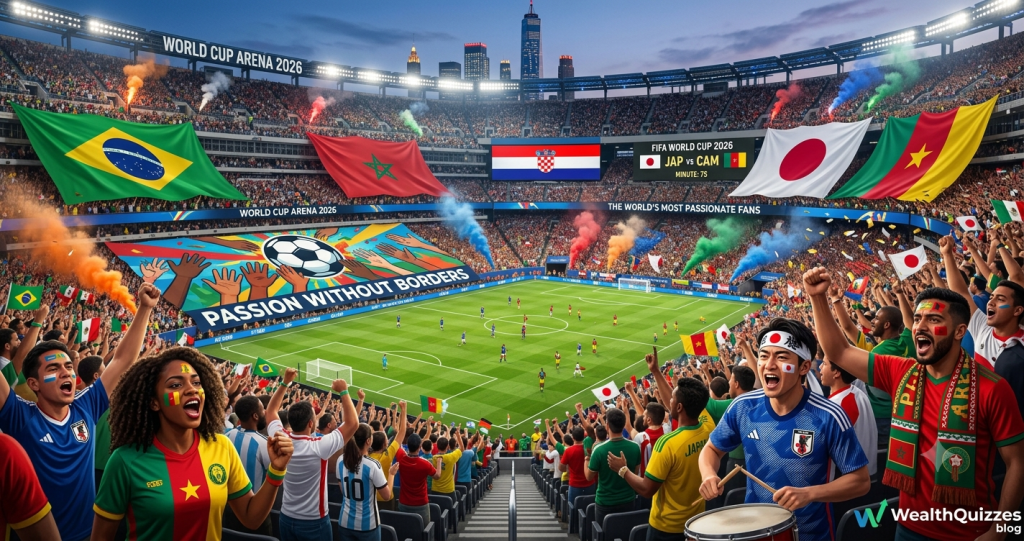
As one of the tournament’s three host nations, Mexico naturally produced some of the most vibrant atmospheres of FIFA World Cup 2026.
Mexican supporters have long enjoyed a reputation among FIFA’s most passionate fan bases.
That reputation only strengthened during the tournament.
The familiar chant of “¡México! ¡México!” echoed throughout packed stadiums.
Green jerseys dominated fan zones.
Traditional music accompanied supporters long after final whistles.
Former FIFA President Gianni Infantino has repeatedly praised Mexican supporters for creating some of football’s most vibrant atmospheres.
World Cup 2026 offered further evidence.
France: Loyalty Despite Heartbreak
France entered the tournament among the favourites.
Although they narrowly missed another final, French supporters remained unwavering throughout the competition.
Particularly memorable was the bronze-medal match against England.
Despite falling behind early, French fans continued encouraging their team throughout an extraordinary ten-goal thriller.
The resilience displayed by supporters mirrored the fighting spirit shown by players such as Kylian Mbappé.
True football passion often reveals itself most clearly during defeat.
Japan: Respect Meets Passion
Japanese supporters once again attracted international admiration—not only for their vocal encouragement but also for their remarkable sportsmanship.
Following several matches, Japanese fans continued the now-famous tradition of cleaning sections of the stadium before departing.
This practice has become symbolic of Japan’s cultural emphasis on respect, discipline and collective responsibility.
FIFA officials and international media have repeatedly praised this unique contribution to World Cup culture.
Supporters demonstrated that football passion can coexist beautifully with humility and respect.
The Global Carnival Beyond the Stadiums
One of World Cup 2026’s defining characteristics was the extraordinary atmosphere outside match venues.
Fan festivals across the United States, Canada and Mexico attracted millions.
Entire city centres became celebrations of international friendship.
Supporters from rival nations exchanged scarves.
Families posed for photographs together.
Children collected flags from countries they had never previously visited.
The World Cup once again proved that football possesses a unique capacity to unite people across language, religion and nationality.
As former FIFA President João Havelange once observed:
“Football is not just a game—it is a universal language.”
World Cup 2026 demonstrated exactly why.
Social Media Amplified the Atmosphere
Unlike earlier tournaments, FIFA World Cup 2026 unfolded simultaneously inside stadiums and across digital platforms.
According to FIFA, tournament content generated approximately 20 billion official video views, while millions of supporters shared celebrations, chants, reactions and behind-the-scenes experiences across social media.
The modern football atmosphere now extends far beyond physical attendance.
A supporter in Lagos, Buenos Aires, Tokyo or London experiences the same emotional moments almost instantly.
Football has become truly global.
What Makes a Football Nation Truly Passionate?
Passion cannot be measured solely by attendance figures.
Nor can it be reduced to noise levels.
The world’s most passionate football nations consistently demonstrate several common characteristics:
- Unwavering loyalty during victory and defeat.
- Pride in representing national identity.
- Respect for football traditions.
- Emotional connection across generations.
- Positive engagement with rival supporters.
- Dedication regardless of distance travelled.
These qualities were evident throughout FIFA World Cup 2026.
The Lasting Legacy of the Fans
Years from now, supporters will undoubtedly remember Spain lifting the trophy.
They will remember Lionel Messi’s emotional farewell.
They will remember Kylian Mbappé’s goals and Rodri’s midfield brilliance.
But they will also remember the songs.
The flags.
The embraces between strangers.
The tears of joy and heartbreak.
The roar that followed every goal.
Because football without supporters is merely a game.
Football with passionate supporters becomes history.
Conclusion
The FIFA World Cup 2026 reminded the world that while players write history on the pitch, supporters give that history its soul.
Argentina’s unwavering devotion.
Spain’s joyous celebrations.
England’s enduring hope.
Brazil’s infectious rhythm.
Morocco’s continental pride.
Mexico’s vibrant hospitality.
France’s steadfast loyalty.
Japan’s inspiring sportsmanship.
Together, these nations created an atmosphere that transcended competition.
As legendary football commentator John Motson once remarked:
“Football is played with the feet, but won with the heart.”
The same can be said of its supporters.
Long after the final whistle, trophies will be displayed in museums and statistics recorded in history books.
But the chants, the colours, the celebrations and the unforgettable atmosphere created by millions of passionate supporters will remain the true heartbeat of FIFA World Cup 2026.
For in the end, football belongs not only to those who play it—but also to those who believe in it.