

World Cup 2026 and the Youth Revolution: How Young Players Are Taking Over Global Football
Are Experienced Veterans Losing Ground to Fearless Young Stars?
The FIFA World Cup has always served as football’s greatest stage, where legends are made, records are broken, and generations of players pass the torch to those who follow. Throughout history, established veterans have often carried the hopes of their nations, relying on years of experience to navigate the immense pressure of the world’s biggest sporting event. Yet the FIFA World Cup 2026 is revealing a striking transformation. Across the tournament, young footballers are no longer merely supporting experienced teammates—they are becoming the stars, leaders, and match-winners of their national teams.
From dynamic teenage midfielders controlling the tempo of matches to fearless young forwards scoring decisive goals against football’s traditional giants, a new generation has arrived with remarkable confidence. These players have grown up in an era of advanced coaching, sophisticated sports science, global scouting networks, and elite football academies. They possess technical excellence, tactical intelligence, physical conditioning, and mental resilience far beyond what previous generations displayed at the same age.
The emergence of these young stars raises an important question: Are experienced veterans gradually losing ground to fearless young players, or is football simply entering a new era where youth and experience must coexist differently?
The evidence from World Cup 2026 suggests that football is undergoing one of the most significant generational shifts in its history.
The Changing Age Profile of Elite Football
For much of football history, players typically reached their peak performance between the ages of 27 and 30. Younger footballers often spent years learning from experienced professionals before assuming leadership roles.
Today, that timeline has changed dramatically.
Many of the world’s best players establish themselves before the age of 21.
Elite clubs increasingly entrust teenagers with enormous responsibilities.
National team managers now select young footballers not because they represent the future, but because they are already among the best available.
Football historian David Goldblatt argues that modern football has accelerated player development through improved coaching structures, greater professionalism, and international exposure at younger ages.
The World Cup 2026 reflects this evolution.
Why Young Players Are Maturing Faster
Several factors explain why today’s young footballers are reaching elite levels earlier than previous generations.
Modern player development now begins at remarkably young ages.
Leading academies provide:
- Individual technical coaching.
- Tactical education.
- Psychological development.
- Nutrition programs.
- Sports science support.
- Video analysis.
- Data-driven performance monitoring.
Former Arsenal manager and FIFA Chief of Global Football Development Arsène Wenger has repeatedly emphasized that today’s youth academies produce players who possess tactical understanding once associated only with experienced professionals.
Young footballers now enter senior football significantly better prepared.
Elite Academies Have Changed Football
Football academies have become the foundation of modern success.
Institutions across Europe, South America, Africa, and Asia now identify talent earlier than ever before.
Legendary Dutch football philosopher Johan Cruyff consistently argued that developing intelligent footballers begins with education rather than physical development.
His philosophy continues influencing youth development worldwide.
Modern academies emphasize:
- Decision-making.
- Positional awareness.
- Technical mastery.
- Creativity.
- Tactical flexibility.
These qualities enable young players to compete confidently against seasoned professionals.
Fearlessness as a Competitive Advantage
One characteristic consistently distinguishes young footballers.
They play without fear.
Unlike experienced veterans burdened by past disappointments, younger players often approach major tournaments with remarkable freedom.
Sports psychologist Bob Rotella explains that confidence frequently stems from focusing entirely on execution rather than consequences.
Young footballers often possess precisely this mindset.
They attack defenders directly.
They attempt ambitious passes.
They shoot from distance.
They embrace responsibility rather than avoiding it.
That fearlessness has become a defining feature of World Cup 2026.
The Physical Demands of Modern Football
Football has become faster and more physically demanding than ever before.
High pressing, rapid transitions, and relentless movement require exceptional athleticism.
Sports scientist Tim Gabbett has demonstrated that modern elite football demands repeated high-intensity actions throughout ninety minutes.
Younger players often possess physical advantages in:
- Recovery speed.
- Sprint capacity.
- Endurance.
- Explosive acceleration.
These attributes suit contemporary tactical systems exceptionally well.
Many coaches therefore build teams around energetic young footballers capable of sustaining intense pressing throughout matches.
Technology Has Accelerated Development
Today’s young players benefit from technologies unavailable to previous generations.
Performance analysis includes:
- GPS tracking.
- Artificial intelligence.
- Video breakdowns.
- Biomechanical analysis.
- Personalized training programs.
Coaches identify weaknesses quickly.
Players receive immediate feedback.
Improvement becomes faster and more targeted.
Sports economist Stefan Szymanski has argued that information increasingly represents one of football’s most valuable competitive resources.
Young footballers raised within this technological environment learn more rapidly than previous generations.
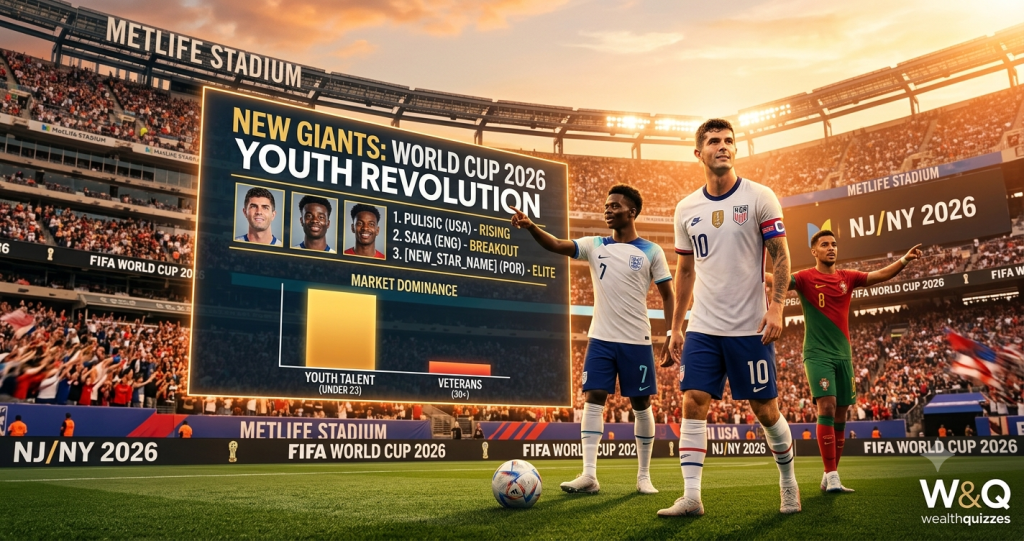
The Rise of Global Superstars Before Age 25
Recent years have produced remarkable examples of young footballers dominating world football.
Players such as Kylian Mbappé, Jude Bellingham, Pedri, Lamine Yamal, Jamal Musiala, and Florian Wirtz have demonstrated that age is no longer a barrier to elite performance.
Many became key players for club and country while still teenagers.
Their confidence has inspired countless young footballers worldwide.
Experience Still Matters
Despite the youth revolution, experience remains invaluable.
Veteran players contribute qualities that statistics cannot easily measure.
These include:
- Leadership.
- Emotional control.
- Decision-making.
- Tactical communication.
- Composure during pressure.
Former Manchester United manager Sir Alex Ferguson consistently emphasized that successful teams require an appropriate balance between youthful enthusiasm and experienced leadership.
History supports that conclusion.
Many World Cup-winning teams have combined emerging stars with seasoned veterans.
Mentorship Within National Teams
Experienced footballers play a crucial role in developing younger teammates.
Captains frequently help younger players:
- Handle media attention.
- Manage tournament pressure.
- Maintain focus.
- Recover after setbacks.
- Adapt to international football.
Leadership therefore extends beyond performance on the pitch.
Former Italian coach Arrigo Sacchi argued that football succeeds when individual talent serves collective objectives.
Veterans often ensure precisely that balance.
The Business of Young Talent
Football economics also favors youth.
Younger players generally command higher transfer values because clubs invest in future potential alongside current ability.
Sports economist Stefan Szymanski explains that player valuation reflects expected future performance rather than present ability alone.
Consequently:
- Clubs scout earlier.
- Academies invest more heavily.
- National teams promote youth faster.
The financial incentives align with sporting development.
The Influence of Social Media
Young footballers have grown up in the digital era.
They understand branding, communication, and fan engagement naturally.
Social media allows emerging players to build global audiences before reaching their athletic peak.
This visibility enhances:
- Sponsorship opportunities.
- Commercial value.
- Global recognition.
While previous generations relied largely on traditional media, today’s young stars develop international reputations almost instantly.
Challenges Facing Young Stars
Rapid success also creates risks.
Young footballers face:
- Intense public scrutiny.
- Constant media attention.
- Social media criticism.
- Physical fatigue.
- High expectations.
Sports psychologists increasingly work alongside elite teams to help young athletes maintain emotional balance.
Managing pressure has become as important as technical development.
Lessons From World Cup 2026
The FIFA World Cup 2026 demonstrates that football’s future belongs neither exclusively to youth nor exclusively to experience.
Instead, success increasingly depends upon integrating both.
Young players contribute:
- Energy.
- Creativity.
- Athleticism.
- Fearlessness.
Veterans contribute:
- Wisdom.
- Leadership.
- Stability.
- Tactical maturity.
The strongest national teams combine these strengths effectively.
What This Means for the Future
As football continues evolving, the youth revolution is likely to accelerate.
Improved coaching, sports science, data analytics, and global scouting will continue producing elite players at increasingly younger ages.
However, experience will remain indispensable in football’s biggest moments.
World Cups are rarely won by talent alone.
They require leadership, resilience, tactical discipline, and emotional intelligence.
The future therefore belongs not to one generation, but to teams capable of blending youthful brilliance with seasoned experience.
Conclusion: A New Generation Takes Center Stage
Are experienced veterans losing ground to fearless young stars?
The FIFA World Cup 2026 suggests that young footballers are assuming greater responsibility earlier than ever before. Elite academies, advanced coaching methods, sports science, and technological innovation have transformed player development, enabling exceptional talents to compete confidently against seasoned professionals while still in their teens or early twenties.
Yet football remains a game where experience retains immense value. The most successful national teams continue to rely upon veteran leadership to guide emerging stars through the pressures of international competition.
As Johan Cruyff famously observed, football is played with the brain as much as with the feet.
Today’s young stars possess both the technical ability and the football intelligence to shape the modern game.
The youth revolution is no longer approaching—it has arrived.
The FIFA World Cup 2026 stands as compelling evidence that the next generation is not waiting for its turn.
It is already defining the future of global football.