
The Income Scalability Test: Can Your Earnings Actually Grow?

The Income Scalability Test: Can Your Earnings Actually Grow?
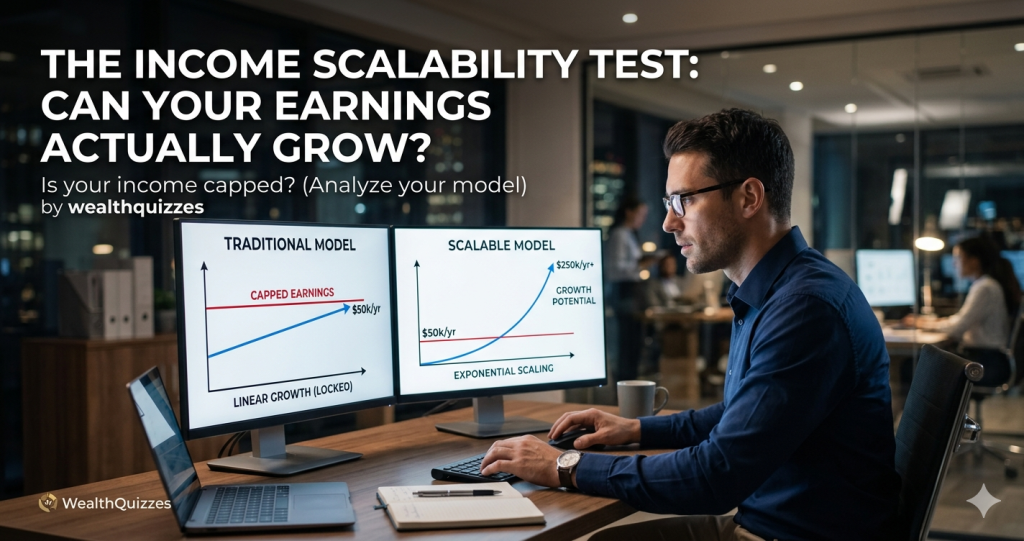
The Income Scalability Test: Can Your Earnings Actually Grow? Why Some Income Models Keep People Busy—but Financially Stuck Introduction: The Hidden Ceiling Most People Never Notice Many people work harder every year yet experience only limited financial progress. They: Take on more work Extend working hours Increase effort Chase additional clients Add side hustles Yet […]

The Wealth Identity Stack: Habits, Environment, and Standards

The Wealth Identity Stack: Habits, Environment, and Standards

The Wealth Identity Stack: Habits, Environment, and Standards Why Wealth Is Less About Luck—and More About Behavioral Architecture Introduction: The Hidden Structure Behind Financial Success Many people believe wealth is primarily created through: High income Business opportunities Good investments Education Economic luck While these factors matter, they do not fully explain why some individuals consistently […]

The Financial Energy Principle: Where Attention Creates Wealth

The Financial Energy Principle: Where Attention Creates Wealth

The Financial Energy Principle: Where Attention Creates Wealth Why Your Focus May Be the Most Valuable Financial Asset You Have Introduction: The Hidden Link Between Attention and Wealth Most people think wealth is created primarily through: Hard work High income Business ownership Investments Education While all these matter, there is a deeper force quietly shaping […]

The Strategic Spending Model: Spending Like the Wealthy
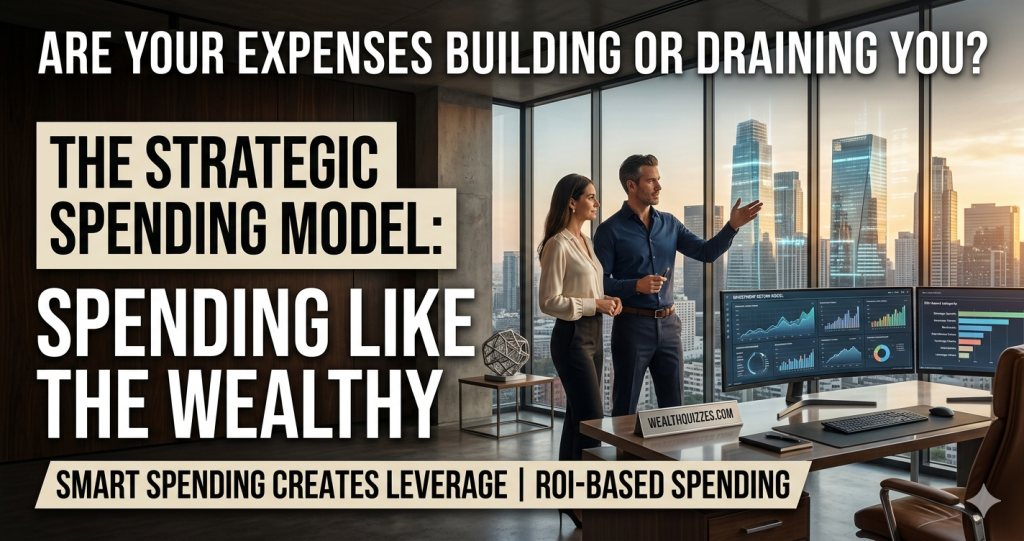
The Strategic Spending Model: Spending Like the Wealthy

The Strategic Spending Model: Spending Like the Wealthy Why Smart Spending Is Not About Looking Rich—But Building Financial Leverage Introduction: The Hidden Difference Between Rich-Looking and Wealthy Many people assume wealthy individuals simply: Spend more Buy luxury items Live extravagantly Upgrade constantly But genuine wealth creation often operates very differently from popular perception. One of […]

The Wealth Protection Blueprint: Keeping What You Build

The Wealth Protection Blueprint: Keeping What You Build

The Wealth Protection Blueprint: Keeping What You Build Why Building Wealth Is Only Half the Battle—and Protecting It Is the Other Half Introduction: The Wealth Most People Lose Too Easily Many people spend years trying to: Earn more money Build businesses Acquire assets Increase investments Improve financial stability Yet surprisingly, many financially successful individuals still […]

The Financial Independence Formula: Escaping Survival Mode

The Financial Independence Formula: Escaping Survival Mode

The Financial Independence Formula: Escaping Survival Mode Why Financial Freedom Is Less About Luxury—and More About Structure Introduction: The Trap of Permanent Survival Mode Millions of people work hard every day yet remain trapped in a financial cycle that feels impossible to escape. The pattern is familiar: Earn money Pay bills Solve urgent problems Start […]

The Cash Flow Engine: Building Money-Producing Systems
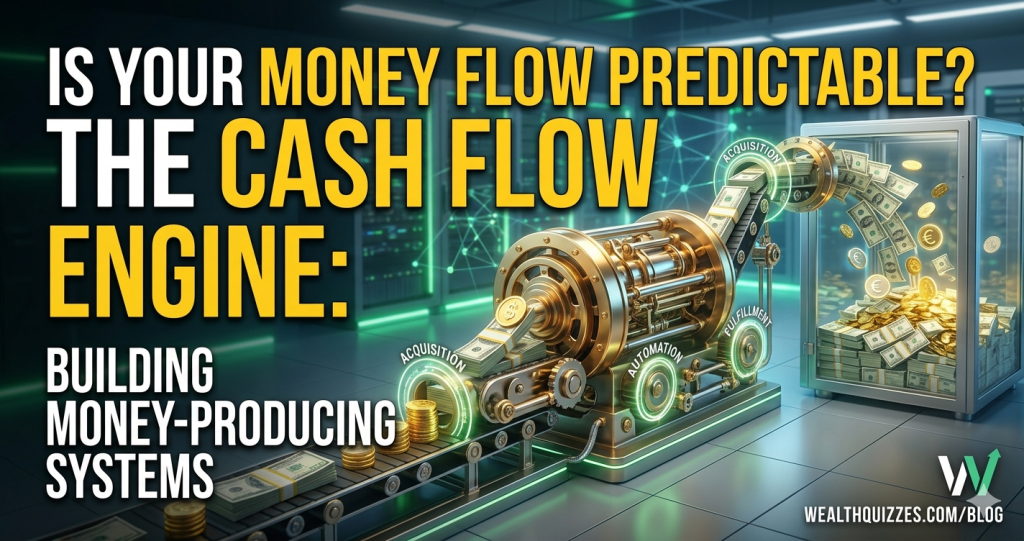
The Cash Flow Engine: Building Money-Producing Systems

The Cash Flow Engine: Building Money-Producing Systems Why Financial Stability Depends on Repeatable Income, Not Occasional Earnings Introduction: The Problem With Unpredictable Money Many people work extremely hard yet remain financially unstable because their income system depends entirely on: Constant effort Daily labor One-time transactions Unpredictable opportunities The result is a frustrating cycle: Earn money […]

The Invisible Wealth Killers: Inflation, Taxes, and Lifestyle Drift

The Invisible Wealth Killers: Inflation, Taxes, and Lifestyle Drift

The Invisible Wealth Killers: Inflation, Taxes, and Lifestyle Drift How Silent Financial Forces Slowly Destroy Wealth Without Most People Realizing It Introduction: The Financial Threats Most People Never Notice When people think about losing money, they often imagine: Business failure Job loss Bad investments Economic crises But in reality, some of the greatest threats to […]

The Capital Allocation Mindset: Why Wealthy People Think in Percentages

# The Capital Allocation Mindset: Why Wealthy People Think in Percentages ## How Financial Destiny Is Determined Less by Income—and More by Allocation ## Introduction: The Hidden Difference Between the Rich and Everyone Else Most people focus heavily on: * How much money they earn Wealthy people focus heavily on: * Where money goes This distinction appears simple, but it changes everything. Two people can earn the same income and end up with completely different financial outcomes. One person: * Builds assets * Expands investments * Increases long-term wealth The other: * Remains trapped in financial pressure * Lives paycheck to paycheck * Experiences little lasting growth The difference is often not: * Intelligence * Luck * Talent The difference is: > **Allocation.** Wealthy individuals understand a principle that many people ignore: > **Financial destiny is determined less by income size and more by capital allocation efficiency.** --- # The Core Truth > **Core Idea:** Allocation determines financial destiny > **Angle:** Capital efficiency Money behaves differently depending on: * How it is distributed * What it is assigned to do * Whether it is consumed or deployed strategically --- # The Percentage Thinking Mindset Most financially struggling people think in: * Amounts Wealth builders think in: * Percentages --- # Example of Amount Thinking * “I spent ₦50,000.” * “I saved ₦20,000.” * “I invested ₦100,000.” --- # Example of Percentage Thinking * “30% goes to investments.” * “10% goes to emergency reserves.” * “15% funds skill growth.” * “40% covers living expenses.” --- # Why This Matters Percentage thinking creates: * Structure * Scalability * Predictability * Financial control --- # Amount thinking creates: * Emotional spending * Inconsistency * Financial drift --- # Insight from Authority As Warren Buffett consistently demonstrates through his investment philosophy: > Capital allocation is one of the most important determinants of long-term financial performance. Buffett’s success has never depended merely on earning money, but on: * Deploying capital efficiently over time. --- # What Is Capital Allocation? Capital allocation is: > **The strategic distribution of financial resources toward priorities that maximize long-term value.** Every naira you earn is assigned somewhere. The real question is: > **Is it being allocated intentionally—or emotionally?** --- # Every Allocation Creates a Future Money allocation is not merely spending. It is: > Future construction. --- # Every financial decision creates consequences. Money directed toward: * Consumption Produces: * Temporary satisfaction Money directed toward: * Assets Produces: * Future cash flow and wealth expansion --- # Insight from Authority As Peter Drucker famously emphasized: > What gets measured gets managed. Percentage allocation creates measurable financial behavior. --- # The Four Major Allocation Categories Most effective wealth systems allocate capital across four major areas. --- # 1. Survival Allocation This covers: * Food * Housing * Transportation * Utilities * Basic living costs --- # Important Principle: Survival spending should remain controlled. --- # Why? Because uncontrolled lifestyle expansion destroys capital efficiency. --- # 2. Protection Allocation This includes: * Emergency funds * Insurance * Financial reserves --- # Purpose: Protection prevents financial collapse during crises. --- # 3. Growth Allocation This is where wealth acceleration begins. Examples include: * Investments * Businesses * Skill acquisition * Asset accumulation --- # Growth allocation creates: * Future earning capacity * Compounding opportunities --- # 4. Lifestyle Allocation This covers: * Entertainment * Luxury spending * Social consumption * Personal enjoyment --- # Important: Lifestyle spending is not inherently bad. The problem occurs when: > Lifestyle consumes capital meant for growth. --- # The Capital Efficiency Principle Wealthy individuals constantly evaluate: > “What return is this money producing?” --- # This is capital efficiency thinking. Every naira is assessed based on: * Long-term value * Productivity * Opportunity cost --- # Example: Two people receive: * ₦500,000 --- # Person A allocates toward: * Gadgets * Fashion * Social spending --- # Person B allocates toward: * Investments * Skill systems * Business expansion --- # Five years later: The outcomes may differ dramatically. --- # Why? Because: > Allocation compounds over time. --- # The Nigerian Context: Why Allocation Matters More Than Ever Nigeria’s economic environment includes: * Inflation pressure * Currency instability * Rising living costs --- # This means: Poor allocation decisions become increasingly expensive. Without strategic allocation: * Income growth may never translate into wealth growth. --- # Many people experience: * Salary increases But: * No meaningful financial progress --- # Why? Because increased income is often absorbed immediately into: * Lifestyle inflation --- # Insight from Authority As Morgan Housel explains: > Wealth is what you don’t see. Real wealth is often: * Unspent capital * Accumulated assets * Deferred consumption --- # The Lifestyle Inflation Trap One of the greatest enemies of capital allocation is: > Lifestyle drift. --- # This occurs when: Income increases lead immediately to: * Bigger expenses * Higher consumption * More status spending --- # Result: Financial pressure remains constant despite higher earnings. --- # The wealthy often behave differently. Instead of scaling consumption aggressively, they scale: * Investments * Assets * Ownership --- # Percentage Thinking Creates Stability When finances operate through percentages: * Decisions become less emotional * Systems become more predictable --- # Example Framework A structured income allocation model may include: * 50% essentials * 20% investments * 10% emergency reserves * 10% skill development * 10% lifestyle enjoyment --- # The exact percentages may differ. The critical issue is: > Intentional structure. --- # The Psychology of Allocation Allocation reflects: * Priorities * Identity * Long-term thinking --- # Financial chaos often reveals: * Lack of systems * Reactive decision-making * Absence of planning --- # Strong allocation systems create: * Discipline * Financial clarity * Reduced anxiety --- # The Difference Between Earners and Builders Earners focus mainly on: * Generating income Builders focus on: * Directing capital strategically --- # This is why: Some high earners remain financially unstable while moderate earners gradually accumulate wealth. --- # The Role of Opportunity Cost Every allocation decision carries: > Opportunity cost. --- # Money spent today cannot simultaneously: * Compound tomorrow --- # Insight from Authority Economist Thomas Sowell famously observed: > There are no solutions. There are only trade-offs. Every allocation choice involves trade-offs between: * Present consumption And: * Future growth --- # Building Your Capital Allocation System --- # Step 1: Track Current Allocation Ask: * Where does my money actually go? --- # Step 2: Create Percentage Rules Assign: * Specific percentages to priorities --- # Step 3: Automate Allocation Use: * Separate accounts * Automatic transfers * Investment systems --- # Step 4: Prioritize Growth Allocation Ensure part of every income cycle funds: * Assets * Investments * Future cash flow systems --- # Step 5: Review and Optimize Allocation systems should evolve as: * Income grows * Responsibilities change * Financial goals expand --- # The Identity Shift To build wealth effectively, you must move from: * “I spend money as it comes” To: > **“I deploy capital intentionally according to structure.”** --- # The Real Transformation Capital allocation changes: * Financial behavior * Wealth trajectory * Long-term outcomes --- # Eventually: Money stops disappearing randomly and begins: > Building measurable financial progress. --- # The Hard Truth Many people do not have an income problem. They have: > An allocation problem. --- # Conclusion: Allocation Shapes Destiny Wealth is rarely built accidentally. It is built through: * Structured financial behavior * Deliberate allocation * Capital efficiency --- Income creates opportunity. But: > Allocation determines outcome. --- The people who build lasting wealth are usually not those who merely earn the most. They are: > The people who consistently direct money toward productive purposes over long periods of time. --- # Final Thought (Conversion Hook) Ask yourself honestly: > **“Where does my money actually go every month?”** Because the difference between financial pressure and financial freedom is often not how much you earn— It is: > **How efficiently you allocate what you already have.** 👉 **Where does your money actually go? Find out on WealthQuizzes**

The Capital Allocation Mindset: Why Wealthy People Think in Percentages How Financial Destiny Is Determined Less by Income—and More by Allocation Introduction: The Hidden Difference Between the Rich and Everyone Else Most people focus heavily on: How much money they earn Wealthy people focus heavily on: Where money goes This distinction appears simple, but it […]

The Wealth Flywheel: How to Build Self-Sustaining Financial Growth
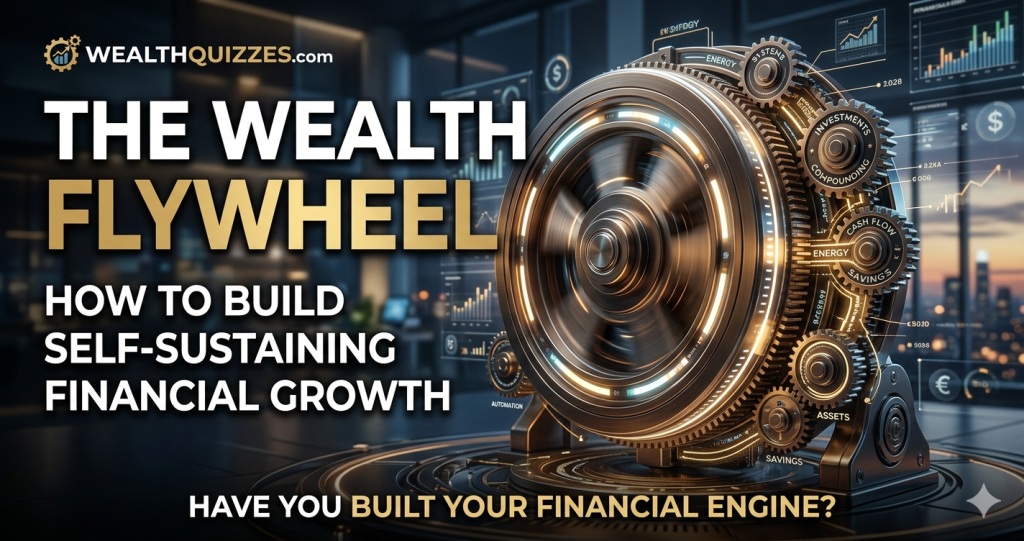
The Wealth Flywheel: How to Build Self-Sustaining Financial Growth

The Wealth Flywheel: How to Build Self-Sustaining Financial Growth Why True Wealth Is Built Through Momentum, Not Constant Struggle Introduction: The Problem With Starting Over Financially Many people experience the same frustrating cycle repeatedly: Earn money Make progress Encounter expenses Lose momentum Start over again This financial “reset loop” prevents long-term wealth accumulation. Even hardworking […]